Sundar Pichai Education: From Chennai Classrooms to Stanford and Wharton


Sundar Pichai education represents one of the most strategic academic journeys in modern tech leadership. Born in a two-room home in Chennai where his family couldn’t afford a television, Pichai built an educational foundation across three continents that directly enabled him to lead Alphabet Inc., a company valued at over $2 trillion in 2025.
His path wasn’t accidental. Each degree served a specific purpose: metallurgical engineering at IIT Kharagpur developed analytical rigour, Stanford’s materials science programme bridged into technology, and Wharton’s MBA provided business strategy frameworks. This combination created the unique skill set Google needed when they hired him in 2004.
I’ve analysed hundreds of tech CEO backgrounds whilst researching leadership pathways, and Pichai’s educational trajectory stands out for its deliberate progression from pure engineering through materials science into business management—a sequence few executives replicate but many should study.
TL;DR: Sundar Pichai’s Educational Credentials
- B.Tech in Metallurgical Engineering, IIT Kharagpur (1993) – Institute Silver Medal
- M.S. in Materials Science & Engineering, Stanford University (1995) – Scholarship
- MBA, Wharton School, University of Pennsylvania (2002) – Siebel Scholar & Palmer Scholar
- Each degree strategically positioned him for technology product leadership
- Overcame significant financial barriers through academic excellence
For comprehensive background beyond education, see our complete Sundar Pichai profile.
Early Education Foundation in Chennai
Sundar Pichai completed his early schooling at Jawahar Vidyalaya Senior Secondary School in Ashok Nagar, Chennai. Teachers remember him as exceptionally gifted with numbers, displaying an unusual ability to memorise every telephone number he encountered—a trait that hinted at the analytical mind that would later architect Chrome and Android.
His family’s modest circumstances shaped his educational drive. His father, Regunatha Pichai, worked as an electrical engineer at GEC (a British conglomerate), whilst his mother Lakshmi served as a stenographer. They lived in a small two-room flat where Sundar shared the living room floor with his brother, yet his parents prioritised education above material comforts.
For his Class XII education, Pichai attended Vana Vani Matriculation Higher Secondary School, located on the campus of IIT Madras. This proximity to one of India’s premier engineering institutions proved formative, exposing him to academic excellence standards that would define his trajectory.
His exceptional performance in mathematics and science during these years earned him admission to India’s most competitive engineering programme. He consistently ranked at the top of his classes, establishing the academic pattern that would characterise his entire educational journey.
IIT Kharagpur: Building Engineering Excellence
In 1988, Sundar Pichai secured admission to the Indian Institute of Technology (IIT) Kharagpur, joining India’s most prestigious engineering institution. He enrolled in the Metallurgical Engineering programme, a discipline focused on materials properties and processing—knowledge that would later prove surprisingly relevant to semiconductor and technology product development.
Pichai graduated in 1993 with a Bachelor of Technology (B.Tech) degree, earning the coveted Institute Silver Medal awarded to the top-performing student in his graduating class. This recognition wasn’t merely ceremonial; it signalled exceptional academic achievement across one of the world’s most rigorous engineering curricula.
Professor Sanat Kumar Roy, who taught at IIT Kharagpur for 44 years, described Pichai as “the brightest in his batch” whilst noting his soft-spoken, well-mannered nature. Another professor, Indranil Manna, recalled Pichai’s exceptional analytical abilities and recommended him for further studies abroad—a recommendation that proved crucial for his Stanford admission.
During his third year at IIT, Pichai wrote an advanced thesis on electronic materials, demonstrating early interest in the intersection of metallurgy and electronics. This work provided foundational understanding of semiconductor materials that would later inform his technology product decisions at Google.
Beyond academics, IIT Kharagpur shaped Pichai’s personal life significantly. He met Anjali Haryani (now Anjali Pichai), a chemical engineering student, during his time there. Their relationship endured through his subsequent years abroad, eventually leading to marriage.
The IIT experience taught Pichai methodical problem-solving approaches that became his trademark. Classmates recall his habit of dissecting problems until fully understood, never accepting surface-level comprehension. This persistence, combined with natural intelligence, created the foundation for his later product management excellence.
Stanford University: Pivoting Toward Technology
After graduating from IIT Kharagpur with top honours, Pichai faced a significant challenge: his family couldn’t afford to send him abroad for further studies. His father’s annual salary as an engineer was modest, and sending a son to study in America represented a financial impossibility for most Indian middle-class families in 1993.
Professor Indranil Manna’s strong recommendation letter to Stanford University proved pivotal. Pichai’s silver medal performance, combined with his professor’s endorsement and his academic credentials, earned him a scholarship to Stanford University—a life-changing opportunity that required significant family sacrifice even with financial aid.
Pichai enrolled in Stanford’s Master of Science (M.S.) programme in Materials Science and Engineering, graduating in 1995. At Stanford, he shifted focus toward the intersection of materials science and technology applications, moving beyond pure metallurgy into areas more directly relevant to Silicon Valley’s emerging tech sector.
His time at Stanford exposed him to Silicon Valley’s innovation culture for the first time. The programme emphasised practical applications alongside theoretical knowledge, and Pichai engaged in challenging research projects that developed his technical problem-solving capabilities.
After completing his master’s degree, Pichai initially considered pursuing a PhD at Stanford. He wanted to continue academic research in materials science, following the traditional path many top IIT graduates took. However, practical considerations intervened—he needed to support himself and contribute to his family’s finances after years of being supported.
Pichai made the strategic decision to enter the workforce rather than continue direct academic pursuit. He joined Applied Materials, a Santa Clara-based semiconductor manufacturing equipment company, working in process engineering and research & development. This five-year stint (1995-2000) provided hands-on experience with semiconductor technology and introduced him to Silicon Valley’s corporate culture.
The Applied Materials experience proved formative. As Pichai later noted: “In semiconductor process engineering, you must be highly methodical in setting your goals and working your way through them.” This disciplined approach to complex technical problems became central to his product management philosophy.
Wharton MBA: Adding Business Strategy
By 2000, Pichai recognised that pure technical expertise, whilst valuable, wouldn’t position him for leadership roles in technology companies. He needed business acumen, strategic thinking frameworks, and exposure to management disciplines. He made the strategic decision to pursue an MBA at the Wharton School of the University of Pennsylvania.
Pichai entered Wharton’s MBA programme in 2000 and graduated in 2002, earning two of the school’s most prestigious honours:
Siebel Scholar: This distinction recognises students who graduate in the top 5% of their class at select business schools. Siebel Scholars are chosen based on outstanding academic achievement and demonstrated leadership potential. The award carries a $35,000 scholarship and signals exceptional performance.
Palmer Scholar: Another honour awarded by Wharton to top-performing MBA students who demonstrate academic excellence and leadership qualities. Receiving both Siebel Scholar and Palmer Scholar designations simultaneously indicates Pichai ranked among the very best in his Wharton cohort.
Classmates at Wharton remember Pichai distinctly. Duncan Young, who graduated alongside Pichai as a fellow Siebel Scholar, described him as “a super nice, personable guy. He was very friendly, very down-to-earth and obviously just an incredibly smart guy.”
Amit Sinha, another classmate, characterised Pichai as “soft-spoken, reflective, thoughtful, and down-to-earth. He would listen carefully to what you would say.” These consistent descriptions reveal a leadership style that would later define his management approach at Google—collaborative, thoughtful, and ego-free.
The Wharton MBA provided Pichai with critical business frameworks he lacked from his engineering background: strategic planning, financial analysis, marketing principles, and organisational behaviour. More importantly, it taught him how to think about technology products as business assets requiring market strategy, not merely technical solutions.
After Wharton, Pichai briefly worked at McKinsey & Company, the prestigious management consulting firm known as a “CEO factory” for producing Fortune 500 executives. His time at McKinsey (2002-2004) further developed his strategic thinking and exposed him to how major corporations approach complex business challenges.
How His Education Shaped His Google Career
Sundar Pichai joined Google in April 2004, the same day Gmail launched. His educational background uniquely positioned him for the product management role that would launch his extraordinary career:
Metallurgical Engineering Foundation: His IIT training in materials science and engineering provided deep understanding of how physical products are designed, tested, and manufactured. This knowledge proved surprisingly relevant when overseeing hardware initiatives and understanding semiconductor limitations in software development.
Materials Science at Stanford: The bridge between pure engineering and technology applications. Pichai’s Stanford education exposed him to Silicon Valley’s innovation mindset whilst maintaining technical rigour. This combination allowed him to communicate effectively with both engineers and business leaders.
Wharton Business Strategy: The MBA provided frameworks for thinking about products as market-driven solutions rather than purely technical achievements. When Pichai proposed building Chrome to compete with Internet Explorer, his business rationale (protecting Google’s search distribution) reflected Wharton-taught strategic thinking.
His first major project at Google—the Google Toolbar—drew directly on his educational background. The toolbar required understanding both technical implementation (engineering), user experience (product thinking), and strategic positioning (business strategy). Pichai’s unique combination of skills allowed him to excel where others with single-dimension expertise struggled.
When he proposed developing Chrome in 2006, facing initial resistance from CEO Eric Schmidt, Pichai’s argument combined technical feasibility (engineering background), market opportunity analysis (Wharton MBA), and strategic threat assessment (McKinsey experience). Schmidt eventually approved the project, and Chrome became one of Google’s most successful products, currently holding over 64% of global browser market share.
His rise from product manager (2004) to CEO of Google (2015) to CEO of Alphabet (2019) validated his educational strategy. Each degree addressed specific capability gaps: IIT provided technical foundation, Stanford bridged into technology applications, and Wharton added business leadership frameworks.
For insights into how this educational foundation manifested in career results, see his career achievements at Google.
Educational Philosophy and Values
Pichai’s educational journey shaped the values he emphasises as CEO. In speeches and interviews, several themes consistently emerge:
Continuous Learning: “As a leader, it is important to not just see your own success, but focus on the success of others.” This philosophy reflects his own journey of strategic learning, recognising that education doesn’t end with formal degrees.
Accessible Education: Pichai frequently advocates for expanding access to quality education, particularly in developing nations. His own experience overcoming financial barriers through scholarships informs Google’s educational initiatives and AI accessibility programmes.
Multidisciplinary Thinking: Rather than viewing his metallurgical engineering background as irrelevant to software, Pichai leverages it. He often discusses how diverse educational experiences create unexpected advantages in problem-solving.
Humility Despite Achievement: Despite holding degrees from three of the world’s most prestigious institutions, Pichai maintains the soft-spoken, reflective demeanor his teachers and classmates noted from his earliest days. This humility creates the collaborative culture he champions at Google.
His emphasis on “moonshot thinking” at Google draws partly from his academic training. Engineering programmes like IIT’s teach systematic approaches to seemingly impossible problems—precisely the mindset required for projects like autonomous vehicles and quantum computing.
Lessons from Pichai's Educational Pathway
Several strategic insights emerge from analysing Sundar Pichai’s educational choices:
Each degree served a specific purpose: He didn’t pursue education randomly. B.Tech built technical foundation, M.S. bridged into technology sector, MBA added business strategy. This sequential skill-building created unique value.
Financial barriers don’t determine outcomes: Despite his family’s inability to fund foreign education, Pichai’s academic excellence earned scholarships that opened doors. Performance, not privilege, drove opportunity.
Prestigious institutions matter: Whilst talent exists everywhere, attending IIT, Stanford, and Wharton provided network access, credential signalling, and educational quality that accelerated his trajectory. The “where” of education proved as important as the “what.”
Technical + Business combination: Pure engineering or pure business skills alone wouldn’t have sufficed. The combination positioned him uniquely for technology product leadership—a lesson many aspiring tech executives should note.
Long-term perspective: Pichai spent 14 years in formal education (1988-2002) before his real career acceleration began. He invested time in building capabilities rather than rushing into impressive-sounding but dead-end opportunities.
For a broader perspective including setbacks alongside successes, explore challenges and setbacks he faced.
Educational Influence on His Children
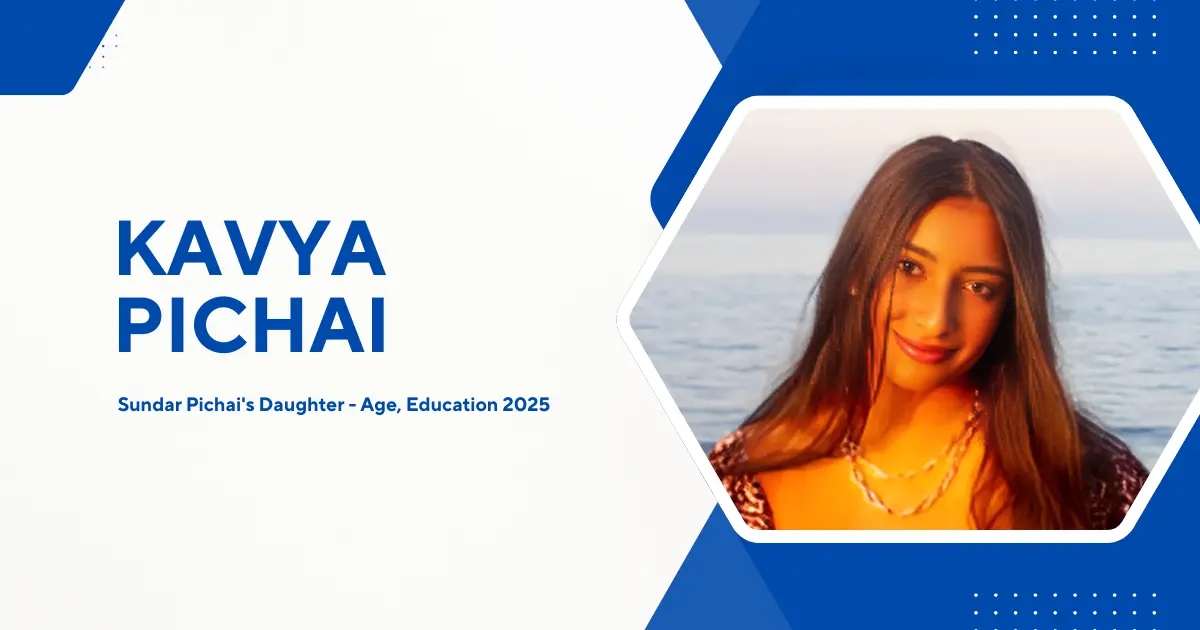
Pichai’s educational values extend to his children, Kiran and Kavya Pichai. Whilst private about family details, Pichai has indicated that he emphasises learning for curiosity rather than credential collection—a subtle but important distinction from his own credential-heavy path.
He’s noted the irony that his children, growing up in Silicon Valley affluence, face completely different circumstances than his own childhood of shared living rooms and delayed telephone installations. Ensuring they maintain intellectual curiosity without the driving necessity he experienced represents a different parenting challenge.
For details about his daughter’s educational path, see Kavya Pichai’s education.
Frequently Asked Questions
What degrees does Sundar Pichai hold?
Sundar Pichai holds three degrees: a B.Tech in Metallurgical Engineering from IIT Kharagpur (1993), an M.S. in Materials Science and Engineering from Stanford University (1995), and an MBA from Wharton School, University of Pennsylvania (2002). He earned top honours at all three institutions, including the Institute Silver Medal at IIT and both Siebel Scholar and Palmer Scholar distinctions at Wharton.
How did Sundar Pichai get into IIT Kharagpur?
Sundar Pichai gained admission to IIT Kharagpur through exceptional performance on the Joint Entrance Examination (JEE), India’s most competitive engineering entrance test. His strong foundation in mathematics and science from Jawahar Vidyalaya Senior Secondary School and Vana Vani School enabled him to score high enough to secure a seat in the Metallurgical Engineering programme at one of India’s most prestigious IITs.
Did Sundar Pichai receive a scholarship to Stanford?
Yes, Sundar Pichai received a scholarship to Stanford University for his master’s degree. His family could not afford to send him abroad for education, despite his father’s engineering salary. Professor Indranil Manna from IIT Kharagpur wrote a strong recommendation letter to Stanford, and Pichai’s silver medal performance combined with his academic credentials earned him scholarship funding that made attendance possible.
What is the significance of being a Siebel Scholar?
The Siebel Scholar award recognises students graduating in the top 5% of their class at select prestigious business schools worldwide, including Wharton. Recipients receive $35,000 and join an elite network of high-achieving MBA graduates. Pichai earning both Siebel Scholar and Palmer Scholar honours simultaneously indicates he ranked among the very best performers in his Wharton cohort.
What was Sundar Pichai's major at IIT?
Sundar Pichai majored in Metallurgical Engineering at IIT Kharagpur, graduating with a B.Tech degree in 1993. Whilst this seems distant from software and internet technology, metallurgical engineering provided deep understanding of materials properties and semiconductor physics that later informed his technology product decisions. He also pursued coursework in electronics during his IIT years, showing early interest in that intersection.
Did Sundar Pichai complete a PhD?
No, Sundar Pichai did not complete a PhD. After finishing his master’s degree at Stanford in 1995, he initially considered pursuing doctoral studies in materials science. However, he decided instead to enter the workforce, joining Applied Materials in Silicon Valley. This pragmatic decision reflected both financial considerations and a shift in career interests from academic research toward technology product development.
Where did Sundar Pichai do his MBA?
Sundar Pichai completed his MBA at the Wharton School of the University of Pennsylvania, graduating in 2002. At Wharton, he was named both a Siebel Scholar and a Palmer Scholar, honours reserved for students in the top 5% of their graduating class. He attended Wharton after working five years at Applied Materials, bringing practical engineering experience into his business education.
How did his education prepare him for Google?
Sundar Pichai’s three degrees created a unique combination rarely found in technology executives. His IIT engineering education provided technical rigour and problem-solving methodology. Stanford’s materials science programme bridged into technology applications whilst exposing him to Silicon Valley’s innovation culture. Wharton’s MBA added strategic business thinking and leadership frameworks. This technical + business combination positioned him perfectly for product management roles requiring both engineering credibility and strategic vision.
What was Sundar Pichai like as a student?
Professors and classmates consistently describe Pichai as exceptionally intelligent yet remarkably humble. At IIT Kharagpur, he was known as soft-spoken, well-mannered, and methodical—the type who dissected problems until fully understood rather than accepting surface-level comprehension. At Wharton, classmates remembered him as “down-to-earth,” “reflective,” and someone who listened carefully before speaking. His consistent academic excellence never translated into arrogance, a trait that later defined his collaborative leadership style at Google.
Can someone with a non-CS background succeed in tech like Pichai?
Absolutely. Sundar Pichai’s success with a metallurgical engineering background demonstrates that diverse technical foundations can succeed in technology leadership. His materials science expertise provided deep understanding of hardware constraints and semiconductor principles that informed software decisions. The key wasn’t his specific major but rather his analytical thinking, continuous learning, and strategic decision to complement technical skills with business education through his Wharton MBA.