Satya Nadella Common Traits: 10 Personality Characteristics That Transformed Microsoft

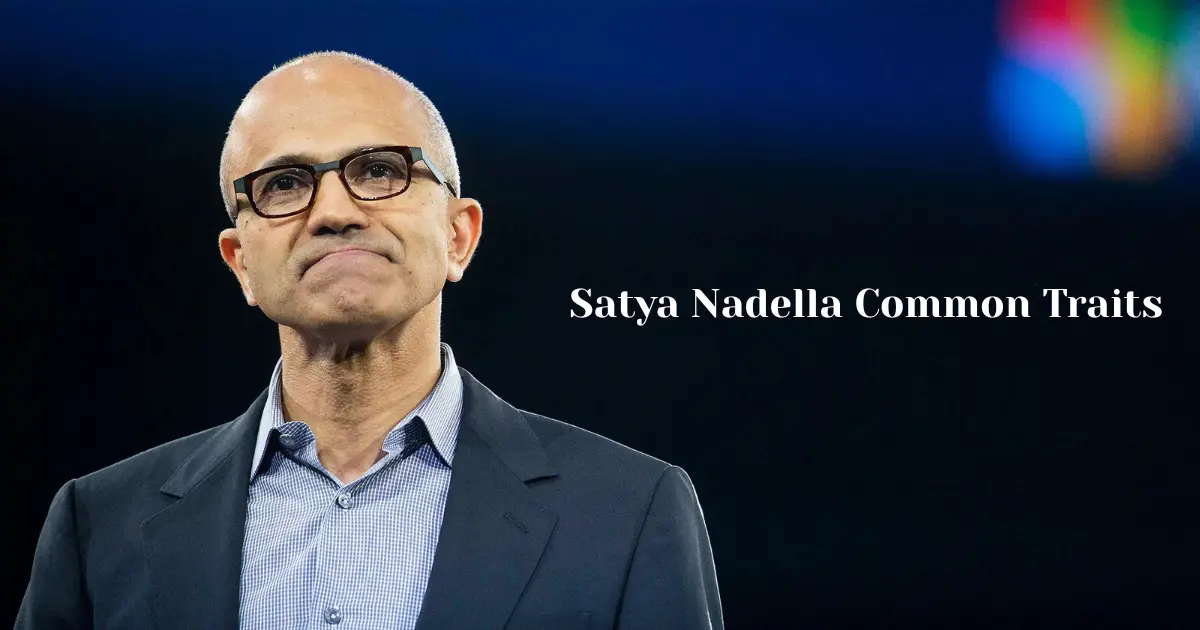
Satya Nadella’s common traits have become a case study in modern leadership, demonstrating how empathy, intellectual curiosity, and humble confidence can transform a $300 billion company into a $3 trillion powerhouse. Since becoming Microsoft’s CEO in February 2014, Nadella has fundamentally reshaped not just the company’s business strategy but its entire cultural DNA. His distinctive personality characteristics offer valuable lessons for anyone interested in leadership, organizational change, or understanding what makes exceptional executives tick.
Leadership researchers, business analysts, and academic studies have extensively documented Nadella’s traits through interviews, speeches, and observable behavior patterns. What emerges is a consistent portrait of someone who combines emotional intelligence with strategic discipline, creating a leadership style that stands apart from typical Silicon Valley approaches.
TL;DR: Key Traits Summary
- Empathy-driven: Uses understanding of others as a business tool, not just a soft value
- Growth mindset: Popularized “learn-it-all vs. know-it-all” culture shift
- Humble and low-ego: Admits weaknesses, studies startups despite running a $3T company
- Transformational vision: Reframed Microsoft’s mission and identity
- Collaboration-focused: Broke down internal silos and competition
- Customer-obsessed: Ties innovation directly to user needs
- Disciplined executor: Combines empathy with tough strategic decisions
- Authentic and values-based: Perceived as genuine rather than purely corporate
- Continuously learning: Treats lifelong learning as core to leadership
- Personality type: Likely INTJ (“The Mastermind”) based on behavioral analysis
1. Empathy-Driven Leadership
The Core Trait
Empathy isn’t just something Nadella talks about. It’s the foundation of his entire leadership philosophy. He frequently describes empathy as his “superpower” and directly links it to innovation, product design, and business success.
This trait distinguishes him from many technology leaders who emphasize technical brilliance or aggressive competition. For Nadella, understanding how others feel, whether customers, employees, or partners, is the starting point for creating value.
Origin Story: The Interview That Changed Everything
The roots of Nadella’s empathy focus trace to a pivotal moment during his 1992 Microsoft job interview. After demonstrating his technical skills on algorithms and data structures, the interviewer posed an unexpected question: What would you do if you saw a baby fall at a crossroad?
Nadella answered logically: run to the nearest phone booth and call 911. The interviewer ended the interview immediately, explaining that Nadella needed to “develop empathy” because when a child is crying, you pick them up and hug them.
That moment stuck with him. Years later, raising a son with cerebral palsy deepened this perspective further. His son Zain (who passed away in 2022) taught Nadella to see the world through others’ eyes rather than focusing on his own challenges.
Empathy in Practice
At Microsoft, empathy translates into concrete business applications:
- Accessibility features: Microsoft leads the industry in products like Xbox Adaptive Controller and Seeing AI
- Product development: Teams are encouraged to understand customer pain points before building solutions
- Employee relations: Nadella publicly acknowledged when Microsoft showed a “lack of empathy” around layoffs and return-to-office policies, promising to “do better”
As Nadella states: “If you have empathy for your people, they will do their best work, and you’ll make progress.”
2. Growth Mindset Orientation
From "Know-It-All" to "Learn-It-All"
Perhaps Nadella’s most culturally significant contribution to Microsoft was introducing growth mindset principles, inspired by Stanford psychologist Carol Dweck’s research.
When he became CEO, Microsoft was known for a “know-it-all” culture where employees defended existing expertise and competed aggressively with colleagues. Nadella explicitly shifted this to a “learn-it-all” culture that values curiosity, experimentation, and learning from mistakes.
How It Manifests
Internal communications: Nadella’s memos and speeches consistently push continuous learning, experimentation, and accepting mistakes as part of progress.
Performance evaluation: One of his first actions as CEO was eliminating Microsoft’s infamous “stack ranking” system that forced managers to rate employees against each other, creating destructive internal competition.
AI transformation: Even during 2025’s AI-driven restructuring and layoffs, Nadella told staff to maintain the growth mindset approach, treating disruption as an opportunity for learning rather than a threat.
Personal example: Nadella models this behavior himself. He recently admitted that Microsoft’s size has become a “massive disadvantage” and revealed he spends weekends studying startups to learn from them.
3. Humility and Low-Ego Leadership
The Quiet Confidence
Unlike predecessors Bill Gates and Steve Ballmer, who were known for forceful personalities, Nadella brings calm, composed humility to leadership. Fortune and other analysts highlight this as central to his effectiveness.
This isn’t false modesty. Nadella genuinely admits weaknesses and actively seeks to learn from others, including much smaller companies.
Evidence of Humility
Public acknowledgment of mistakes: After a 2014 gaffe at a tech conference about gender discrimination, Nadella went out of his way to apologize publicly and met with women in tech groups to learn more.
Learning from small companies: Despite leading one of the world’s largest companies, Nadella told Business Insider he views Microsoft’s size as a disadvantage and deliberately studies startups to understand what they’re doing better.
Listening tours: When he became CEO, rather than dictating changes from above, Nadella went on a “listening tour,” meeting managers throughout the company and implementing their bottom-up suggestions.
Credit sharing: He consistently frames Microsoft’s success as a team achievement rather than personal accomplishment.
Academic studies classify this as “authentic leadership”: self-awareness, relational transparency, and balanced processing of different viewpoints before making decisions.
4. Transformational Vision
Redefining Microsoft's Purpose
Nadella exemplifies transformational leadership, characterized by clear long-term vision, inspiring purpose, and large-scale cultural change.
His most significant vision statement was reframing Microsoft’s mission as: “to empower every person and every organization on the planet to achieve more.” This became the north star for strategy, product development, and cultural decisions.
Strategic Transformation
Under this vision, Nadella pivoted Microsoft from a Windows-centric identity to:
- Cloud-first: Azure became a $100+ billion revenue business
- Mobile-first: Even without a phone platform, Microsoft products work across all devices
- AI leadership: Partnership with OpenAI positioned Microsoft ahead in generative AI
- Platform agnostic: Office apps launched on iOS and Android, embracing competitors’ ecosystems
These shifts required convincing employees and investors that a 40+ year old company could reinvent itself. Satya Nadella’s notable achievements during this transformation include growing market cap by over 1,000%.
5. Collaboration and Culture Focus
Breaking Down Silos
Before Nadella, Microsoft was notorious for internal infighting and divisional silos. Different product groups competed rather than cooperated, sometimes actively sabotaging each other’s projects.
Nadella deliberately pushed a culture of collaboration and cross-functional teamwork, viewing culture as a strategic asset rather than HR decoration.
Cultural Changes Implemented
“One Microsoft” initiative: Encouraged teams to work together rather than protecting turf.
Listening emphasis: Leaders were encouraged to “listen more, talk less” and prioritize teamwork over internal competition.
Psychological safety: Studies of Microsoft under Nadella show emphasis on empowerment and integrated product development teams.
Open source embrace: Microsoft joined the Linux Foundation and open-sourced major projects like .NET Core, signaling collaboration extends beyond company walls.
The results are evident in products like Microsoft 365, where Word, Excel, Teams, and OneDrive integrate seamlessly, something impossible under the old siloed structure.
6. Customer Obsession
Product-Centric Thinking
Leadership analyses describe Nadella as obsessed with customer impact, tying innovation directly to user needs and outcomes rather than internal technology preferences.
This represents a shift from Microsoft’s historical approach, which often prioritized what engineers wanted to build over what customers actually needed.
Customer Focus in Action
Accessibility features: Driven by genuine understanding of user challenges, not just compliance requirements.
Developer relations: The GitHub acquisition kept the platform developer-friendly despite fears Microsoft would corporatize it.
Enterprise partnerships: Microsoft positions itself as a platform provider and partner rather than just a vendor.
AI integration: Copilot products are designed around how people actually work, not just technical capabilities.
Nadella repeatedly emphasizes that empathy is directly connected to understanding customer pain points and building better products.
7. Disciplined Execution
Creating Clarity in Chaos
Nadella often says a leader’s main job is to “create clarity when none exists.” This strategic clarity combines with disciplined execution to ensure vision becomes reality.
He’s not just a “nice” leader. He combines empathy with tough decisions, clear prioritization, and consistent follow-through.
Evidence of Discipline
Strategic focus: Clear prioritization of cloud and AI over legacy bets like Windows Phone.
Decisive action: Willingness to shut down or write off failing projects (Nokia, Mixer, Groove Music).
Capital discipline: Strong financial management and performance-based resource allocation.
Acquisition execution: Successfully integrated LinkedIn, GitHub, and Activision Blizzard where many large acquisitions fail.
Case studies of his tenure emphasize that empathetic leadership doesn’t mean avoiding hard choices. Nadella has overseen layoffs affecting tens of thousands of employees when strategic pivots required it.
8. Authentic and Values-Based
Internal Moral Compass
Academic research specifically links Nadella to “authentic leadership” characterized by:
- Self-awareness
- Relational transparency
- Balanced processing (considering different views before deciding)
- Internalized moral perspective
He frequently discusses purpose, ethics, and responsible AI, positioning Microsoft as a mission-driven company rather than purely a profit engine.
Values in Practice
Responsible AI: Microsoft has published AI ethics guidelines and created governance structures around AI development.
Environmental commitment: Carbon negative by 2030 initiative reflects values beyond quarterly earnings.
Book donation: Nadella donated all proceeds from his book “Hit Refresh” to charity, specifically organizations supporting people with disabilities.
Transparency about mistakes: Rather than corporate spin, Nadella often acknowledges problems publicly and commits to doing better.
When comparing to other successful tech CEOs, Nadella’s authenticity stands out as particularly consistent across public and reported private behavior.
9. Continuous Learning
The Perpetual Student
Commentators consistently note that Nadella treats lifelong learning as core to leadership, not something you stop once you reach the CEO level.
This isn’t performative. Evidence suggests genuine intellectual curiosity drives his reading habits, information gathering, and decision-making processes.
Learning Behaviors
Reading habits: Nadella is an avid reader, particularly drawn to Russian literature and poetry, which he describes as relaxing because they’re “against the grain” of his daily tech work.
Studying competitors: He explicitly admits studying startups and smaller companies to understand what they do better than Microsoft.
MBA while working: Earlier in his career, Nadella commuted from Seattle to Chicago on weekends to complete an MBA at University of Chicago Booth while working full-time at Microsoft.
Microsoft Hackathon: He championed internal innovation events that let employees explore ideas outside their normal scope, treating the company as a learning organization.
As one analyst noted: “Leadership isn’t about being the smartest person in the room. It’s about making everyone in the room feel like they have the potential to be the next Satya Nadella.”
10. MBTI and Personality Type Analysis
The Mastermind Profile
Personality analysts generally classify Nadella as either INTJ (“The Mastermind”) or ENTJ (“The Commander”), with INTJ appearing more frequently in detailed assessments.
| Dimension | Evidence |
|---|---|
| Introversion (I) | Calm, composed demeanor; prefers deep discussions over charismatic displays |
| Intuition (N) | Long-term vision focus (cloud, AI) over short-term gains |
| Thinking (T) | Data-driven, logical decisions (open-source shift despite resistance) |
| Judging (J) | Structured approach; methodical career progression |
IBM Watson Personality Analysis
Job search firm Paysa analyzed Nadella’s speeches, essays, and interviews using IBM Watson’s Personality Insights API. The top five traits identified:
- Emotionality (highest)
- Intellect
- Liberalism
- Artistic Interests
- Achievement-striving
The emotionality ranking surprised some, but visible evidence supports it. In interviews, Nadella shows genuine emotional responses, including becoming visibly moved when discussing his parents’ influence on his life.
Enneagram Analysis
Some personality assessments place Nadella as a Type 5w6 (The Investigator with Loyalist wing), characterized by:
- Deep analytical thinking
- Desire for knowledge and competence
- Cautious approach to decisions
- Value placed on expertise and preparation
This aligns with his reputation as a cerebral, transformative leader who balances innovation with systemic stability.
Where Traits Meet Criticism
The Empathy Gap
Even Nadella’s strongest traits sometimes clash with reality:
Layoff contradictions: While promoting empathy and growth mindset, Microsoft has conducted large-scale layoffs affecting over 35,000 employees during his tenure. Some employees criticized the company’s “lack of empathy” in these situations. Nadella acknowledged the criticism and promised improvement.
Return-to-office tensions: Microsoft’s return-to-office policies created friction with employees who felt the company wasn’t living up to its empathetic reputation.
DEI rollbacks: Some criticized Microsoft’s approach to diversity initiatives, questioning whether stated values translated to actions.
Security culture: Despite emphasis on culture change, Microsoft faced severe cybersecurity criticism in 2024, with the US Department of Homeland Security calling its security culture inadequate.
Understanding some setbacks during his tenure provides important context: even strong personality traits don’t guarantee perfect outcomes.
The Balance
These criticisms don’t invalidate Nadella’s traits. They illustrate that leading a 200,000+ person organization involves trade-offs between values and operational realities. Nadella’s willingness to acknowledge these gaps publicly demonstrates the authenticity trait in action.
Traits and Financial Success
The Results
Nadella’s personality traits have translated directly into business results:
| Metric | 2014 | 2025 |
|---|---|---|
| Market Cap | $300B | $3T+ |
| Stock Growth | – | +1,000% |
| Cloud Revenue | ~$4B | $100B+ |
| Employee Satisfaction | Low | Significantly improved |
His substantial personal wealth of approximately $1.1 billion reflects compensation tied to these outcomes, with over 95% of his pay performance-based.
Why Traits Matter
The connection between personality and business success isn’t coincidental:
- Empathy enabled Microsoft to understand customer needs and build relevant products
- Growth mindset allowed the company to pivot from Windows dependence
- Humility let Microsoft embrace open source and partner with former rivals
- Strategic clarity focused resources on high-growth opportunities
Frequently Asked Questions
What are Satya Nadella's main personality traits?
Satya Nadella’s main personality traits include empathy-driven leadership, growth mindset orientation, humility, transformational vision, collaboration focus, customer obsession, disciplined execution, authentic values, and continuous learning. These traits combine to create a leadership style that emphasizes understanding others while maintaining strategic clarity.
What is Satya Nadella's leadership style?
Nadella employs a combination of transformational and authentic leadership styles. His approach emphasizes empathy, growth mindset thinking, and strategic vision while maintaining genuine personal values. Unlike traditional command-and-control leadership, he focuses on empowering teams, listening to feedback, and creating clarity in uncertain situations.
Why is Satya Nadella considered a successful leader?
Nadella is considered successful because his personality traits directly enabled Microsoft’s transformation from a struggling company to one worth over $3 trillion. His emphasis on empathy, collaboration, and growth mindset changed the company’s culture, while his strategic clarity focused resources on cloud computing and AI, both of which became massive growth engines.
What is Satya Nadella's MBTI personality type?
Personality analysts generally classify Nadella as INTJ (“The Mastermind”), characterized by introversion, intuition, thinking, and judging preferences. Some assessments suggest ENTJ. His calm demeanor, long-term strategic focus, logical decision-making, and structured career progression support the INTJ classification.
How does Nadella's empathy affect his leadership?
Nadella uses empathy as a business tool, not just a soft value. He connects understanding customer feelings to product innovation, employee understanding to better performance, and partner relationships to strategic success. His personal experience raising a son with cerebral palsy deepened this trait and influenced Microsoft’s industry-leading accessibility features.
What is the "learn-it-all" vs "know-it-all" concept?
Nadella popularized shifting Microsoft from a “know-it-all” culture (defending existing expertise, competing internally) to a “learn-it-all” culture (curiosity, experimentation, learning from mistakes). This concept comes from Carol Dweck’s growth mindset research and became central to Microsoft’s cultural transformation.
Is Satya Nadella an introvert or extrovert?
Based on behavioral analysis, Nadella appears more introverted than extroverted. He prefers deep, focused discussions over charismatic public displays. Unlike his predecessor Steve Ballmer (known for energetic presentations), Nadella brings calm, composed presence to leadership. However, he demonstrates strong interpersonal skills when engaging with employees and partners.
How did Nadella learn empathy?
A pivotal moment occurred during Nadella’s 1992 Microsoft interview when he was told to “develop empathy” after answering a hypothetical question too logically. Later, raising his son Zain, who had cerebral palsy, profoundly deepened his understanding of seeing the world through others’ perspectives. He credits these experiences with shaping his leadership philosophy.
What makes Nadella different from other tech CEOs?
Unlike many tech CEOs who emphasize technical brilliance or aggressive competition, Nadella leads with empathy and humility. He publicly acknowledges mistakes, studies smaller companies despite running a $3 trillion giant, and prioritizes culture as much as strategy. His authentic, values-based approach contrasts with more image-managed corporate leadership styles.
Does Nadella's leadership style have any weaknesses?
Critics note gaps between Nadella’s stated values and some outcomes, particularly around large-scale layoffs, return-to-office policies, and cybersecurity culture failures. While he promotes empathy, some employees have criticized Microsoft’s handling of workforce reductions. Nadella’s willingness to acknowledge these criticisms publicly reflects his authenticity trait.
Conclusion
Satya Nadella’s common traits reveal a leadership model that combines emotional intelligence with strategic rigor. His empathy-first approach, growth mindset emphasis, and authentic humility created the cultural foundation for Microsoft’s remarkable transformation from a $300 billion company to a $3 trillion leader.
These aren’t just abstract personality characteristics. They translate directly into business outcomes: products that serve customer needs, a culture that attracts and retains talent, strategies that adapt to changing markets, and partnerships that extend Microsoft’s reach.
For aspiring leaders, Nadella’s traits offer actionable insights. Empathy can be developed through deliberate practice and genuine curiosity about others. Growth mindset can be cultivated by reframing failures as learning opportunities. Humility strengthens rather than weakens leadership effectiveness.
The tension between Nadella’s stated values and occasional organizational shortcomings provides equally valuable lessons. Leading at scale requires difficult trade-offs, and even the strongest personality traits don’t guarantee perfect outcomes. What matters is consistent effort to live up to one’s values while acknowledging gaps when they occur.
Nadella’s personality has become inseparable from Microsoft’s identity. Understanding his traits means understanding why the company operates the way it does, and offers a blueprint for leadership that creates both human connection and business results.