Burst Fade vs Drop Fade: Which Haircut Wins in 2025? (Face Shape Guide)


After cutting hundreds of burst fade vs drop fade haircuts over the past decade, I’ve learned that choosing wrong costs you more than money. It costs time in the barber chair every two weeks, awkward growth phases that look sloppy, and that nagging feeling your haircut doesn’t match your face. The difference between these fades is stark once you understand where the fade curves, how fast it grows out, and which face shapes each flatters.
TL;DR:
- Burst fade: Semi-circular around ears, bold statement, 2-week maintenance, best for round/square faces
- Drop fade: Curves down behind ears, professional versatility, 3-week maintenance, works for all face shapes
- Best burst fade for: Curly/textured hair, creative industries, mohawks/mullets, making bold statements
- Best drop fade for: First-time fade wearers, conservative workplaces, longer top styles, graceful grow-out
- Key factors: Maintenance commitment, workplace culture, hair texture, face shape, styling preferences
What Is Burst Fade vs Drop Fade?
A burst fade creates a semi-circular pattern that curves around your ear like a sunburst, starting high at the temple and radiating outward in all directions. The fade doesn’t continue down the back of your head but instead stops behind the ear, leaving more hair at the nape of your neck.
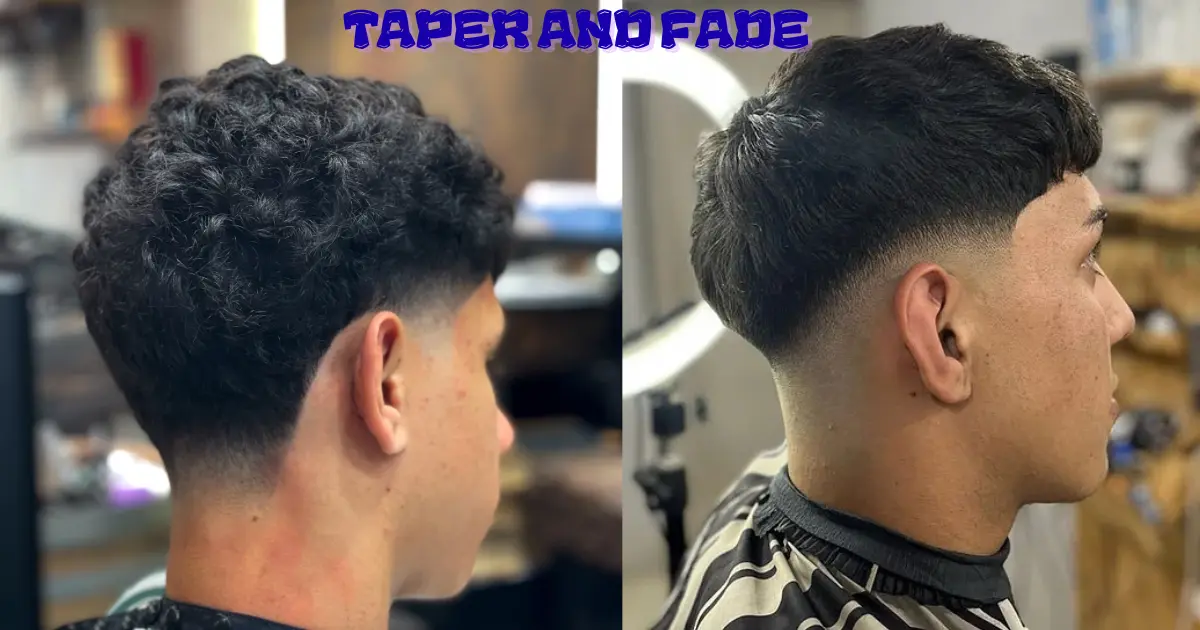
A drop fade haircut follows your natural head contour, curving down behind the ear and dropping lower at the back. Unlike a straight fade that maintains one horizontal line around your head, this style dips down, creating a smooth, sculpted silhouette that enhances your head shape.
Critical Structural Differences:
| Feature | Burst Fade | Drop Fade |
| Fade Pattern | Semi-circular, radiates outward | Curves down, follows head shape |
| Back Coverage | More hair at nape | Tapered down to neckline |
| Visual Impact | Bold, eye-catching burst | Smooth, contoured flow |
| Best Pairings | Mohawks, mullets, high volume | Any top style, versatile |
| Grow-Out Pattern | Uneven, shows quickly | Gradual, forgiving |
The burst focuses attention on the ear area with dramatic circular shaping. The drop creates an overall refined appearance that works from every angle. Both can be customized as high, mid, or low variations depending on where the fade starts.
2025 Trends for Burst and Drop Fades
Burst fades dominate social media in 2025, particularly the burst fade mullet combination that pairs the sharp circular fade with length at the back. TikTok and Instagram exploded with this style, making it the signature cut for Gen Z and younger millennials who want maximum visual impact.
Drop fades continue as the workplace standard. Professionals aged 25-45 request drop fades at three times the rate of burst fades because they bridge modern style with corporate acceptance. The subtle curve reads as polished rather than trendy.
The hybrid drop-burst fade emerged as barbershops’ most requested customization. Clients want the curved drop in back for natural flow plus the burst pattern around ears for statement-making. This combination delivers boldness with professional viability.
Celebrity influence matters. Usher popularized the burst fade (originally called “South of France”) through his barber Curtis Smith. That cultural credibility, rooted in hip-hop and Black barbershop tradition, gives burst fades authenticity that resonates across demographics.
Regional preferences show patterns. Urban barbershops in LA, Houston, and Atlanta report 60% burst fade requests. Suburban shops in professional corridors see 70% drop fade requests. Your location’s fade culture influences what looks “normal” versus “bold” in your area.
How to Choose Between Burst Fade and Drop Fade for Your Face Shape
Your face shape determines which fade enhances your features versus fights against them.
Round Face (Soft angles, similar width and length):
- Best choice: Burst fade (low to mid height)
- Why: The upward burst pattern creates angles and definition where your face lacks them
- Avoid: Very high burst fades can make round faces appear wider
- Styling tip: Pair with height on top (textured crop, short pompadour) to elongate your face
Oval Face (Balanced proportions, versatile shape):
- Best choice: Either works perfectly
- Why: Oval faces are the most adaptable shape for any fade style
- Recommendation: Choose based on lifestyle and maintenance preference, not face shape necessity
- Styling tip: Experiment with both to see which matches your personal aesthetic
Square Face (Strong jaw, angular features):
- Best choice: Burst fade works exceptionally well
- Why: The curved burst complements existing angles without adding harsh lines
- Alternative: Drop fade also works but provides less visual interest
- Styling tip: Keep texture on top soft to balance your strong jawline
Heart-Shaped Face (Wide forehead, narrow chin):
- Best choice: Drop fade (low to mid)
- Why: Draws attention downward, balancing your wider forehead with chin area
- Avoid: High burst fades that emphasize forehead width
- Styling tip: Add fullness at sides of your top hair for proportion
Long/Rectangular Face (Significantly longer than wide):
- Best choice: Burst fade can add width perception
- Why: The circular pattern around ears creates horizontal emphasis
- Avoid: High drop fades with tall top styles that further elongate
- Styling tip: Keep top relatively flat, swept to side rather than pushed up
Diamond Face (Wide cheekbones, narrow forehead/chin):
- Best choice: Drop fade provides smooth balance
- Why: The contoured line doesn’t emphasize your already prominent mid-face
- Alternative: Low burst fade works if you want subtle boldness
- Styling tip: Avoid extreme volume that widens your already broad cheekbones
Step-by-Step Guide: Getting Your Perfect Fade
Step 1: Find a Fade Specialist Barber
Not every barber excels at both styles. Burst fades require precise circular blending that many generalist barbers botch. Check Instagram portfolios for multiple examples of the specific fade you want. Read reviews mentioning “burst fade” or “drop fade” specifically, not just “great fade.”
Step 2: Bring Visual References (Mandatory)
Save 3-5 photos showing your desired fade from multiple angles. Include front view, side profile, and back if possible. Screenshot images with hair texture similar to yours. Barbers need to see how the fade looks on your specific curl pattern or straight hair.
Step 3: Use Precise Communication
Say: “I want a [low/mid/high] [burst/drop] fade that [describe the curve].”
For burst: “I want the fade to burst outward from my ears in a semi-circle, stopping behind my ear rather than continuing down the back.”
For drop: “I want the fade to curve down behind my ear following my natural head shape, dropping lower at the back.”
Step 4: Specify Top Integration
Tell your barber how you’ll style the top. Burst fades pair better with height and texture (mohawks, textured crops, curls left full). Drop fades work with any top style but excel with longer, flowing styles (pompadours, comb-overs, longer fringes).
Step 5: Confirm Fade Depth
Clarify whether you want:
- Skin fade: Completely bald at shortest point (maximum contrast)
- Shadow fade: Very short but not bare skin (softer, lasts slightly longer)
- Guard fade: Uses lowest clipper guard for minimal length difference
Step 6: Watch the Initial Guideline
The first line your barber creates determines everything. For burst fades, watch them form that semi-circle around your ear. For drop fades, ensure the curve behind your ear follows your head’s natural slope. Speak up immediately if the placement looks wrong.
Step 7: Schedule Next Appointment Before Leaving
Book your touch-up for 2 weeks (burst) or 3 weeks (drop) before you leave the chair. This prevents the “I’ll call later” trap that leads to overgrown fades.
Common Mistakes to Avoid
Choosing Based on Trend Rather Than Reality
Burst fades look incredible on Instagram, but they demand commitment. If you travel frequently for work, hate frequent haircuts, or work in conservative settings, the 2-week maintenance cycle and bold appearance become problems fast. Don’t choose a burst fade because it’s trending if your life doesn’t support it.
Ignoring Hair Texture Compatibility
Burst fades on very straight, fine hair can look unbalanced as they grow out because the circular pattern becomes obvious when hair lies flat. Textured and curly hair disguises uneven growth better. Check our guides for burst fade for curly hair and drop fade for curly hair for texture-specific advice.
Mismatching Fade with Top Length
A burst fade with a very short top (buzz cut length) creates visual imbalance, as the circular ear emphasis has nothing to contrast with. Burst fades need volume or length on top to justify the dramatic sides. Drop fades forgive all top lengths because the contoured line provides its own visual interest.
Skipping the Lineup/Edge-Up
Both fades look half-finished without sharp, clean edges around your hairline and nape. Some guys skip this thinking it’s optional extra grooming. It’s not. The precise edges are what separate a professional fade from a home clipper job. Never skip the lineup.
Not Communicating Workplace Requirements
If you work in law, finance, healthcare, or any field with conservative appearance standards, mention this upfront. Your barber can adjust the burst fade to be more subtle (low burst, less dramatic curve) or steer you toward a drop fade that reads as modern rather than edgy.
Expecting Perfect Symmetry Without Skill
Burst fades are the hardest fade to execute symmetrically. The circular pattern must match identically on both ears or it looks lopsided. If your barber has fewer than 50 burst fades in their portfolio, go elsewhere. One botched burst fade takes months to grow out and fix.
Neglecting Scalp Care
Both fades expose scalp that may not have seen sun or air in months. Dry, flaky scalp ruins even the cleanest fade. Start using a gentle scalp exfoliant and moisturizer one week before your first fade to prevent the white flakes that appear on newly exposed skin.
Best Practices and Pro Tips
The Test Run Strategy
Can’t decide? Get a drop fade first. If you want more boldness next visit, your barber can easily add burst elements. Going from burst to drop requires growing out the burst area, which takes 4-6 weeks. Always start conservative when uncertain.
Maintenance Product Investment
Burst fades benefit from strong-hold products that maintain the top style contrast. Use matte clay or strong-hold pomade to keep your textured top defined against the sharp sides. Drop fades work with lighter products (styling cream, light mousse) since the fade itself provides visual definition.
The Hybrid Request
Ask for “a drop fade with burst elements around my ears” to get both styles. Many modern barbers automatically incorporate slight burst shaping into drop fades for clients who want subtle boldness. This customization has become standard in progressive barbershops.
Seasonal Fade Adjustments
Summer: Both fades keep you cooler, but drop fades expose more nape area for maximum heat dissipation. Winter: Burst fades leave more coverage at the back, providing warmth when wearing beanies. Year-round: Consider your climate’s impact on exposed scalp (sun protection, moisturizing needs).
Beard Integration Technique
Drop fades blend seamlessly into beards using the “fade to beard” method where your barber tapers the fade right into your facial hair line. Check our drop fade with beard guide for specific techniques. Burst fades create more separation between beard and haircut, which works if you prefer distinct boundaries.
Photography Considerations
Burst fades photograph dramatically from straight-on angles where the circular pattern is obvious. Drop fades photograph better from side/profile shots where the curved contour creates an elegant silhouette. If you take a lot of selfies or professional headshots, factor in your typical photo angles.
The Grow-Out Plan
Life happens. New job, travel, budget constraints. Drop fades grow out more gracefully over 4-5 weeks, morphing into low fades naturally. Burst fades become obviously grown-out after 3 weeks when the circular pattern blurs into shapelessness. Plan your fade choice around life stability.
Maintenance Schedule and Long-Term Considerations
Burst Fade Maintenance:
- Weeks 1-2: Peak crispness, circular pattern highly visible
- Week 2: Burst pattern starts softening, still looks intentional
- Week 3: Noticeably grown, loses dramatic burst effect
- Week 4: Looks messy, circular shape unclear
- Recommended visit: Every 2 weeks maximum
- Annual cost: $35-50 per visit x 24-26 visits = $840-1,300
Drop Fade Maintenance:
- Weeks 1-2: Fresh and sharp, curves clearly defined
- Weeks 2-3: Still professional-looking, curve present but softened
- Week 3: Recommended touch-up, though still acceptable if needed
- Week 4: Grown but not sloppy, morphs into lower fade
- Recommended visit: Every 3 weeks
- Annual cost: $35-50 per visit x 16-18 visits = $560-900
Hair Texture Impact on Longevity:
- Straight hair: Drop fades last longer visually. Burst fades show uneven growth faster.
- Wavy hair: Both fades maintain appearance reasonably. Drop fades slightly more forgiving.
- Curly hair (3A-3C): Burst fades excel as curls hide uneven growth patterns. Natural choice.
- Coily hair (4A-4C): Both work excellently. Burst fades particularly popular in Black barbershop culture.
DIY Touch-Up Capability:
Drop fades: You can maintain neckline and sideburn edges at home between visits, extending time to 4 weeks if needed. The gradual curve makes mistakes less obvious.
Burst fades: Home touch-ups are risky. The circular pattern requires precision most people can’t achieve with home clippers. One wrong move disrupts the symmetry. Leave burst fades to professionals entirely.
Climate and Environment Factors:
Humid environments: Burst fades expose more nape area where sweat accumulates on curly/coily hair. Drop fades with more back coverage can be more comfortable in high humidity.
Cold climates: Burst fades’ additional back coverage provides warmth. Drop fades expose more scalp that gets cold quickly.
Active lifestyles: Both fades work for athletes and gym-goers. Choose burst if you wear headbands (leaves more hair to secure them). Choose drop if you wear helmets (less friction on exposed fade area).
Workplace Culture Reality Check:
Conservative Corporate (Law, Finance, Healthcare): Drop fade strongly preferred. Low drop fade specifically reads as modern professional rather than trendy. Burst fades can be perceived as too bold.
Creative Industries (Design, Tech, Media): Both fades widely accepted. Burst fades often seen as creative expression. Choose based on personal preference.
Retail/Service: Depends on brand image. Upscale retail leans drop fade. Casual/urban retail accepts burst fades.
Manual Labor/Trades: Both fades popular and accepted. Maintenance frequency becomes the deciding factor (3 weeks vs 2 weeks between shop visits).
Related Fade Styles and Alternatives
Mid Fade vs Burst/Drop
If neither burst nor drop feels right, mid fades split the difference. They start at temple level with no special curve pattern, providing clean contrast without boldness or specific contouring. Mid fades work for men who want modern style without committing to distinctive fade patterns.
Drop Fade vs High Fade
Confused about how drop fades compare to high fades? Our drop fade vs high fade guide explains how fade height (where it starts) differs from fade curve (burst or drop pattern). You can combine these concepts: high drop fade, low burst fade, mid drop fade.
Taper Fade Compromise
Not ready for the drama of burst fades or the curve of drop fades? Taper fades offer the safest middle ground. They gradually shorten hair without going to skin and avoid specialized patterns entirely. Perfect for fade beginners or ultra-conservative workplaces.
The Burst Fade Mullet Phenomenon
The burst fade mullet exploded in 2025 as social media’s most viral haircut combination. The circular burst pattern on sides contrasts dramatically with length left at the back, creating a modern take on the classic mullet. This style pairs burst fade’s boldness with mullet’s rebellious edge for maximum statement-making.
Temple Fade Alternative
Temple fades (also called temp fades) focus fade blending only around your temples and sideburns, leaving the back longer and unfaded. This minimalist approach gives you fade benefits without full commitment. Works excellently with afros, curly tops, or when growing out previous fades.
Low Fade for Maximum Versatility
If maintenance frequency concerns you, low fades (whether burst or drop pattern) grow out most gracefully. The fade starts lower, so growth is less noticeable. Low drop fades last 4 weeks. Low burst fades stretch to 3 weeks. Sacrifice some dramatic impact for practical longevity.
Choosing between burst fade vs drop fade haircut comes down to maintenance reality, face shape compatibility, and lifestyle demands. Burst fades make bold statements through circular patterning but require 2-week touch-ups and work best on textured hair with round/square faces. Drop fades provide versatile, professional polish that flatters all face shapes and forgives 3-week maintenance intervals. Start with drop fades if uncertain, communicate precisely with skilled barbers, and factor in your workplace culture before committing to either style.
Frequently Asked Questions
What is the main difference between burst fade and drop fade?
A burst fade creates a semi-circular pattern around the ear that radiates outward like a sunburst, stopping behind the ear. A drop fade curves down behind the ear following your natural head shape, dropping lower at the back and tapering to the neckline. The burst focuses on dramatic ear-area contrast, while the drop creates overall head contouring.
Which lasts longer between haircuts: burst fade or drop fade?
Drop fades last 3 weeks between touch-ups before looking grown out. Burst fades need maintenance every 2 weeks because the circular pattern becomes unclear faster as hair grows. Drop fades grow out more gracefully and maintain professional appearance longer, making them better for people who can’t visit barbers frequently.
Is burst fade or drop fade better for round faces?
Burst fades work better for round faces because the upward circular pattern creates angles and definition where round faces lack them. Drop fades can work but provide less face-shaping benefit. Pair burst fades with height on top to maximize the face-lengthening effect for round face shapes.
Which fade is more professional for workplace settings?
Drop fades are more professional and workplace-appropriate, especially in conservative corporate environments like law, finance, and healthcare. The smooth contoured curve reads as modern and polished rather than trendy. Burst fades can appear too bold for conservative workplaces but work well in creative industries.
Can you combine burst fade and drop fade in one haircut?
Yes, the drop-burst hybrid has become one of 2025’s most requested fade combinations. Your barber creates the burst pattern around your ears while incorporating the drop curve down the back. This delivers boldness around the sides with professional smoothness at the neckline, giving you benefits of both styles.
Does burst fade or drop fade work better with curly hair?
Both work excellently with curly hair, but burst fades particularly shine on textured and curly hair because curls hide uneven growth patterns that make the burst less obvious as it grows out. The circular burst emphasizes curl volume beautifully. Check our specific guides for burst fade or drop fade with curly hair for detailed styling.
How much does burst fade vs drop fade cost annually?
Burst fades cost $840-1,300 annually ($35-50 per visit x 24-26 visits at 2-week intervals). Drop fades cost $560-900 annually ($35-50 per visit x 16-18 visits at 3-week intervals). The maintenance frequency difference means burst fades cost significantly more over time despite identical per-visit prices.
Which fade is better for beginners trying fades for the first time?
Drop fades are better for first-time fade wearers. They grow out more forgivingly, work with all face shapes, appear more universally acceptable in various settings, and require less frequent maintenance. If you want more boldness after experiencing drop fades, you can always transition to burst fades at your next visit.
Can I do a burst fade at home or does it require a professional?
Burst fades absolutely require professional barbers. The semi-circular pattern demands precise clipper work and perfect symmetry on both sides that’s nearly impossible to achieve on yourself. Even experienced home cutters struggle with burst fades. Drop fades also need professionals initially, but you can maintain edges between visits.
Which face shapes should avoid burst fades?
Long or rectangular faces should avoid high burst fades because the circular pattern can make faces appear even more elongated. Heart-shaped faces with wide foreheads should also be cautious with burst fades, as they can emphasize forehead width. These face shapes fare better with drop fades that provide balanced contouring.