Burst Fade: The Curved Cut That’s Dominating Barbershops in 2025


After cutting hair for 15 years across everything from upscale London salons to street-shop barber chairs in Manchester, I can tell you the burst fade isn’t just another passing trend. Since 2023, I’ve watched this curved, semicircular fade explode from niche requests to my single most common cut. Google searches for burst fades increased 300% between 2023 and 2025, and sitting in my chair daily, I understand exactly why.
The burst fade radiates around your ear like a sunburst, creating that perfect curved transition that adds serious dimension without looking like you’re trying too hard. Whether you’re rocking natural curls, going for a modern mullet, or keeping things clean on top, a burst fade delivers bold definition whilst maintaining wearability. It’s the cut that makes your barber’s skill visible and your head shape look intentional.
Quick Takeaways:
- Burst fade curves around the ear in a semicircle, leaving more hair at the nape (doesn’t wrap all the way around like other fades)
- Works brilliantly with curly, coily, and thick hair textures (creates natural shape and reduces bulk)
- Requires professional trims every 2-3 weeks to maintain sharp definition (non-negotiable if you want it fresh)
- Best for round or oval faces, anyone wanting volume at the back, those ready to commit to regular maintenance
- Pairs perfectly with mohawks, mullets, textured crops, and natural curls
- Different from a mullet: burst fade is the cutting technique; mullet is the hairstyle (they combine beautifully)
What Is a Burst Fade? Understanding the Basics
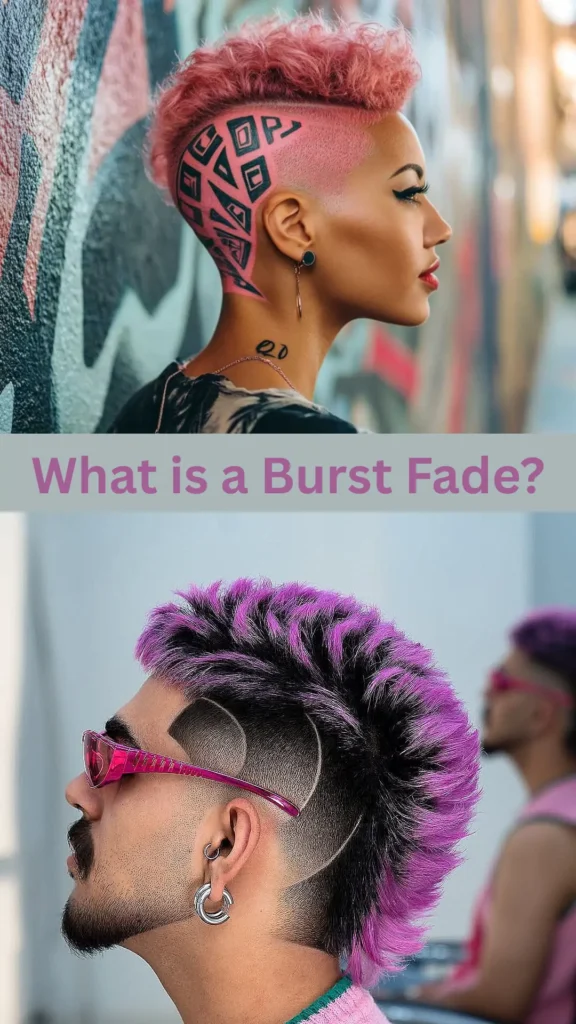
A burst fade is a specialized fade haircut where your hair tapers in a curved, semicircular pattern radiating outward from around your ear. Picture a sunburst—tight at the center (your ear), expanding outward in an arc. That’s exactly how this fade moves across the side of your head.
Unlike traditional fades that follow straight horizontal lines around your entire head, the burst fade curves around the ear in a distinct semicircle and stops at the side of your neck. It doesn’t continue wrapping all the way around the back like a standard low fade or drop fade. This creates a rounded, sculptural shape that follows your skull’s natural contours whilst preserving length and volume at your nape.
Here’s what makes it technically distinct: regular fades travel straight down like a motorway running around your head. The burst fade haircut takes a curved path, literally “bursting” around your ear and ending at the side of your neck. Your barber uses progressively shorter clipper guards (#3 or #2 starting, blending down to #1, #0.5, and sometimes skin) to create that seamless curved gradient.
Why this construction matters: you maintain weight and fullness at the back of your head. If you’ve got a flatter occipital bone (back of skull), the burst fade adds dimension and balance to your overall head shape by not cutting everything down uniformly. I’ve transformed clients who’d been getting standard fades for years—when we switched to a burst fade, they couldn’t believe how much more defined their profile looked. The curved tapering simply interacts with head shape differently than straight-line fades.
The burst fade originated in Black barbershop culture during the early 2000s, initially dubbed the “South of France” cut after being popularised by R&B singer Usher and his barber Curtis Smith. It represented a fusion of clean precision with artistic expression and cultural identity. That cultural significance continues today, making it more than just a technical haircut—it’s a style with heritage and meaning, particularly within Black and urban communities.
Why the Burst Fade Exploded in Popularity Since 2023
Walking into any barbershop in Melbourne, New York, London, or Lagos right now, you’ll hear “burst fade, mate” or “gimme that burst” every fifteen minutes. This haircut has become the default modern men’s cut for a specific reason: it solves multiple grooming problems simultaneously whilst looking genuinely fresh.
The Curved Advantage: Traditional fades create clean lines but can flatten your head’s natural shape. The burst fade’s semicircular arc works with your skull’s curves, adding dimension rather than removing it. For blokes with flatter backs of heads or those wanting to avoid that “too tight” look, the burst provides structure whilst maintaining presence.
Texture Celebration: We’re in an era where natural texture is celebrated rather than fought against. The burst fade curly hair combination has become iconic precisely because it reduces side bulk whilst letting your natural curls, coils, or waves dominate on top. I cut more burst fades on curly-haired clients than any other texture—the pairing is genuinely perfect. For detailed curly-specific techniques, see our burst fade for curly hair guide.
The Mullet Renaissance: The burst fade mullet deserves its own mention. This combination pairs the curved fade with longer back length, creating that “business on the sides, party in the back” vibe that’s somehow become acceptable (even cool) again in 2025. The burst fade cleans up the sides whilst the mullet maintains length—they’re genuinely complementary rather than competing. I’ve cut more burst mullets in the past eighteen months than my entire previous career combined.
Celebrity Influence: When Usher popularised it originally, then The Weeknd brought it back with a high burst fade variation, and Justin Bieber rocked the burst fade V-cut, millions of young blokes took notice. Athletes followed. Instagram barbers showcased it. TikTok tutorials exploded. The visibility created demand, which created more visibility—classic trend acceleration.
Cultural Significance: For many clients, particularly those from Black and urban communities, the burst fade carries cultural weight. It’s not just about looking good; it’s about connection to barbershop tradition, community identity, and cultural expression. This deeper meaning gives the cut staying power beyond mere aesthetics. Check our guide on burst fade for Black men for culturally-informed approaches.
Practical Versatility: You can pair a burst fade with almost anything on top: textured crops, pompadours, natural afros, straight hair styled forward, messy fringes, or even buzz cuts. The curved fade adapts to your top preference rather than dictating it, making it genuinely versatile across different style preferences and professional requirements.
Cultural Origins and Modern Evolution of the Burst Fade
Understanding where the burst fade comes from adds context to why it matters beyond aesthetics. This isn’t just another barbershop invention—it’s a cut with genuine cultural roots and evolution.
The South of France Era: In the early 2000s, Usher’s barber Curtis Smith created what became known as the “South of France” cut—essentially a burst fade with specific styling. The name stuck in certain circles, though “burst fade” eventually became the more universal terminology. This originated in Black barbershops where precision fading was already an art form, and barbers were pushing creative boundaries with curved and sculptural fade techniques.
Urban Barbershop Innovation: Traditional Black barbershops have always been centres of community, conversation, and creative expression. Fade techniques evolved there not just as technical skills but as artistic statements. The burst fade represented another evolution in that lineage—taking the precision of skin fades and adding sculptural, curved elements that enhanced rather than flattened head shape.
Mainstream Adoption: What started in urban American barbershops gradually spread through hip-hop culture, athlete influence, and eventually social media visibility. By the late 2010s, burst fades were crossing cultural and geographic boundaries. In 2025, I cut burst fades on clients from every background, though the technique and cultural significance still trace back to its Black barbershop origins.
2025 Variations: The modern burst fade has diversified significantly. You’ve got low burst fades for conservative looks, high burst fades for maximum drama, burst fades with hard parts or design work, and the explosion of burst fade mullet combinations. Each variation maintains that characteristic curved arc around the ear whilst adapting to different personal styles and professional requirements.
The cultural evolution matters because it explains why burst fades aren’t just trendy—they’re rooted in decades of barbering innovation and community tradition. When you get a burst fade, you’re participating in that ongoing evolution, which gives the cut depth beyond mere appearance.
Burst Fade vs. Drop Fade vs. Other Fades: Technical Differences
The most common question I hear is “what’s the difference between burst and drop fades?” They’re similar enough to confuse at first glance but distinct enough that requesting the wrong one leaves you disappointed. Here’s the technical breakdown.
Burst Fade Characteristics:
- Curves around the ear in a semicircular, “sunburst” pattern
- Stops at the side of the neck (doesn’t continue around the back)
- Creates a rounded, sculptural arc from temple to neck
- Preserves fullness at the nape and back of head
- Works exceptionally with mohawks, mullets, and styles requiring back length
- More dramatic and eye-catching from side profile
- Shows regrowth faster due to curved contrast (needs touch-ups every 2-3 weeks)
Drop Fade Characteristics:
- Curves downward behind the ear following the occipital bone’s natural curve
- Continues wrapping around the back of the head toward the nape
- Creates a smooth, continuous gradient from sides to back
- More subtle overall silhouette
- Works with virtually any top style (very versatile)
- Grows out more evenly than burst fades
- Slightly longer maintenance cycle (can stretch to 3 weeks)
For a detailed visual comparison and styling differences, see our burst fade vs drop fade comparison. The drop fade haircut offers excellent detail on that specific technique if you’re considering both options.
Key Decision Factors:
Choose burst fade if you want:
- Maximum side profile impact and definition
- To pair with mohawks, mullets, or styles requiring back length
- Bold, sculptural shaping that makes a statement
- Enhanced head shape through curved architecture
- A cut with cultural significance and urban edge
Choose drop fade if you want:
- Versatility across multiple top styles
- Smoother, more subtle overall appearance
- Slightly longer time between maintenance cuts
- Professional-friendly whilst still modern
- Natural head contour following without drama
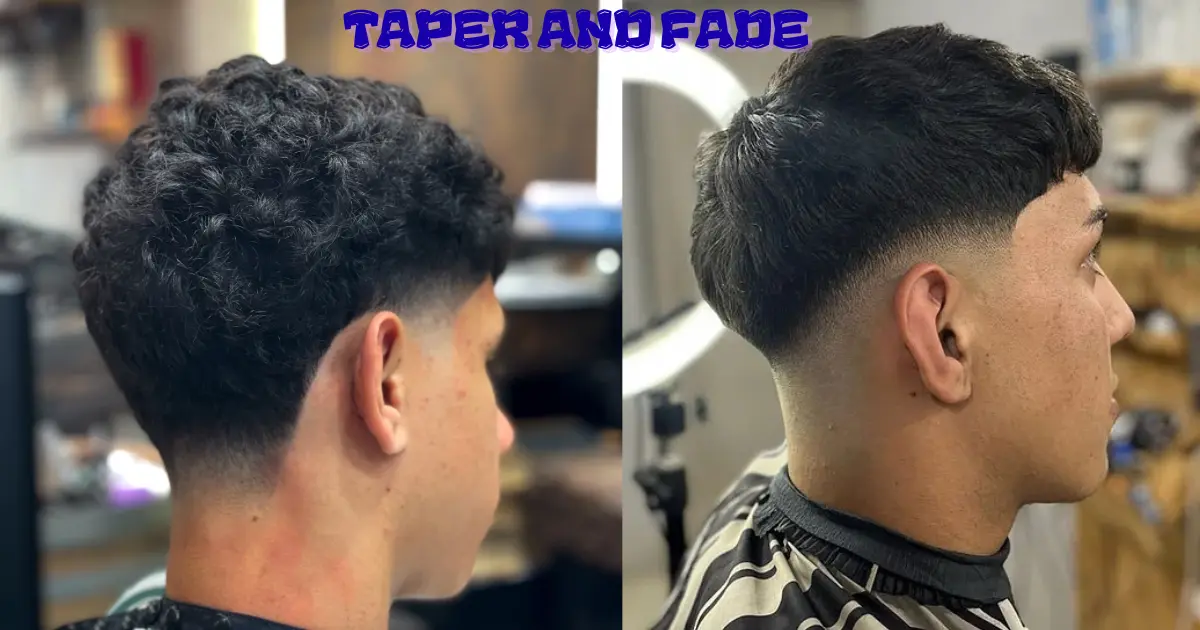
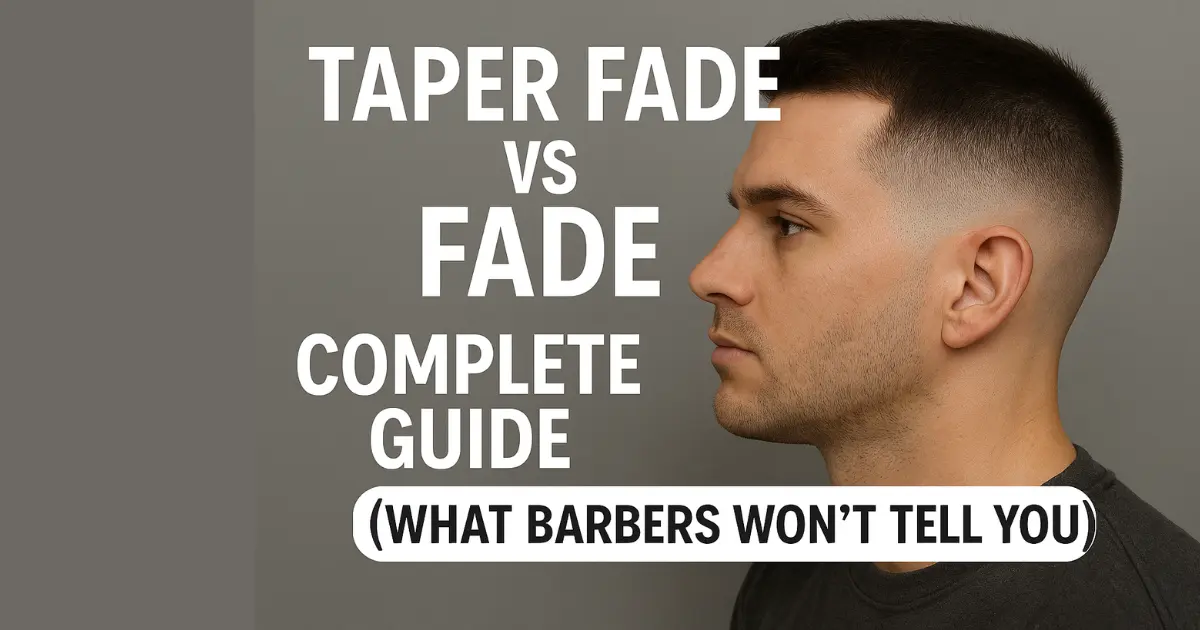
Mid Taper Fade Alternative: If you’re uncertain about committing to the burst fade’s curved drama or maintenance schedule, consider starting with a mid taper fade. It provides modern definition with straight-line blending, requires less frequent maintenance, and works as a stepping stone before going full burst.
High Taper Fade Option: For those wanting maximum contrast without curves, the high taper fade delivers dramatic height whilst maintaining traditional straight-line fading. It pairs well with high-volume styles like pompadours or afros.
The technical distinction matters because miscommunication with your barber leads to disappointment. Knowing exactly which fade architecture you want prevents the “this isn’t what I expected” moment when you leave the chair.
Burst Fade Height Variations: Low, Mid, and High
Not all burst fades are created equal. The height where your curved fade begins dramatically changes the overall look, maintenance requirements, and appropriateness for different settings. Here’s how to choose the right height.
Low Burst Fade:
- Starts just above the ear, curves gently around, ends low on the neck
- Creates subtle definition without aggressive contrast
- Most conservative variation, suitable for traditional workplaces
- Grows out gracefully, can stretch to 3 weeks between cuts
- Works excellently with longer top styles and side parts
- Best for those wanting the burst shape without the boldness
- Ideal first-time burst fade option
The low burst fade delivers that curved architecture whilst maintaining professional appropriateness. I recommend this for clients in corporate environments or those uncertain about committing to more dramatic versions.
Mid Burst Fade:
- Begins at temple level, creates balanced curved contrast
- Sweet spot between subtlety and statement
- Versatile across casual and semi-professional settings
- Requires trims every 2-3 weeks to maintain definition
- Pairs beautifully with textured crops, curls, and medium-length tops
- Most commonly requested variation in my chair
- Goldilocks zone: not too subtle, not too extreme
For most clients considering their first burst fade, I steer them toward the mid height. It provides that characteristic burst shape with enough presence to be worth doing, whilst remaining manageable and appropriate for diverse situations.
High Burst Fade:
- Starts well above the temple, creates maximum curved contrast
- Bold, dramatic, unmistakable from every angle
- Fashion-forward, best for creative fields or confident styling
- Demands touch-ups every 10-14 days (grows out quickly)
- Pairs perfectly with mohawks, high-volume afros, pompadours
- Makes strong visual impact, not for conservative environments
- Requires confidence and commitment to maintenance
The high burst fade makes a statement. It’s the choice for clients who want maximum definition and don’t mind frequent barber visits. Athletes, performers, content creators, and those in creative industries gravitate toward this height.
Choosing Your Height:
Start with low burst if: You work in traditional corporate settings, want the burst shape with minimum drama, prefer longer maintenance cycles, or are testing burst fades for the first time.
Choose mid burst if: You want balanced definition that works across multiple settings, can commit to 2-3 week maintenance, prefer that sweet spot of modern without extreme.
Go high burst if: You work in creative fields, want maximum visual impact, don’t mind weekly or bi-weekly barber visits, pair it with high-volume top styles, and have the confidence to carry bold cuts.
Height flexibility means you can customize the burst fade to your specific life circumstances. Communicate clearly with your barber about which height suits your lifestyle, workplace, and maintenance commitment.
Popular Burst Fade Styles That Actually Work in 2025
The burst fade serves as your foundation, not a complete hairstyle. What you do on top determines whether you look edgy, professional, casual, or bold. Here are the combinations I cut most frequently, with honest styling advice for each.
Burst Fade Mullet
The undisputed king of 2025 burst fade variations. This pairs the curved fade with longer hair at the back, creating that perfect modern mullet silhouette.
Best for: Confident stylists aged 18-35, those in creative fields, anyone wanting to make a fashion statement.
Hair type: Works with all textures; straight hair shows the length dramatically, whilst curly hair adds volume and texture.
Styling: Keep the back moisturised to prevent dryness, use light styling cream to define without weight, let the natural flow dominate. The burst fade does the heavy lifting—your back length just needs to be healthy and shaped.
Maintenance: The fade requires touch-ups every 2-3 weeks; the back length needs trimming every 6-8 weeks to prevent ragged ends.
Burst Fade Mohawk
Sharp contrast with a strip of longer hair running from forehead to nape, burst fades curving around both sides.
Best for: Bold personalities, those wanting maximum edge, anyone comfortable with high-maintenance styling.
Hair type: Thick, coarse, or curly hair works best (creates volume for the mohawk strip); fine hair struggles to achieve height.
Styling: Apply strong-hold gel or pomade to damp hair, blow-dry the center strip upward with fingers, let it set. Alternatively, let curly hair naturally create the mohawk volume.
Maintenance: Frequent trims every 2 weeks to keep the burst definition sharp and the mohawk strip shaped correctly.
Burst Fade with Curly Top
Natural curls dominate on top whilst the curved fade manages side bulk. This is probably my most-requested combination because it genuinely transforms curly head shapes.
Best for: Anyone with naturally curly, coily, or kinky hair (2C to 4C curl patterns); those tired of fighting their natural texture.
Hair type: Specifically designed for curly textures; the burst fade is what makes this work by reducing the “triangle head” effect.
Styling: Apply curl cream to soaking wet hair, scrunch upward, diffuse on low heat or air dry. The fade does the shape work—your curls become the feature rather than the problem you’re managing.
Maintenance: Fade needs touching up every 2-3 weeks; top curls need regular moisturising and occasional shape trimming every 6-8 weeks.
Burst Fade with Textured Crop
Choppy, disconnected texture on top (2-4 inches), tight burst fade on sides. Modern, youthful, requires minimal daily styling.
Best for: Younger clients (late teens to 30s), those wanting trendy looks, men with straight to wavy hair.
Hair type: Straight and wavy hair executes this best; curly hair needs different texturizing approaches.
Styling: Apply sea salt spray to damp hair, blow-dry forward whilst scrunching with fingers, finish with texture powder for hold and separation. Five minutes maximum.
Maintenance: Fade touch-ups every 2-3 weeks, top texture needs refreshing every 4-6 weeks to maintain that choppy disconnection.
Burst Fade with Beard
Any of the above top styles paired with facial hair, with the burst fade blending seamlessly into your beard line.
Best for: Anyone with facial hair, especially those with patchy beard growth (the fade draws eyes upward and creates continuous grooming).
Hair type: All textures work; this is more about the overall aesthetic continuity from hair to beard.
Styling: Ask your barber to line up both the fade and beard edge simultaneously for perfect symmetry. Maintain beard shape between cuts with trimming and beard oil.
Maintenance: Both fade and beard need regular attention; budget for every 2-3 weeks to keep everything sharp.
High Burst Fade with Afro
Tight, curved fade creating maximum contrast with full, natural afro texture on top.
Best for: Those with naturally coily hair (3C to 4C patterns), anyone wanting to showcase their natural texture with clean definition.
Hair type: Specifically for coily, afro-textured hair; the burst fade shapes whilst the afro provides volume and presence.
Styling: Moisturise regularly, pick out for volume, use afro comb to shape, light oils for shine. The fade provides structure so your afro can be full and free.
Maintenance: Fade needs touching up every 2 weeks (high fades grow out fast); afro needs shaping every 4-6 weeks and constant moisturising.
Who Should Get a Burst Fade? Face Shapes and Hair Types
The burst fade is versatile but not universal. Certain face shapes and hair textures benefit more than others. Here’s who looks best with this cut and who should consider alternatives.
Face Shapes That Excel with Burst Fades:
Round faces: The curved fade adds vertical structure at the sides, creating the illusion of length and definition. If you’ve got fuller cheeks, a mid-to-high burst fade helps elongate your face shape. The upward curve draws eyes vertically rather than emphasizing width.
Oval faces: You’re the golden standard—burst fades work at any height because your proportions are already balanced. Choose based on style preference and maintenance commitment rather than face shape concerns.
Square faces: The burst fade’s curves soften angular jawlines beautifully. A mid-to-low burst works best, as it harmonizes your strong features without adding more angles. The rounded shape creates balance against your natural squareness.
Diamond faces: With wider cheekbones and narrower forehead/chin, the burst fade balances your proportions excellently. The curved shape at the sides complements your facial geometry without overwhelming it.
Heart-shaped faces: The burst fade works well, though avoid going too high—it can emphasize a wider forehead. Stick with low to mid burst fades that maintain balance.
Oblong/rectangular faces: Be cautious. High burst fades with volume on top can elongate further. If you’ve got a long face, opt for low burst fades with moderate top length to avoid stretching your proportions.
Hair Types and Textures:
Curly and coily hair (3A-4C): Absolute perfection. The burst fade was practically designed for textured hair. It reduces side bulk, prevents triangle head, and lets your natural curl pattern shine. This is where burst fades truly excel.
Thick and coarse hair: Excellent match. The contrast between your dense top and faded sides creates serious dimension. The burst’s curved architecture works with thick hair’s natural volume rather than fighting it.
Wavy hair (2A-2C): Great middle ground. Your texture adds movement on top whilst the fade controls bulk on sides. Natural wave patterns complement the burst’s curves beautifully.
Straight hair: Still works, though you’ll see regrowth faster and the contrast isn’t as dramatic. Consider a low to mid burst fade with textured top styling to add dimension that straight hair sometimes lacks.
Thin or fine hair: The burst fade can work but requires careful execution. The curved contrast might emphasize thinness if done too aggressively. Stick with subtle low burst fades and keep some length throughout to maintain fullness. Alternatively, consider a low taper fade for gentler tapering that suits finer textures better.
Lifestyle and Professional Considerations:
Creative fields/casual workplaces: Any burst fade height works. Go as dramatic as you’re comfortable with.
Corporate/traditional environments: Low burst fades pass most dress codes whilst maintaining modern edge. Mid burst might work depending on your industry; high burst is generally too bold.
Active/athletic lifestyles: Burst fades pair excellently with shorter tops for easy wash-and-go styling. The shaped sides stay tidy through sweat and activity.
Budget-conscious: Factor in £60-150 monthly for maintenance (every 2-3 weeks at £25-50 per cut). If that’s prohibitive, consider lower-maintenance alternatives.
Time-poor schedules: If you can’t commit to barber visits every 2-3 weeks, the burst fade will frustrate you as it grows out and loses definition. Be honest about your maintenance capacity.
How Barbers Create Burst Fades: The Technical Process
Understanding what’s happening in that chair helps you communicate better and appreciate the skill involved. Here’s the step-by-step technical process your barber follows.
Step 1: Consultation and Planning
Good barbers start by asking about your lifestyle, styling habits, and desired fade height. They assess your head shape, hair texture, and face structure. This consultation prevents miscommunication and ensures the burst fade suits your specific features. If your barber skips this conversation and just starts cutting, that’s a red flag.
Step 2: Establishing the Curved Guideline
Your barber creates the semicircular outline that defines the burst. This typically starts behind/around your ear, curves upward following the parietal ridge (widest part of your skull), and arcs back down toward your neck. This curved guideline is everything—it’s what makes a burst fade a burst instead of a regular fade. Precision here determines the overall shape.
Step 3: Choosing Fade Level
The burst fade can be low, mid, or high depending on desired contrast. Your barber determines where the curved fade begins on your temple area, establishing the fade’s starting point. Low starts just above the ear, mid at temple level, high well above the temple toward the crown.
Step 4: Guard Progression and Blending
Working from bottom to top with clippers, barbers use progressively longer guards to create seamless transitions. Typically: #0.5 or skin at the lowest point, blending to #1, then #1.5, #2, and #3 as they move upward along that curved arc. The clipper lever (that small metal lever on the side) allows micro-adjustments between full guard lengths for even smoother blending.
This blending process is what separates good burst fades from great ones. It requires steady hands, understanding of hair growth patterns, and practiced technique to create that smooth gradient along a curve rather than a straight line.
Step 5: Refining the Curved Edge
The curved burst line gets razor-sharp attention. Your barber uses detail trimmers or straight razors to define that semicircular arc precisely. This edge work makes the burst shape unmistakable and clean. Sloppy edge work ruins an otherwise good fade.
Step 6: Hairline and Neckline Cleanup
Sideburns, forehead hairline, and neckline get lined up. The neckline often receives special attention since burst fades preserve length there—your barber shapes it appropriately rather than fading it down like traditional fades would.
Step 7: Top Styling
Whatever’s happening on top gets styled last. Curls get shaped, texture gets added, length gets trimmed to desired specifications. The top and fade should work together cohesively, not compete for attention.
Tools Professional Barbers Use:
- Fade clippers with adjustable levers (Wahl, Andis, Oster brands typically)
- Multiple clipper guards (#0.5 through #3 minimum)
- Detail trimmers for precise edge work
- Straight razors or foil shavers for ultra-clean lines
- Styling products appropriate to your hair type and desired finish
Why DIY Burst Fades Almost Never Work:
The curved blending requires seeing the side of your head whilst maintaining steady clipper control. Home mirrors don’t provide the angles needed, and most home clippers lack the power for smooth fading. The curved arc is significantly harder to execute than straight-line fades. Unless you’re a trained barber, attempting burst fades at home results in choppy lines, uneven patches, and wasted time. I’ve fixed dozens of DIY burst fade disasters—they always cost more time and money to repair than a proper cut would have cost initially.
How to Ask Your Barber for a Burst Fade (And Get What You Want)
Communication prevents disappointment. Here’s exactly how to request a burst fade clearly and ensure you leave happy.
What to Say:
“I want a burst fade that curves around my ear in a semicircle. Start it at [low/mid/high – point to your temple/ear] and blend it down smoothly. Keep the back [specify length], and on top I want [describe your desired style: textured crop/curls left natural/mohawk/slicked back/etc.].”
What to Bring:
Reference photos solve 90% of miscommunication. Screenshot 2-4 images of burst fades you like, specifically showing:
- Side profile (where the burst curve is most visible)
- Front view (overall head shape)
- Back view (how the nape is handled)
- Top styling (what’s happening above the fade)
Show your barber these and say “something like this.” Visual references communicate more accurately than words.
Specific Details to Mention:
Fade height: Point to your temple and say “start the burst around here” for mid, “lower, just above my ear” for low, or “higher up” for high fade.
Skin fade or shadow: “Take it down to skin” means completely bald at the lowest point. “Leave a shadow” means keeping subtle stubble rather than going to bare skin.
Back length: “Keep length at the nape” if you want mullet or longer back styling. “Fade the back too” if you want it shorter.
Top styling: Be specific. “Textured and choppy” vs “slicked back smooth” vs “leave my curls natural” tell your barber exactly what you’re after.
Design work: If you want hard parts, line designs, or patterns incorporated, mention this upfront so your barber plans accordingly.
Questions Your Barber Might Ask:
- “How much contrast do you want?” (Translation: How dramatic should the fade be? Subtle or bold?)
- “What do you do for work?” (They’re gauging how conservative or bold they can go)
- “How often can you come back for touch-ups?” (Helps them judge fade aggressiveness)
- “Have you had a burst fade before?” (First-timers often start more conservative)
Common Communication Mistakes:
“Just fade it” is useless. There are dozens of fade variations—be specific about the burst pattern.
“Make it look good” puts unfair pressure on your barber without guidance. Give them direction.
“Like everyone else has” assumes your barber knows what’s in your head. They don’t. Reference photos fix this.
“I trust you” sounds nice but often leads to mismatched expectations. Trust combined with clear communication works better than trust alone.
Mid-Cut Check-ins:
Don’t wait until the cut’s finished to voice concerns. If you notice your barber is fading higher than you wanted, speak up immediately: “Can we start that burst a bit lower?” Good barbers appreciate mid-cut feedback and would rather adjust than have unhappy clients.
Burst Fade Maintenance: The Honest Truth About Upkeep
Getting the burst fade is half the commitment. Maintaining it determines whether you look sharp or sloppy. Here’s the realistic maintenance schedule and what it actually costs.
Professional Touch-Up Schedule:
Every 2-3 weeks is ideal for most burst fades. Here’s why: hair grows approximately 1.25cm (half an inch) per month. That curved burst line shows regrowth faster than straight-line fades because the sculpted arc loses definition quickly. By week two, you’ll notice softening. By week three, it’s clearly grown out. By week four, the burst shape is gone.
High burst fades: Need touch-ups every 10-14 days. The dramatic contrast means regrowth is more visible, and the shape disappears faster.
Low burst fades: Can stretch to 3 weeks, sometimes 4 if you’re comfortable with less definition.
Mid burst fades: The sweet spot at 2-3 weeks depending on your hair growth rate and how sharp you want to look constantly.
Cost Reality:
At £25-50 per cut (US$30-60, AU$40-75 depending on location and barber), maintaining a burst fade runs you:
- Every 2 weeks: £50-100/month (US$60-120, AU$80-150)
- Every 3 weeks: £35-70/month (US$40-80, AU$55-100)
Over a year, that’s £420-1,200 (US$480-1,440, AU$660-1,800) just for haircuts. Factor this into your decision. Some barbershops offer membership programmes that reduce per-visit costs if you’re committed to regular maintenance.
Between-Visit Home Maintenance:
You can extend sharpness by 3-5 days with careful home touch-ups. Here’s what works:
Neckline cleanup: Use a detail trimmer or regular razor (Gillette Mach 3 works fine) to remove stray hairs below your burst fade line every 5-7 days. Don’t cut into the actual fade—just tidy below it.
Hairline edges: Clean up your forehead hairline and sideburn edges with trimmers to maintain definition.
Top styling: Keep whatever’s on top healthy. Textured tops need occasional product refreshing. Curls need constant moisturising. Slicked styles need regular product application.
What NOT to do: Don’t attempt to re-create the burst curve at home. Don’t use clippers on the actual fade unless you’re trained. Don’t “just touch up a little” with kitchen scissors. These attempts universally end badly, and I charge more to fix DIY disasters than regular cuts cost.
Daily Care Routine:
Washing: Every other day for most hair types using sulfate-free shampoo. Daily if you exercise heavily or have very oily scalp. Overwashing strips natural oils and makes hair difficult to style.
Conditioning: Use conditioner appropriate to your texture. Curly hair needs heavier, moisturising formulas. Straight hair needs lighter conditioners to avoid greasiness.
Moisturising: Particularly important for textured and curly hair. Use leave-in conditioner or light oils to keep hair healthy and prevent dryness, especially on the faded areas that can get irritated.
Styling products: Use what works for your top style. Texture powder for messy crops. Curl cream for natural curls. Pomade for slicked styles. Matte clay for natural-looking texture.
Product Recommendations by Top Style:
For textured/messy tops: Texture powder (adds grip and volume), matte clay (natural finish with hold)
For defined curls: Curl-defining cream, leave-in conditioner, light oils for shine
For slicked styles: Medium to strong-hold pomade, styling cream for shine
For natural/minimal styling: Light matte paste, sea salt spray for texture
For faded skin areas: Beard oil or light moisturiser prevents razor bumps, irritation, and ashy appearance on darker skin tones
Seasonal Considerations:
Summer: You might want to go shorter and commit to more frequent cuts. Heat and sweat are easier to manage with tighter fades. You’ll likely wash more frequently, so use gentle products.
Winter: You can potentially stretch slightly longer between cuts if you’re wearing hats that cover regrowth. Keep hair and scalp well-moisturised as indoor heating dries everything out.
The First Week Reality:
Your burst fade looks absolutely peak fresh days 3-7 after the cut. Day 1-2 can look almost too sharp. After week one, you’re still good but that razor definition starts softening. Plan important events (photos, interviews, dates, weddings) for that days 3-10 window when your fade looks perfect.
Growing It Out Strategy:
If you decide burst fades aren’t for you, growing them out requires strategy. The curved shape will look odd as it grows, creating a “half-grown fade” phase that’s awkward. Best approach: get one or two transitional cuts where your barber gradually raises the burst line and reduces contrast, eventually moving you to a regular taper or longer all-over style. This transition takes 6-8 weeks but prevents that messy in-between phase.
Common Burst Fade Mistakes to Avoid
I’ve fixed countless bad burst fades and counselled disappointed clients. Here are the mistakes that happen repeatedly and how to avoid them.
Mistake #1: Going Too High on Your First Burst Fade
First-timers often request aggressive high burst fades because they look dramatic in photos. Two weeks later, they’re frustrated by rapid regrowth and realise the maintenance commitment. The fix: Start with a low or mid burst fade. If you like it and can handle the upkeep, go higher next time. You can always increase drama; you can’t add hair back.
Mistake #2: Choosing Burst When Drop Would Work Better
Some clients request burst fades when their desired top style actually pairs better with drop fades. The burst’s semicircular shape works specifically with mohawks, mullets, and styles needing back length. If you’re doing a regular textured crop or pompadour without back emphasis, a drop fade might suit better. The fix: Understand which fade architecture complements your intended top style. When in doubt, ask your barber which fade type they’d recommend for your specific look.
Mistake #3: Skipping Regular Maintenance
Clients push cuts to 5-6 weeks, then wonder why their once-sharp burst looks blurry and shapeless. Hair grows. That carved curve disappears. The fix: Budget time and money for 2-3 week touch-ups before getting the burst fade initially. If you can’t commit to that schedule, choose a lower-maintenance haircut. Burst fades aren’t set-and-forget styles.
Mistake #4: Not Communicating Clearly with Your Barber
“Just do what you think” or “make it look good” gives your barber no direction. They might create something beautiful that’s completely wrong for your lifestyle. The fix: Bring reference photos. Specify fade height, top style, skin fade vs shadow, and any design work you want. Clear communication prevents disappointment.
Mistake #5: Attempting DIY Burst Fades at Home
Unless you’re trained, don’t try recreating that curved blend with home clippers. The angles are impossible to see properly, the technique requires practice, and home clippers lack the power for smooth fading. The fix: Leave burst fades to professionals. Between visits, only do simple neckline cleanup with trimmers—nothing more ambitious.
Mistake #6: Ignoring Hair Texture Realities
Trying to force a burst fade that doesn’t work with your hair type leads to frustration. Super fine hair won’t create the dramatic contrast thick hair achieves. Very short curls might not provide enough top styling options. The fix: Be realistic about your texture. If you’ve got fine hair, consider a subtle low burst. If your curls are very tight and short, ensure you’re keeping enough length on top to work with.
Mistake #7: Pairing It with Incompatible Top Styles
Burst fades pair naturally with mohawks, mullets, textured crops, and natural curls. They can look odd with some traditional styles. A slicked-back pompadour with a burst fade? Might feel disjointed. The fix: Choose top styles that complement the burst’s curved, modern aesthetic. When in doubt, look at reference photos to see which combinations look cohesive.
Mistake #8: Forgetting About Workplace Appropriateness
Getting a high burst fade mullet when you work in conservative finance creates problems. The fix: Consider your professional environment before choosing fade height and top style. Low burst fades work in most settings. High burst fades with dramatic top styles are better for creative industries or casual workplaces.
Burst Fade Cost and Choosing the Right Barber
Pricing varies significantly by location, barber experience, and shop positioning. Here’s what to expect and how to find someone who won’t butcher your head.
Average Price Ranges (2025):
Budget barbershops/chains: £20-30 ($25-40 USD, $35-50 AUD) Mid-tier local barbers: £30-45 ($40-55 USD, $50-70 AUD) Premium barbershops: £45-65 ($55-80 USD, $70-100 AUD) Celebrity/high-end barbers: £65+ ($80+ USD, $100+ AUD)
Prices reflect location (central London costs more than smaller cities), barber skill (master barbers with proven burst fade expertise charge premiums), and shop amenities (complimentary drinks, hot towels, relaxing atmosphere).
Monthly Commitment:
With touch-ups every 2-3 weeks:
- Budget route: £40-60/month ($50-80 USD, $70-100 AUD)
- Mid-tier: £60-90/month ($80-110 USD, $100-140 AUD)
- Premium: £90-130/month ($110-160 USD, $140-200 AUD)
This ongoing cost is the reality of maintaining burst fades. Factor it into your decision before committing.
How to Choose the Right Barber:
1. Check Instagram/TikTok portfolios: Every decent barber showcases their work. Look specifically for burst fades in their posts. Check for:
- Consistent curved definition across multiple clients
- Clean blending without choppy lines
- Variety showing they can execute different burst heights
- Before/after comparisons demonstrating transformation
2. Read reviews with context: One bad review among fifty great ones isn’t alarming. Patterns matter. Watch for:
- Repeated complaints about wait times or scheduling
- Multiple mentions of rushed cuts
- Concerns about hygiene or cleanliness
- Feedback about barbers not listening to client requests
3. Ask mates with good burst fades: If someone’s curved fade looks sharp, ask where they go. Personal recommendations beat online searches because you’re seeing real results on actual heads.
4. Visit without committing: Drop by the shop, observe the environment. Are cuts being rushed? Do barbers consult with clients before starting? Is the space clean and professional? Do they have proper fade clippers and tools?
5. Start with a simpler cut first: Your first appointment isn’t the time to request elaborate designs. Get a basic burst fade to test their blending skills and communication style.
Red Flags to Avoid:
- No consultation before starting the cut
- Using only one or two clipper guards (proper fading requires multiple guards)
- Never stepping back to check overall balance and symmetry
- Rushing through the cut in under 20 minutes
- Unwilling to make adjustments when you ask
Green Flags to Seek:
- Asks questions about your lifestyle, work environment, styling habits
- Takes 30-50 minutes on a burst fade (proper time for quality curved blending)
- Uses multiple clipper guards and frequently adjusts the lever for micro-blending
- Checks your fade from multiple angles throughout the process
- Happy to explain what they’re doing and why
Finding the right barber for burst fades specifically matters because the curved blending requires more skill than straight-line fades. Not every barber excels at burst fades even if they’re good at regular fades. Look for proven burst fade expertise rather than just general fade competence.
Related Fade Styles Worth Considering
The burst fade isn’t your only curved or modern fade option. If you’re exploring different types, these related styles offer distinct advantages depending on your preferences.
Drop Fade: The most commonly confused alternative. Instead of a semicircular burst around the ear, the drop fade curves downward behind your ear following your skull’s natural shape, then continues wrapping around the back toward your nape. It creates smoother overall silhouette and grows out more evenly. Excellent for those wanting modern definition without the burst’s dramatic arc.
Mid Taper Fade: The versatile Swiss Army knife of fades. Straight-line blending starting at temple level, works with virtually any top style, requires slightly less maintenance than burst fades. If you’re uncertain about committing to curved fades or intensive upkeep, the mid taper provides modern polish with more forgiveness.
Low Taper Fade: Conservative, professional-friendly, maintains more hair on sides. Perfect for traditional workplaces or those preferring subtle grooming. Grows out gracefully and can stretch 3-4 weeks between cuts.
High Taper Fade: Maximum contrast with straight-line architecture. If you’re considering high burst fades but uncertain about curves, the high taper delivers similar drama with traditional fade patterns. Works excellently with pompadours, afros, and high-volume tops.
Temple Fade (Temp Fade): Focuses tapering only around the temples and front hairline, leaving more length at back and sides. Less commitment than full burst fades, good for those wanting minimal fade work whilst maintaining longer overall hair.
Buzz Cut Fade: All the benefits of a fade with zero daily styling time. Keep everything short whilst curved or straight fading adds shape. The burst fade version adds that semicircular arc to an otherwise utilitarian cut.
Each variation serves different needs, maintenance capacities, and style preferences. The burst fade remains the boldest curved option with the most dramatic side profile impact—but understanding alternatives helps you make informed decisions about which fade architecture truly suits your life.
Conclusion: Why the Burst Fade Remains Unbeatable in 2025
After 15 years cutting burst fades on hundreds of clients across diverse backgrounds, I can confirm this haircut’s dominance isn’t accidental. It’s earned through genuine versatility, cultural significance, and the simple fact that it makes most heads look intentionally shaped rather than just “haircut.”
The burst fade solves specific problems other fades don’t. It preserves back length for mullets and mohawks. It reduces side bulk for curly textures whilst celebrating natural curl patterns. It creates sculptural dimension that enhances rather than flattens head shape. It carries cultural weight and barbershop heritage that gives it depth beyond aesthetics.
Yes, it demands commitment—2-3 week maintenance isn’t negotiable if you want it sharp. Yes, it costs more over time than lower-maintenance cuts. But for the right person with the right texture and lifestyle, few haircuts deliver this combination of modern edge, head-shaping architecture, and genuine versatility across different top styles.
Whether you’re pairing it with a trendy burst fade mullet, letting your natural curls dominate, or keeping things clean with a textured crop, that curved semicircular fade provides the foundation that makes everything else look intentional. It’s bold without being costume-y, modern without feeling like it’ll be dated next year, and when it’s fresh, genuinely few cuts look sharper from every angle.
Book your appointment, bring clear reference photos, communicate your fade height and top style preferences, and commit to the maintenance schedule. That’s the formula for maintaining this cultural, architectural, confidence-boosting haircut that’s dominated barbershops throughout 2025 and shows no signs of fading.
Frequently Asked Questions About Burst Fade
What exactly is a burst fade haircut?
A burst fade is a specialized fade haircut featuring a curved, semicircular tapering pattern that radiates around your ear like a sunburst. Unlike regular fades that follow straight lines around your head, the burst fade curves from your temple around your ear and stops at the side of your neck. This preserves length and volume at the back of your head whilst creating sharp, sculptural definition on the sides.
How is a burst fade different from a drop fade?
A burst fade curves around the ear in a semicircle and stops at the side of your neck, creating a dramatic rounded arc. A drop fade curves downward behind the ear following your skull’s natural shape and continues wrapping around the back toward the nape. Burst fades are more sculptural and dramatic with stronger side profile impact, whilst drop fades create smoother overall silhouettes and grow out more evenly.
Is a burst fade the same thing as a mullet?
No. A burst fade is a fade cutting technique—the method of tapering hair in a curved semicircular pattern. A mullet is a hairstyle with shorter front/sides and longer back. However, they combine beautifully. The burst fade mullet pairs the curved fade with longer back length, creating one of 2025’s most popular style combinations.
How often do you need to get a burst fade trimmed?
To keep your burst fade looking sharp, professional touch-ups every 2-3 weeks are essential. High burst fades need maintenance every 10-14 days due to dramatic contrast showing regrowth quickly. Low burst fades can sometimes stretch to 3 weeks. The curved shape loses definition faster than straight-line fades, making regular maintenance non-negotiable for maintaining that clean burst arc.
Does a burst fade work for all hair types?
Burst fades work best on curly, coily, thick, and coarse hair textures where the contrast creates dramatic dimension and the fade helps manage bulk. Wavy hair also pairs excellently. Straight and fine hair can still work but show regrowth faster and may not achieve the same dramatic effect. The burst fade truly excels on textured hair types where it transforms head shape by reducing side volume.
What face shapes look best with burst fades?
Burst fades suit round, oval, and square faces especially well. The curved shape adds vertical structure to round faces, creating length and definition. Oval faces work with any burst height due to balanced proportions. Square faces benefit from the curves softening angular jawlines. Diamond-shaped faces find the burst balances wider cheekbones nicely.
Can you maintain a burst fade at home between barber visits?
You can perform minor touch-ups like cleaning up your neckline and edges with trimmers or razors between professional visits. However, the actual curved burst fade blending requires professional barber skills, proper angles, and quality tools. Attempting to recreate the semicircular fade at home almost always results in choppy lines, uneven patches, and ruined definition that costs more to fix than proper cuts would have cost.
Is a burst fade appropriate for professional office environments?
A low burst fade can work in professional settings as it provides subtle curved definition whilst passing most dress codes. It remains modern whilst staying conservative enough for traditional workplaces. High burst fades are more fashion-forward and may be too bold for conservative corporate environments. Mid burst fades work in semi-professional or creative fields but might raise eyebrows in traditional finance or law offices.
What's the difference between a burst fade and a regular taper?
A taper gradually shortens hair down to the hairline without exposing skin, creating gentle transitions. A burst fade tapers down to skin or very short stubble in a dramatic curved semicircular pattern around the ear. Burst fades create bold contrast and sculptural shape. Tapers are subtler and more conservative. Burst fades make statements; tapers provide polish.
How much does a burst fade cost?
Expect £20-65 ($25-80 USD, $35-100 AUD) per cut depending on location, barber experience, and shop positioning. Since burst fades require touch-ups every 2-3 weeks to stay sharp, budget £40-130 monthly (£60-150 USD, $70-200 AUD annually). Some barbershops offer membership programmes reducing per-visit costs. The ongoing financial commitment is significant—factor this into your decision before getting a burst fade.
Can women get burst fades?
Absolutely. Burst fades work beautifully for women, particularly paired with undercuts, short pixie styles, or bold cuts. Many women opt for burst fades with design work, shaved patterns, or color highlights for added visual interest. The style is especially popular among female athletes, performers, and fashion-forward women who want sharp, modern edge with their short hairstyles.
How long does a burst fade stay looking fresh?
Your burst fade looks absolutely sharpest for approximately 3-10 days after cutting. During this window, the curved definition is razor-sharp and the contrast is maximum. After 10-14 days, you’ll notice visible regrowth starting to blur those clean curved lines. By week 2-3, regrowth becomes obvious and the burst shape loses definition. By week 4, the curved arc is largely gone.