
Jensen Huang Net Worth: Complete Year-by-Year Breakdown (2019-2025)

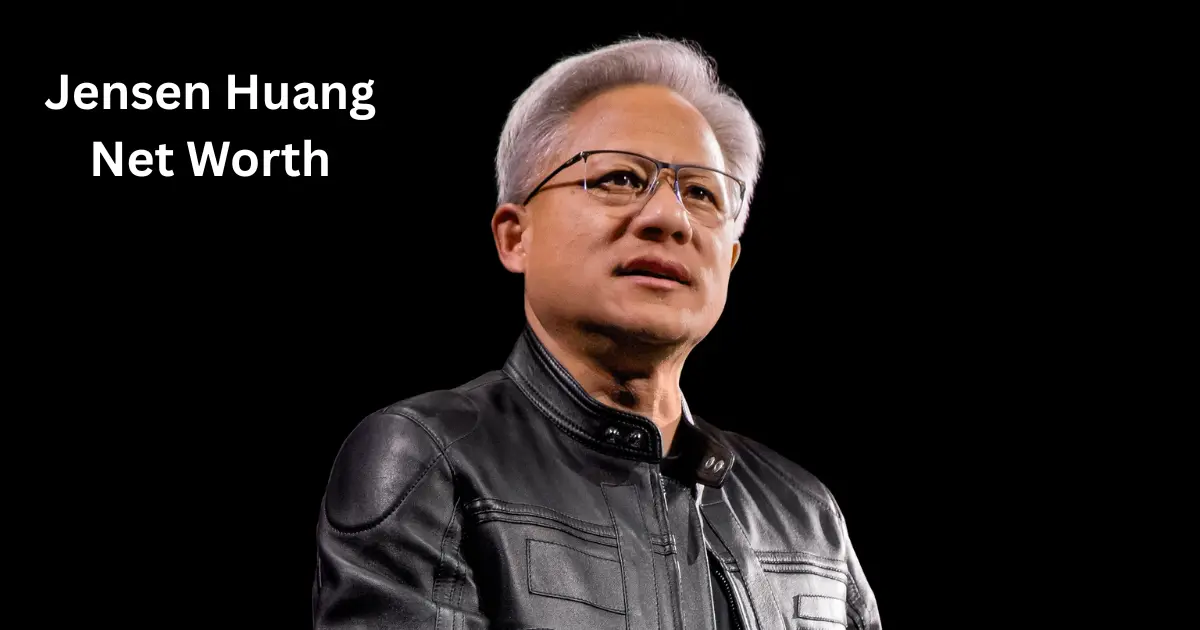
Jensen Huang, the co-founder and CEO of NVIDIA Corporation, has experienced one of the most dramatic wealth surges in modern business history. His net worth has grown from approximately $3 billion in 2019 to an estimated $179 billion by late 2025—a staggering 5,866% increase in just six years.
This wealth explosion was not the result of multiple successful companies, aggressive diversification, or financial engineering. It came from a single source: NVIDIA stock appreciation driven by the artificial intelligence revolution. As AI transformed from niche technology to global priority, NVIDIA’s graphics processing units (GPUs) became the essential infrastructure, and Jensen Huang’s 3.6% ownership stake translated into one of the fastest wealth accumulations in history.
Anchored focus on net worth metrics and financial specifics.
Good start. I need to stay focused on net worth specifically – the numbers, the growth, the reasons, the context. I should not drift into full biography. Let me continue with the structure.
Understanding Jensen Huang’s net worth requires understanding three things: the precise timeline of wealth growth, the mechanics of how founder equity creates billionaire fortunes, and why NVIDIA’s stock became so extraordinarily valuable so quickly.
TL;DR: Jensen Huang Net Worth Facts
- Current estimated net worth: $152-179 billion (varies by source and date)
- Owns approximately 3.6% of NVIDIA Corporation
- Wealth grew from ~$3 billion (2019) to ~$179 billion (late 2025)
- One of the top 10 richest people globally as of December 2025
- Wealth directly tied to NVIDIA stock price, creating significant volatility
- Never sold NVIDIA to another company, maintaining founder equity
- Minimal wealth diversification—fortune almost entirely in NVIDIA shares
Jensen Huang Net Worth 2025: Current Estimates
As of December 2025, Jensen Huang’s net worth is estimated between $152 billion and $179 billion, depending on the tracking source and exact date of measurement.
Why the wide range?
The variation exists because billionaire net worth calculations are not static numbers but real-time estimates based on stock market valuations. Jensen Huang’s wealth is almost entirely tied to his NVIDIA stockholdings, meaning every dollar change in NVIDIA’s share price directly affects his net worth.
Current estimates by major trackers:
Bloomberg Billionaires Index (December 2025): Approximately $152 billion, placing him among the top 10 richest people globally. Bloomberg updates this figure daily based on NVIDIA’s closing stock price.
Forbes Real-Time Billionaires (Late 2025): Estimates have ranged from $142 billion to $179 billion depending on the specific date, reflecting NVIDIA’s stock volatility during 2025.
Reuters and Financial Express: Reported figures as high as $179 billion during peak moments in late 2025, though these represent high-water marks rather than sustained valuations.
The December 2025 figure of approximately $152 billion represents a more stable calculation after accounting for normal market fluctuations. However, during strong trading days for NVIDIA stock, Huang’s wealth can increase by $5-10 billion in a single session. Conversely, market corrections can erase similar amounts just as quickly.
Key point: When reading “Jensen Huang net worth” figures, always check the date. A figure from October 2025 showing $176 billion may be accurately reported for that moment but not reflect current value. This volatility is normal for tech founder wealth tied to single company stock.
Jensen Huang Net Worth Year by Year: Complete Breakdown (2019-2025)
The most revealing way to understand Jensen Huang’s wealth is through year-by-year progression, showing exactly when the major jumps occurred and what drove them.
Complete Net Worth Timeline
| Year | Estimated Net Worth (USD) | Year-over-Year Change | Key Driver |
|---|---|---|---|
| 2019 | ~$3 billion | Baseline | NVIDIA profitable but pre-AI boom |
| 2020 | ~$7 billion | +$4B (+133%) | Cryptocurrency mining demand, data center growth |
| 2021 | ~$20 billion | +$13B (+186%) | COVID tech surge, gaming boom, early AI interest |
| 2022 | ~$30 billion | +$10B (+50%) | Continued GPU demand despite crypto crash |
| 2023 | ~$90 billion | +$60B (+200%) | ChatGPT launches, AI becomes mainstream priority |
| 2024 | ~$102-118 billion | +$12-28B (+13-31%) | AI infrastructure buildout accelerates |
| 2025 (Early) | ~$120 billion | +$2-18B | Saudi chip deals, sustained AI investment |
| 2025 (Mid) | ~$142-151 billion | +$22-31B | NVIDIA hits $4 trillion market cap |
| 2025 (Late) | ~$152-179 billion | Variable | Peak AI demand, market volatility |
Note: Early year figures (2019-2022) are retrospective estimates based on NVIDIA stock prices, as major trackers did not closely monitor Huang’s wealth before he entered top billionaire rankings.
Analysis of Growth Phases
Phase 1: Pre-AI Steady Growth (2019-2022) From 2019 to 2022, Huang’s wealth grew from approximately $3 billion to $30 billion—a respectable 10x increase driven by NVIDIA’s dominance in gaming GPUs, professional visualization, and early data center adoption. This represented normal tech founder wealth accumulation for a successful company.
Phase 2: AI Explosion (2023) The year 2023 marked the inflection point. When ChatGPT launched in late 2022 and captured global attention by early 2023, the world suddenly understood that AI was real, immediate, and required massive computing infrastructure. NVIDIA GPUs were the only chips capable of training large language models at scale.
Jensen Huang’s wealth tripled in 2023 alone, growing from $30 billion to $90 billion as NVIDIA stock surged on AI demand projections. This represented the fastest single-year wealth creation for any tech CEO in decades.
Phase 3: Sustained AI Dominance (2024-2025) In 2024 and 2025, Huang’s wealth continued climbing as AI moved from experimental to essential. Every tech company, every government, every research institution needed NVIDIA GPUs. The company’s market capitalization crossed $3 trillion, then $4 trillion, and Jensen Huang’s 3.6% ownership stake grew proportionally.
The growth from $90 billion (2023) to $152-179 billion (late 2025) represented continued AI infrastructure investment globally, with no competitor able to challenge NVIDIA’s GPU dominance during this period.
How much NVIDIA stock does Jensen Huang own?
Jensen Huang’s net worth is almost entirely derived from his NVIDIA stockholdings. Understanding exactly how much he owns and how that translates to wealth is essential.
Current ownership stake:
Jensen Huang owns approximately 3.6% of NVIDIA Corporation as of late 2025. This percentage has remained relatively stable over the years, though the absolute number of shares and their value has changed dramatically.
Why 3.6% matters:
When NVIDIA’s market capitalization is $4 trillion (as it reached in 2025), 3.6% ownership equals approximately $144 billion in stock value. When the market cap drops to $3.8 trillion, that same 3.6% equals about $137 billion. This direct mathematical relationship explains the daily volatility in Huang’s reported net worth.
Share count:
Based on Bloomberg Billionaires Index data and SEC filings, Jensen Huang owns approximately 86-88 million NVIDIA shares (exact figure varies slightly with stock splits and minor transactions). At peak 2025 prices exceeding $140 per share (adjusted for splits), this translated to the $179 billion high-water mark.
How he acquired this stake:
Jensen Huang’s NVIDIA shares come from three sources:
- Founder equity – When Huang co-founded NVIDIA in 1993 with Chris Malachowsky and Curtis Priem, he received founder shares representing his ownership stake in the new company. This formed the foundation of his holdings.
- Executive compensation – As CEO for over 30 years, Huang has received stock grants and options as part of his executive compensation package. However, his CEO compensation is relatively modest compared to the value of his founder shares.
- Stock held rather than sold – Critically, Huang has never sold NVIDIA to a larger company and has not aggressively sold down his personal stake. Founders who sell their companies early or who sell significant portions of stock for diversification end up with far less wealth. Huang held through every market cycle.
Comparison to other tech founders:
A 3.6% stake may sound small, but it is substantial for a CEO of a publicly traded company of NVIDIA’s size. For comparison:
- Satya Nadella owns less than 0.05% of Microsoft
- Tim Cook owns less than 0.02% of Apple
- Sundar Pichai owns minimal Google/Alphabet stock
The difference is that Nadella, Cook, and Pichai are hired CEOs, not founders. Founder CEOs like Huang, Mark Zuckerberg (Meta), and Jeff Bezos (former Amazon CEO) typically own much larger percentages because they built the companies from inception.
What Is Jensen Huang's Net Worth Compared to Other Tech CEOs?
Jensen Huang’s wealth surge has elevated him into the very top tier of global billionaires, surpassing most other tech leaders. Context matters.
Ranking among tech CEOs and founders (December 2025 estimates):
- Elon Musk – ~$600+ billion (Tesla, SpaceX, other ventures)
- Jeff Bezos – ~$240 billion (Amazon founder)
- Mark Zuckerberg – ~$220 billion (Meta/Facebook founder)
- Jensen Huang – ~$152-179 billion (NVIDIA founder/CEO)
- Larry Page – ~$150 billion (Google co-founder)
- Sergey Brin – ~$145 billion (Google co-founder)
- Bill Gates – ~$140 billion (Microsoft co-founder, largely diversified)
Key observations:
Huang ranks 4th-6th among tech billionaires depending on market fluctuations and which tracking source is used. This places him ahead of established tech founders like Bill Gates (who has diversified and donated extensively), Larry Ellison, and far ahead of hired CEOs.
His wealth grew faster than almost anyone’s in the 2019-2025 period. While Musk experienced the fastest absolute wealth growth (driven by Tesla’s valuation surge), Huang’s percentage growth rate from his 2019 baseline rivals any tech founder in history.
He is richer than hired CEOs by orders of magnitude. To understand the founder equity advantage: Satya Nadella’s net worth trajectory shows approximately $1 billion despite leading Microsoft brilliantly, while Huang’s founder stake in NVIDIA is worth 150x more. The difference between founding a company and running someone else’s company is enormous in wealth creation terms.
Why Did Jensen Huang's Net Worth Increase So Dramatically?
The speed and scale of Jensen Huang’s wealth growth—from $3 billion to $179 billion in six years—is historically unusual. Understanding why requires understanding what happened to NVIDIA specifically.
The AI infrastructure monopoly:
Jensen Huang’s wealth exploded because NVIDIA achieved near-monopoly status in AI computing infrastructure at exactly the moment when AI became a global priority.
Why NVIDIA specifically?
In the 2000s and 2010s, NVIDIA developed GPUs primarily for gaming and professional graphics. However, researchers discovered that these same chips were extraordinarily effective at the parallel processing required for training AI models. NVIDIA, under Huang’s leadership, recognized this and developed CUDA (Compute Unified Device Architecture), a software platform that made GPUs programmable for AI workloads.
By the time ChatGPT demonstrated AI’s transformative potential in late 2022/early 2023, NVIDIA had a decade lead in AI chip development. Competitors like AMD and Intel had graphics chips but lacked the integrated hardware-software ecosystem NVIDIA had built. New entrants like startups couldn’t match NVIDIA’s manufacturing partnerships with TSMC or its software compatibility advantages.
This created effective monopoly: if you wanted to train large AI models in 2023-2025, you bought NVIDIA GPUs. There were no viable alternatives at scale.
Market size explosion:
The AI market itself grew exponentially during this period. In 2019, AI training was a niche activity for research labs and a few tech companies. By 2025, every major corporation, government, and research institution was investing billions in AI infrastructure.
This meant NVIDIA’s addressable market expanded from perhaps $10-20 billion annually to over $500 billion annually in just a few years. When your company has monopoly position in a market growing 25x in size, stock price increases accordingly.
Founder equity advantage:
Jensen Huang owns 3.6% of NVIDIA because he founded the company and never sold it. If NVIDIA had been acquired by Intel or AMD in the 2000s (which nearly happened during difficult periods), Huang might have netted $100-200 million—substantial but not world-changing wealth. If he had sold down his stake over the years for diversification, he might own 0.5% instead of 3.6%.
By maintaining founder equity through every challenge—near bankruptcy in the 1990s, cryptocurrency boom-and-bust cycles, competitive threats—Huang positioned himself to capture the full value creation when NVIDIA’s technology became essential infrastructure.
Comparison to other wealth creation:
For historical context, Jensen Huang’s wealth growth from 2019-2025 is comparable to:
- Jeff Bezos during Amazon’s fastest growth (1997-2000)
- Mark Zuckerberg during Facebook’s IPO and mobile transition (2012-2014)
- Elon Musk during Tesla’s valuation surge (2020-2021)
However, Huang’s wealth growth is notable for occurring when he was already in his 60s, running an established company for 30 years. Most explosive tech wealth creation happens to younger founders building new companies. Huang achieved it by leading an existing company into a new era.
How Jensen Huang's Wealth Compares to NVIDIA's Market Cap
Understanding the relationship between Jensen Huang’s personal wealth and NVIDIA’s total value provides important context.
NVIDIA market capitalization progression:
| Year | NVIDIA Market Cap (approx) | Jensen Huang 3.6% Ownership Value | His Net Worth (reported) |
|---|---|---|---|
| 2019 | ~$100 billion | ~$3.6 billion | ~$3 billion |
| 2020 | ~$200 billion | ~$7.2 billion | ~$7 billion |
| 2021 | ~$550 billion | ~$20 billion | ~$20 billion |
| 2023 | ~$2.5 trillion | ~$90 billion | ~$90 billion |
| 2025 (peak) | ~$4+ trillion | ~$144+ billion | ~$152-179 billion |
Why his net worth sometimes exceeds his ownership value:
In some reports, Jensen Huang’s stated net worth slightly exceeds his calculated NVIDIA stake value. This occurs because:
- Timing differences – Net worth might be calculated at market peak while ownership value uses average price
- Other assets – Huang owns real estate, other investments, cash from past stock sales (though minimal)
- Stock options and grants – Executive compensation includes vested but unexercised options that have value
- Reporting methodology – Different trackers calculate founder net worth slightly differently
However, the overwhelming majority (likely 95%+) of Jensen Huang’s net worth is NVIDIA stock. He is not meaningfully diversified, which creates both opportunity (if NVIDIA continues growing) and risk (if NVIDIA declines).
Daily Volatility: How Much Jensen Huang's Net Worth Changes
One of the most striking aspects of Jensen Huang’s wealth is how dramatically it fluctuates day to day.
Single-day wealth changes:
In 2025, there have been multiple instances where Jensen Huang’s net worth changed by $5-10 billion in a single trading day. On days when NVIDIA stock surges 3-5% on positive earnings or major announcements, Huang’s wealth increases proportionally. On days when the stock falls due to market corrections or competitive concerns, his wealth decreases just as quickly.
Largest single-day gain: In July 2025, when NVIDIA’s market cap crossed $4 trillion, reports indicated Huang gained approximately $27.6 billion in wealth in a single day. This represented roughly 18% wealth increase in 24 hours—one of the largest single-day wealth increases ever recorded for any individual.
Why such extreme volatility?
The volatility exists because Jensen Huang’s wealth is concentrated in a single, highly volatile stock. When you own $150 billion worth of one company’s shares, even small percentage moves in that stock create billion-dollar wealth swings.
For comparison:
- A 1% NVIDIA stock increase = ~$1.5 billion Huang wealth increase
- A 5% NVIDIA stock increase = ~$7.5 billion Huang wealth increase
- A 10% NVIDIA stock correction = ~$15 billion Huang wealth decrease
This volatility is why Jensen Huang’s reported net worth varies so dramatically depending on the source and date. A Bloomberg figure from October showing $176 billion and a December figure showing $152 billion can both be accurate for their respective dates—the difference is simply NVIDIA stock movement in those two months.
Unrealized gains caveat:
It is crucial to understand that Jensen Huang’s $152-179 billion net worth represents unrealized gains—the theoretical value of his NVIDIA stock if he could sell it all at current market prices. He has not “made” this money in the sense of having it in a bank account. If he tried to sell all his shares, the stock price would plummet, and he would realize far less than the stated net worth.
This is true for all billionaire net worth figures but particularly relevant for Jensen Huang given how concentrated his wealth is in NVIDIA stock.
Factors That Could Increase or Decrease Jensen Huang's Net Worth
Jensen Huang’s wealth will continue fluctuating based on NVIDIA’s stock performance, which depends on several key factors.
Factors that could increase his net worth:
Continued AI demand growth. If AI infrastructure investment continues accelerating and NVIDIA maintains dominant market share, the company’s valuation could continue rising, increasing Huang’s wealth proportionally.
New AI model breakthroughs. Each new generation of large language models requires more computing power. If AI models continue scaling (GPT-5, GPT-6, etc.), demand for NVIDIA GPUs will remain strong.
Geographic expansion. Emerging markets (India, Southeast Asia, Middle East) beginning serious AI infrastructure investments could provide new demand sources.
New product categories. NVIDIA expanding successfully into autonomous vehicles, robotics, or other AI applications could drive additional revenue and stock appreciation.
Factors that could decrease his net worth:
Competitive threats. If AMD, Intel, or new entrants develop GPUs that match NVIDIA’s performance at lower prices, NVIDIA could lose market share, reducing stock value and Huang’s wealth.
AI bubble concerns. If AI investment proves less profitable than expected or if AI capabilities plateau, the massive valuations assigned to AI infrastructure companies could correct dramatically.
Regulatory challenges. Antitrust concerns about NVIDIA’s market dominance could lead to regulatory action that constrains the company’s growth or forces business model changes.
Geopolitical risks. U.S.-China tensions affecting semiconductor trade, Taiwan manufacturing risks (NVIDIA chips are made by TSMC in Taiwan), or export restrictions could harm NVIDIA’s business.
Market corrections. General stock market crashes or tech sector corrections would likely impact NVIDIA disproportionately given its premium valuation.
Realistic outlook:
Most analysts expect Jensen Huang’s net worth will remain in the $100-200 billion range for the foreseeable future, with significant volatility within that band. Scenarios where his wealth drops below $80 billion would require NVIDIA stock declining 50%+ from recent highs—possible but unlikely absent major negative developments. Scenarios where his wealth exceeds $250 billion would require NVIDIA’s market cap approaching $6-7 trillion, which would require continued AI boom exceeding even current optimistic projections.
How Does Founder Equity Create Extreme Wealth?
Jensen Huang’s wealth trajectory illustrates a fundamental principle of how extreme wealth is created in technology: founder equity in companies that achieve massive scale.
The founder equity wealth creation mechanism:
When you found a company, you typically own 100% initially. As you raise venture capital funding, you sell portions of the company to investors, diluting your ownership but gaining capital to grow. By IPO, founders typically own 10-30% of their companies if they have been successful at raising capital while retaining equity.
Jensen Huang and his co-founders owned significant percentages of NVIDIA when it went public in 1999. Over subsequent years, as NVIDIA issued more shares for acquisitions, employee stock options, and capital raises, Huang’s percentage ownership gradually declined to approximately 3.6% today.
However, that 3.6% of a $4 trillion company is worth far more than 30% of a $1 million startup. This is the fundamental math of founder wealth: maintaining even small percentage ownership of a company that achieves massive scale creates extraordinary wealth.
Why hired CEOs cannot achieve comparable wealth:
Compare Jensen Huang’s situation to hired CEOs like Satya Nadella or Sundar Pichai. These leaders receive generous compensation packages including salary, bonuses, and stock grants. However, their stock ownership never reaches founder levels because they are buying at market price (or receiving grants that vest over time) rather than owning from inception.
The achievements of other tech leaders may be equally impressive in business terms, but without founder equity, the wealth creation is orders of magnitude smaller. Nadella’s approximately $1 billion net worth represents exceptional success for a hired CEO but is 150x less than Huang’s founder-based wealth.
The “never sell” strategy:
Many founders sell their companies early (to larger tech companies or in acquisitions) or diversify their wealth by selling stock over time. These are rational risk-management decisions—concentrated wealth in one company is extremely risky.
Jensen Huang took the opposite approach. He never sold NVIDIA to a larger company despite surely receiving acquisition offers during difficult periods. He has not aggressively sold stock for diversification despite financial advisors almost certainly recommending it. By maintaining concentrated ownership through 30+ years, he positioned himself to capture full value if NVIDIA achieved massive scale.
This strategy worked spectacularly for Huang but involves enormous risk. If NVIDIA had failed or been disrupted, Huang’s wealth would be far smaller. The “never sell” strategy creates extreme outcomes: either extraordinary wealth or significant loss.
Tax Implications and Unrealized Gains
An important technical point: Jensen Huang’s $152-179 billion net worth is almost entirely unrealized capital gains.
What this means:
When Jensen Huang received or purchased his NVIDIA shares decades ago, they were worth very little—perhaps dollars per share. Today they are worth $130+ per share (adjusted for splits). The difference between his cost basis and current value is capital gain.
However, Huang has not sold these shares, so the gain is “unrealized”—he has not converted stock to cash and has not paid capital gains tax on the appreciation. The $152-179 billion figure represents the theoretical value if he sold all shares at current market price.
Tax implications:
If Jensen Huang sold significant amounts of NVIDIA stock, he would owe capital gains taxes on the appreciation. In California (where Huang resides), combined federal and state capital gains tax rates can exceed 35-40% for high earners. This means if Huang wanted to convert his entire net worth to cash, he would lose $50-70 billion to taxes, netting closer to $100-110 billion in actual spendable wealth.
This is why most billionaires maintain wealth in stock rather than selling: not only does holding stock avoid triggering taxes, but it allows wealth to continue growing through stock appreciation. Huang can borrow against his NVIDIA shares at low interest rates for spending money while avoiding capital gains taxes entirely—a common wealth management strategy for billionaires.
Estate planning implications:
When Jensen Huang eventually passes away, his estate will face significant tax considerations. Under current U.S. tax law, estates over certain thresholds face estate taxes up to 40%. However, there are numerous sophisticated estate planning strategies (trusts, charitable foundations, stepped-up basis rules) that can minimize these taxes. How Huang structures his estate plan will significantly impact how much of his NVIDIA wealth ultimately passes to heirs versus going to taxes and philanthropy.
Jensen Huang Net Worth vs. Other Billionaire Tech Founders
Placing Jensen Huang’s wealth in broader context reveals how unusual his trajectory has been.
Wealth growth rate comparison (2019-2025):
- Jensen Huang: $3B → $179B (5,866% increase)
- Elon Musk: $24B → $600B+ (2,400% increase)
- Mark Zuckerberg: $70B → $220B (214% increase)
- Jeff Bezos: $115B → $240B (108% increase)
- Bill Gates: $110B → $140B (27% increase)
Key insight: Only Elon Musk’s wealth grew faster than Jensen Huang’s in percentage terms during this period, and Musk’s wealth is spread across multiple companies (Tesla, SpaceX, etc.) rather than concentrated in one. Huang’s wealth growth from a single company over this timeframe is historically exceptional.
Age factor:
Jensen Huang is 62 years old as of 2025. Most explosive tech founder wealth creation happens to founders in their 20s-40s (Zuckerberg, Gates, Bezos all achieved initial wealth breakthroughs younger). Huang building $150+ billion in wealth while in his late 50s and early 60s is highly unusual—most founders at that age have either already succeeded or clearly failed.
This demonstrates that NVIDIA’s AI dominance was not inevitable or predictable. Huang built a successful company over 30 years, but the extreme wealth came from NVIDIA’s technology becoming essential at exactly the right moment in history.
Comparison to industry pioneers:
For additional perspective, the success of leaders like Sundar Pichai at Google or other prominent tech CEOs shows that exceptional leadership does not automatically create founder-level wealth without equity ownership from inception.
Philanthropy and Wealth Distribution
Unlike some tech billionaires who have become known for extensive philanthropy, Jensen Huang has maintained a relatively low profile in charitable giving relative to his wealth.
Known philanthropic activities:
Oregon State University: Huang has donated over $50 million to Oregon State University, his undergraduate alma mater, funding engineering programs and facilities. This represents one of his largest known charitable contributions.
Stanford University: Huang has contributed to Stanford, where he earned his master’s degree, though specific amounts are not publicly disclosed.
General charitable giving: Huang likely engages in charitable giving beyond these publicized donations, but he has not established a high-profile foundation like the Gates Foundation or Chan Zuckerberg Initiative.
Why limited public philanthropy?
Several possible explanations exist for Huang’s relatively modest public philanthropy relative to wealth:
- Timing: His extreme wealth ($100B+) is very recent (2023-2025). Many billionaires increase philanthropy after wealth stabilizes rather than during rapid accumulation phases.
- Privacy values: Consistent with maintaining personal privacy, Huang may engage in charitable giving without publicity or recognition.
- Business focus: At 62 and still actively CEO of NVIDIA, Huang may view building the company as his primary contribution, with philanthropy planned for post-retirement.
- Wealth concentration: With 95%+ of wealth in NVIDIA stock, Huang may be waiting until he diversifies or sells stock to fund major philanthropic initiatives (to avoid losing voting control or triggering taxes).
Future expectations:
Given that Huang’s peer billionaires (Gates, Bezos, Zuckerberg) have all eventually embraced significant philanthropy, it is reasonable to expect Huang will increase charitable activities in coming years, particularly as he approaches eventual retirement from active NVIDIA leadership.
FAQ: Everything About Jensen Huang's Net Worth
What is Jensen Huang's net worth in 2025?
Jensen Huang’s net worth is estimated between $152 billion and $179 billion as of December 2025, depending on the tracking source and exact date. Bloomberg Billionaires Index reports approximately $152 billion, while peak estimates in late 2025 reached $179 billion. The variation reflects NVIDIA’s stock volatility and the timing of measurement, as Huang’s wealth is almost entirely tied to his NVIDIA stockholdings.
How much NVIDIA stock does Jensen Huang own?
Jensen Huang owns approximately 3.6% of NVIDIA Corporation, which translates to roughly 86-88 million shares. This ownership percentage has remained relatively stable over the years, though the value has increased dramatically. At NVIDIA’s peak $4+ trillion market capitalization, his 3.6% stake was worth over $144 billion. His ownership comes from founder equity, executive compensation stock grants, and maintaining his shares rather than selling over three decades.
How did Jensen Huang become so rich?
Jensen Huang became extraordinarily wealthy by co-founding NVIDIA in 1993 and maintaining his founder equity stake for over 30 years. His wealth exploded between 2023-2025 when NVIDIA’s GPUs became essential infrastructure for the AI revolution. As AI transformed from niche technology to global priority, NVIDIA’s stock price surged from around $100 billion market cap (2019) to over $4 trillion (2025), and Huang’s 3.6% ownership stake grew proportionally.
When did Jensen Huang become a billionaire?
Jensen Huang likely became a billionaire in the early 2000s after NVIDIA’s successful IPO in 1999 and subsequent stock appreciation. However, he entered the ultra-wealthy category (tens of billions) only in recent years. He reached $20 billion in 2021, $90 billion in 2023, and crossed $100 billion in 2024. The majority of his wealth—over $100 billion—was created in just the last two years (2023-2025) during the AI boom.
Why does Jensen Huang's net worth change so much?
Jensen Huang’s net worth fluctuates dramatically because it is almost entirely tied to NVIDIA’s stock price, which is highly volatile. A 1% change in NVIDIA stock equals approximately $1.5 billion change in Huang’s wealth. During 2025, his reported net worth varied from $120 billion to $179 billion depending on market conditions and the measurement date. On single trading days, his wealth has changed by $5-10 billion, with the largest single-day gain exceeding $27 billion in July 2025.
How does Jensen Huang's wealth compare to other tech CEOs?
Jensen Huang ranks 4th-6th among tech billionaires with $152-179 billion, trailing Elon Musk ($600B), Jeff Bezos ($240B), and Mark Zuckerberg (~$220B) but ahead of hired CEOs by orders of magnitude. For example, Satya Nadella’s net worth is approximately $1 billion despite leading Microsoft brilliantly. The difference between founding a company (Huang) versus running someone else’s company (Nadella) creates 150x wealth differential due to founder equity ownership.
Has Jensen Huang sold his NVIDIA stock?
Jensen Huang has sold minimal amounts of NVIDIA stock over the years, primarily for tax obligations and personal expenses, but has not engaged in aggressive diversification. He has maintained approximately 3.6% ownership consistently, never selling large blocks of stock despite financial advisors likely recommending diversification. This “never sell” strategy positioned him to capture full value appreciation but also created extreme concentration risk—if NVIDIA had failed, his wealth would be far smaller.
What percentage of Jensen Huang's wealth is in NVIDIA stock?
Approximately 95%+ of Jensen Huang’s net worth is NVIDIA stock. Unlike many billionaires who diversify into real estate, other investments, or philanthropic foundations, Huang has maintained highly concentrated wealth in the single company he founded. This concentration creates both opportunity (he captures full upside if NVIDIA grows) and risk (his wealth could decline dramatically if NVIDIA stock falls significantly).
Is Jensen Huang the richest person in tech?
No, Jensen Huang is not the richest person in tech. As of December 2025, Elon Musk leads with over $600 billion, followed by Jeff Bezos ($240B) and Mark Zuckerberg ($220B). Huang ranks 4th-6th among tech billionaires depending on market fluctuations. However, his wealth grew faster than almost anyone’s in the 2019-2025 period, increasing 5,866% from $3 billion to $179 billion, one of the fastest wealth accumulations in modern business history.
How much does Jensen Huang make per year?
Jensen Huang’s “annual income” is different from his wealth growth. His CEO salary and cash compensation are relatively modest (a few million dollars annually), typical for tech founder CEOs who already own significant equity. However, his net worth increases by billions annually due to NVIDIA stock appreciation. In 2023 alone, his wealth increased by $60 billion. In 2025, his wealth has fluctuated from $120B to $179B, representing $32-59 billion in gains depending on measurement points.
What could cause Jensen Huang's net worth to drop?
Jensen Huang’s net worth could decline significantly if NVIDIA’s stock price falls due to several factors: competitive threats from AMD or Intel developing comparable AI chips, AI investment bubble bursting if AI proves less profitable than expected, regulatory antitrust action against NVIDIA’s market dominance, geopolitical risks affecting semiconductor supply chains, or general stock market corrections. A 50% NVIDIA stock decline would reduce his wealth to approximately $75-90 billion. However, absent major negative developments, analysts expect his wealth to remain in the $100-200 billion range.
Has Jensen Huang donated his wealth to charity?
Jensen Huang has engaged in modest philanthropy relative to his wealth, primarily donating over $50 million to Oregon State University and contributing to Stanford University. Unlike billionaire peers like Gates or Bezos who have established major foundations, Huang has not created a high-profile charitable entity or made headline philanthropic commitments. This may reflect his wealth being very recent (extreme wealth only 2023-2025), preference for privacy, continued business focus at age 62, or waiting until he diversifies wealth before major giving. Most expect his philanthropy will increase in coming years.
Final Thoughts: The Historic Wealth Creation Story
Jensen Huang’s net worth trajectory from $3 billion to $179 billion in six years represents one of the most dramatic wealth surges in modern business history. This accumulation was not the result of financial engineering, cryptocurrency speculation, or inheriting existing wealth. It came from building transformational technology over three decades and having that technology become essential infrastructure exactly when the world needed it most.
The story illustrates several enduring principles about extreme wealth creation in technology:
Founder equity is the primary mechanism. No amount of salary, bonuses, or stock grants given to hired executives can create wealth comparable to founding and maintaining ownership of a company that achieves massive scale. Huang’s 3.6% of NVIDIA is worth 150x what exceptional hired CEOs accumulate.
Timing and luck matter enormously. Huang did not plan in 1993 for GPUs to become essential AI infrastructure in 2023. NVIDIA built excellent technology, but the explosive wealth came from that technology becoming critical at exactly the right moment in history. Many equally talented founders build great companies that never achieve this timing alignment.
The “never sell” strategy creates extreme outcomes. By maintaining concentrated ownership through 30+ years, through near-bankruptcy moments and competitive threats, Huang positioned himself for extraordinary gains when NVIDIA’s value exploded. This strategy could have easily resulted in much smaller wealth if NVIDIA had been disrupted or failed.
Wealth concentration creates volatility. With 95%+ of his net worth in NVIDIA stock, Huang’s wealth can swing by $10+ billion in a single day. This concentration is both his greatest asset (he captures full upside) and his greatest risk (he would lose dramatically in downturns).
Unrealized gains are not liquid wealth. While Huang’s net worth is $152-179 billion on paper, this represents theoretical value of stock he cannot easily sell without tanking the price. His actual liquid wealth is far smaller, though still substantial enough to fund any conceivable lifestyle.
Looking forward, Jensen Huang’s wealth will likely remain in the $100-200 billion range for the foreseeable future, fluctuating with NVIDIA’s stock performance. Whether he eventually diversifies, when he increases philanthropy, and how he structures his estate will determine the ultimate disposition of this historic fortune.
For now, Jensen Huang’s net worth stands as testament to what founder equity combined with transformational technology can create—and how quickly life-changing wealth can accumulate when timing, technology, and market demand align perfectly.