Mid Taper Fade with Comb Over: Complete 2025 Styling Guide


After fifteen years working behind the barber chair, I’ve executed thousands of mid taper fade with comb over cuts, and it remains the most requested style among professionals aged 25-45. This combination delivers what most men want: polished enough for client meetings, versatile enough for weekend plans, and maintainable without daily salon-level effort.
The mid taper fade with comb over solves a specific grooming challenge. You get the clean, professional appearance of a traditional comb over with the modern edge of a fade. The mid-height placement creates balance—higher than a conservative low fade but not as aggressive as a high fade. I’ve seen this cut transform how men present themselves in professional settings while maintaining their personal style.
According to Men’s Health’s 2024 grooming survey, 67% of men prioritize hairstyles that transition seamlessly from office to social settings. This cut delivers exactly that versatility.
TL;DR – Quick Overview
- Best for: Professional men wanting modern style with conservative appeal
- Maintenance: Barber visits every 2-3 weeks; daily styling takes 5-7 minutes
- Works well with: Most hair types except very thin/fine hair
- Cost consideration: $35-65 per cut; quality products run $40-60 for 2-3 months
- What makes it different: Perfect middle ground between classic and contemporary
What Is a Mid Taper Fade with Comb Over?
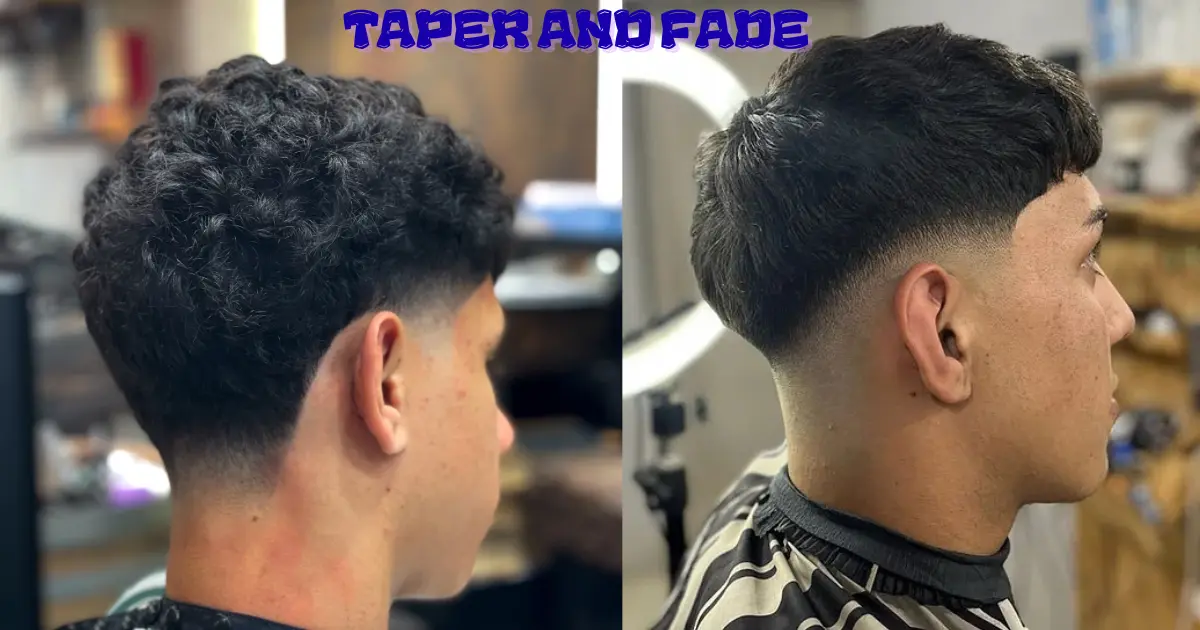
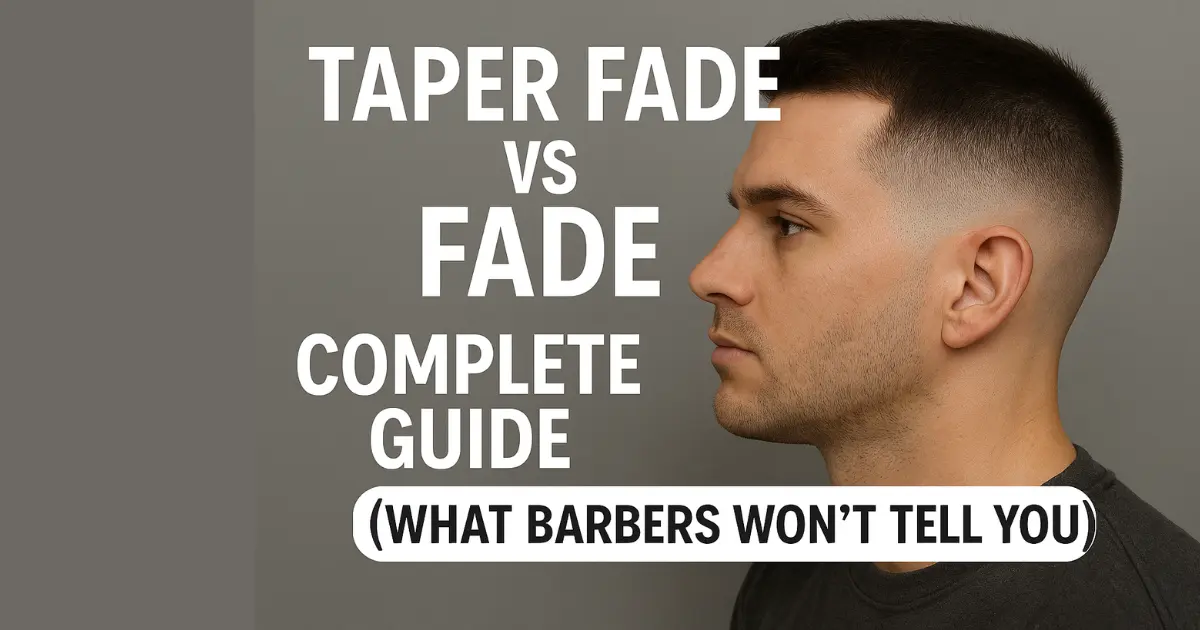
A mid taper fade with comb over combines two distinct techniques into one cohesive hairstyle. The top features longer hair swept to one side (the comb over), while the sides showcase a gradual fade starting roughly at the temple level (mid taper).
The fade transitions from longer hair on top to progressively shorter hair on the sides and back, creating a seamless blend. The “mid” placement means the fade begins around your temples—roughly where your head starts to curve. This differs from a low fade (starts above the ear) or high fade (starts near the top of your head).
The comb over portion keeps 2-4 inches of length on top, swept to one side with a defined part line. This creates volume and movement while maintaining a polished appearance. For foundational knowledge about mid taper fade fundamentals, understanding the fade mechanics helps you communicate effectively with your barber.
Most men choose this cut because it reads as “put together” in professional environments while avoiding the overly corporate look of slicked-back styles. The fade adds contemporary edge without appearing trendy or high-maintenance.
Why the Mid Taper Fade with Comb Over Works in 2025
Three significant trends have pushed this style to the forefront of men’s grooming.
Professional versatility has become non-negotiable. Remote work and hybrid schedules mean your hairstyle needs to work for video calls, in-person meetings, and casual Fridays without looking out of place. The mid taper with comb over adapts to all three contexts with minimal styling adjustments.
Natural texture is replacing high-shine formality. Modern grooming has shifted toward matte finishes and lived-in texture rather than the shellacked looks of previous decades. This cut works beautifully with contemporary matte pomades and clays that provide hold without looking styled.
Maintenance efficiency matters more than ever. According to a 2024 American Crew survey, 73% of men want hairstyles requiring under 10 minutes of daily styling. This cut delivers professional results in 5-7 minutes once you establish your routine.
The style also photographs well—important as LinkedIn profiles, dating apps, and video calls make your appearance more visible than ever. The defined structure reads clearly on camera without looking overly styled or artificial.
Best Hair Types for This Style
This cut performs best with specific hair characteristics, though skilled cutting and proper products expand its versatility.
Medium to thick hair density provides ideal conditions. You need enough volume on top to create the side-swept effect without the hair lying flat against your scalp. Thick hair holds the comb over shape throughout the day with minimal product reapplication.
Straight to slightly wavy hair offers easiest styling. The comb over component works naturally with hair that wants to lie in one direction. Wavy hair adds beneficial texture without requiring excessive manipulation. If you have curly hair, check out our guide on mid taper fade for curly hair to adapt the technique for your texture.
Hair length requirements start at 2.5 inches minimum on top. Anything shorter won’t provide enough length to create a convincing side sweep. Ideal length runs 3-4 inches, allowing flexibility in styling while maintaining the shape throughout your day.
Fine or thin hair presents challenges but isn’t impossible. You’ll need strategic cutting techniques (point cutting for texture), volumizing products, and possibly a blow dryer to create the appearance of fullness. I typically recommend fine-haired clients consider slightly longer lengths on top (4+ inches) to maximize visible volume. For thick hair considerations, see our low taper fade for thick hair guide which covers density management techniques.
Hair growth patterns matter significantly. Cowlicks, whorls, or strong natural parts can work with or against your desired comb over direction. A skilled barber identifies these patterns during consultation and either works with them or cuts strategically to minimize their influence.
Face Shape Compatibility
Understanding how this cut interacts with your facial structure prevents disappointment and ensures the style enhances your features.
Oval faces handle this style effortlessly. The balanced proportions of oval faces work with virtually any hairstyle. The mid taper with comb over adds minimal width while maintaining clean lines along the sides.
Square faces benefit from the volume on top. The added height balances strong jawlines and creates vertical proportion. The fade keeps sides clean without adding unwanted width. For specific guidance, see our mid taper fade for square faces breakdown.
Round faces gain definition from the part line and height. The vertical styling elongates the face, while the tapered sides avoid adding fullness. Request your barber keep length on top for maximum vertical effect.
Oblong faces should approach with caution. Adding height to an already long face can create imbalance. If you have an oblong face, discuss with your barber about keeping moderate length on top (2.5-3 inches rather than 4+) and ensuring the fade doesn’t extend too low.
Heart-shaped faces work well with this cut. The volume on top balances a narrower chin, while the fade tapers nicely with the face shape. The comb over can be swept away from the wider forehead to create balance.
How to Ask Your Barber for This Cut
Communication prevents misunderstandings and ensures you get the haircut you’re envisioning.
Use specific terminology. Say: “I want a mid taper fade with a comb over. Start the fade at my temples, blend it down to a 0 or 1 guard at the bottom. Leave 3 to 3.5 inches on top with a defined part on [left/right] side.”
Bring reference photos showing multiple angles. Front, side, and back views help your barber understand the overall shape. Choose photos of people with similar hair texture and density to yours—this manages expectations about achievable results.
Discuss the fade gradient. Specify whether you want a tight, quick transition (more dramatic) or a gradual, longer transition (more subtle). Most mid tapers benefit from a moderate gradient that blends over 1-2 inches of vertical space.
Address the part line. Decide whether you want a natural part (created by combing hair in the desired direction) or a hard part (shaved line). Hard parts add definition but require more frequent touch-ups.
Clarify the top length and texture. Mention if you want texturizing (creates movement and volume), point cutting (adds texture), or blunt cutting (cleaner lines). For most comb overs, some texturizing on top improves manageability.
Discuss your styling routine honestly. If you’re not going to blow dry, tell your barber. If you won’t use product, mention it. This information helps them cut in a way that works with your actual routine, not an idealized version.
Step-by-Step Guide to Styling Your Mid Taper Fade with Comb Over
Achieving consistent results requires understanding the technique, not just copying motions.
Step 1: Start with towel-dried hair (damp, not soaking). Too much water dilutes products and prevents proper hold. Too little water makes product application difficult and uneven. Hair should feel cool and slightly damp to touch.
Step 2: Apply pre-styler if using a blow dryer. Heat protectant spray or sea salt spray (for texture) goes on before heat. Work through hair with fingers, ensuring even distribution from roots to ends.
Step 3: Blow dry in the direction of your comb over. Use medium heat, directing airflow from roots toward ends and in the direction you want hair to fall. Keep dryer moving constantly—hovering in one spot causes heat damage. Rough dry to about 80% dry, letting the last bit air dry to prevent over-drying.
Step 4: Apply your main styling product to dry or nearly-dry hair. Use a nickel to quarter-sized amount of pomade, clay, or cream. Warm it between palms until it becomes pliable and translucent. Work through hair from back to front, focusing on roots first for lift, then working through mid-lengths and ends.
Step 5: Create your part with a comb. Use a fine-toothed comb to establish a clean part line where your barber created it. The part should run from your hairline back toward your crown at a slight angle.
Step 6: Comb over and shape the top section. Using the same comb, sweep hair from the part line across your head in your desired direction. Comb through 2-3 times, each time adding slight downward pressure to encourage hair to maintain the swept position.
Step 7: Shape the front for your preferred look. Push front sections slightly up and back for volume (more modern), or comb straight back for a sleeker appearance (more conservative). The front 1-2 inches determine whether your style reads as contemporary or traditional.
Step 8: Finish with fingers to add texture. Run fingers through styled hair to break up overly combed appearance. This creates natural-looking movement and prevents the “helmet head” effect.
Step 9: Optional—set with light-hold hairspray. If your hair doesn’t hold style well or you need all-day hold, a quick mist of hairspray locks everything in place. Keep the can 10-12 inches away to avoid creating stiff spots.
Pro tip: Your second-day styling is often better than day-one. Product residue provides additional texture and hold. Many of my clients report their hair looks best on day two, requiring only minor touch-ups with a small amount of product.
Best Products for Mid Taper Fade with Comb Over
Product selection dramatically affects your results and daily styling experience.
Matte pomades deliver modern hold without shine. American Crew Fiber and Layrite Matte Cream provide strong hold with natural finish. These work best for contemporary, textured looks. Apply to dry hair for maximum hold.
Medium-hold clays create piecey texture. Baxter of California Clay Effect and Uppercut Deluxe Matt Clay provide moldable hold with matte finish. These excel at creating the currently trending natural, lived-in texture. They work best in slightly damp hair for easier distribution.
Traditional pomades suit classic, polished styles. Suavecito Original and Murray’s (sparingly) create the slicked, defined look associated with traditional comb overs. Use these if your work environment requires conservative grooming. Apply to damp hair for easier combing and better shine.
Pre-styling sprays add volume and heat protection. Oribe Dry Texturizing Spray or basic sea salt spray applied before blow drying creates foundational volume and grip for products applied later. These prove especially valuable for fine or medium-density hair.
Finishing sprays lock in style without stiffness. Light-hold hairsprays like Kenra Volume Spray 25 or Tresemme Compressed Micro Mist provide insurance without the crunchy, dated texture of traditional hairsprays.
Product amounts matter as much as product choice. Start with less than you think you need. You can always add more, but removing excess product requires washing and restarting. Most men use 2-3 times more product than necessary, creating buildup and unnatural appearance.
Mid Taper vs Other Fade Heights
Understanding fade placement helps you request modifications or explore alternatives.
Mid taper fades start around temple level. The fade begins where your head starts to curve, roughly where your temples sit. This creates balance—visible but not aggressive—and works for most professional environments.
Low taper fades start above the ear. More conservative than mid fades, low tapers maintain more length on the sides. This option suits very conservative workplaces or men preferring subtle fades. Our guide to the low taper fade covers when this choice makes sense, and you can explore the differences in our low taper fade vs regular fade comparison.
High taper fades start near the top of your head. These create dramatic contrast between top and sides, delivering an edgy, contemporary look. High fades read as fashion-forward and work best in creative industries or casual environments.
The mid taper offers maximum versatility. It’s modern enough for social settings but conservative enough for professional contexts. This sweet spot explains why mid tapers dominate men’s grooming across industries and age groups.
Fade transitions vary regardless of height. You can have a tight mid fade (quick transition, more dramatic) or a gradual mid fade (slow transition, more subtle). Discuss transition speed with your barber based on your hair density and desired look.
Comparing a high taper fade to a mid taper, the high version works better for men with longer faces who want to avoid adding vertical height, while mid tapers suit most other face shapes.
Common Mistakes to Avoid
These errors sabotage your results and make styling unnecessarily difficult.
Using too much product creates buildup and unnatural appearance. Hair should move naturally when you run your hands through it. If it feels crunchy, helmet-like, or greasy, you’ve used too much. Reduce product amount by half your current usage and adjust upward only if needed.
Combing when hair is completely dry causes breakage and frizz. Always apply product to damp or slightly dry hair, never bone dry. The moisture helps products distribute evenly and prevents damaging friction from combing.
Skipping the blow dryer limits your style potential. If you have fine or medium-density hair, blow drying creates foundational volume that products alone can’t provide. Even 2-3 minutes of directed heat makes significant difference.
Waiting too long between cuts destroys the fade effect. Mid taper fades look best for 2-3 weeks maximum. By week four, the fade has grown out enough that you’ve lost the defined transition. Calendar your next appointment before leaving the barbershop.
Using the wrong products for your hair type wastes money and causes frustration. Heavy pomades make fine hair greasy and flat. Light clays don’t provide enough hold for thick, coarse hair. Match product weight and hold to your specific hair characteristics.
Neglecting the back creates an unfinished appearance. You can’t see the back, but everyone else can. Run your product-laden hands over the back of your head, ensuring coverage and smoothness. Use a hand mirror to check your work periodically.
Fighting your natural hair growth patterns instead of working with them. If you have a strong cowlick or natural part, trying to force hair against it requires excessive product and constant adjustment. Either work with your growth pattern or have your barber cut strategically to minimize its influence.
Maintenance and Styling Tips
Consistent maintenance extends the life and appearance of your cut between barbershop visits.
Schedule your next appointment before leaving. Book your next cut for 2.5-3 weeks out while you’re still in the chair. This ensures consistent timing and prevents the “I should have gone in last week” cycle. Understanding how long your mid taper will last helps you plan appropriately.
Invest in proper tools at home. A quality blow dryer ($50-100), fine-toothed comb ($5-10), and small scissors for stray hairs ($15-25) make home maintenance manageable. These tools pay for themselves within 2-3 barbershop visits.
Clean your fade line between cuts. Around week 2, your fade line (where short meets shorter) may look fuzzy. Use small clippers or carefully trim with scissors to maintain crispness. Focus only on obvious strays—don’t attempt to recreate the fade.
Wash hair 2-3 times weekly maximum. Daily washing strips natural oils, making hair harder to style and requiring more product. On non-wash days, rinse with water only or use dry shampoo if needed. This approach maintains your hair’s natural texture and hold.
Rotate between 2-3 products for different occasions. Keep a matte clay for casual looks, a stronger pomade for important meetings, and maybe a lighter cream for everyday use. This prevents product buildup from using the same formula daily and gives you styling flexibility.
Learn basic home touch-ups for the back. Use a handheld mirror and wall mirror to check your neckline. Small clippers with guards let you clean up stray hairs below your fade line. Focus on obvious strays only—leave actual cutting to your barber.
Comprehensive guidance on maintaining your mid taper fade covers seasonal adjustments, product rotation, and troubleshooting common issues. If you’re considering a low taper instead, our how to maintain low taper fade guide offers similar strategies for lower fade placements.
Cost Breakdown: Initial Cut and Ongoing Maintenance
Understanding the financial commitment helps you budget appropriately.
Initial haircut costs vary by location and barber experience. Expect $35-65 in most US cities, with prices running higher in major metropolitan areas (NYC, SF, LA) where $65-85 is common. A consultation cut with a new barber should include discussion of your lifestyle, styling commitment, and hair characteristics.
Maintenance cuts run every 2-3 weeks. At $40 average and every 2.5 weeks, you’re looking at roughly $640-800 annually. This assumes consistent maintenance—letting cuts slide to 4-5 weeks reduces cost but compromises the style’s definition.
Quality products cost $40-60 for 2-3 months supply. A good pomade or clay ($18-28) lasts 2-3 months with proper usage amounts. Shampoo and conditioner ($25-40 together) last 2-3 months. Pre-stylers and finishing products are optional but add $15-30 each and last 3-4 months.
Home maintenance tools are one-time investments. Budget $100-150 for a quality blow dryer, $25 for a good comb set, and $30-50 for small clippers. These tools last years with proper care, making the per-cut cost negligible.
Total first-year cost runs approximately $900-1,200 including initial cut, maintenance cuts, products, and tools. Subsequent years cost $750-900 since you already own the tools.
Cost-saving approaches include: finding a skilled barber at a training barbershop (often 30-40% cheaper), extending cuts to 3 weeks consistently instead of 2.5, buying products during sales, and mastering home touch-ups between professional cuts.
Troubleshooting Common Issues
Solutions to frequent problems that frustrate men attempting this style.
Hair won’t stay swept to the side. Causes: insufficient product, product applied to dry hair, or fighting natural growth patterns. Solutions: apply product to damp hair, use stronger-hold product, blow dry in desired direction first, or ask your barber to identify if you’re working against your growth pattern.
Fade looks grown out after just one week. Causes: fast hair growth or fade cut too conservatively. Solutions: discuss tighter fade with barber (closer to skin at bottom), plan for every-2-week cuts if growth is genuinely fast, or learn to do light touch-ups at home on the lowest fade sections.
Front section falls forward throughout the day. Causes: front hair too long, insufficient product at roots, or missing the blow-dry step. Solutions: request shorter front sections (front should be slightly shorter than back for better control), ensure product application includes roots, or spend 1-2 minutes blow drying front sections back.
Style looks good morning, falls flat by afternoon. Causes: product choice lacks all-day hold, hair type doesn’t match product, or environmental humidity. Solutions: switch to stronger-hold products, try pre-styling with sea salt spray for grip, or carry a small amount of product for midday refresh.
Part line keeps disappearing. Causes: product weighing down hair, lack of defined part from barber, or hair too short for visible part. Solutions: use lighter-hold products, request hard part (shaved line) from barber for maximum definition, or grow top to 3.5-4 inches minimum for better part visibility.
Scalp shows through on swept side. Causes: hair too thin, combing too tight, or unrealistic expectations for coverage. Solutions: add more texture and volume at roots (less combing, more finger styling), ensure adequate hair length, use volumizing powder at roots, or reconsider if this style suits your hair density.
Related Fade Styles and Variations to Consider
Alternative styles worth exploring if the standard mid taper with comb over doesn’t fully meet your needs.
Mid taper with textured top replaces the comb over with a more casual, modern approach. Hair on top is cut to 2-3 inches and styled with fingers rather than combed over, creating a messy, contemporary look. This works better for casual environments and requires less precise styling.
Mid taper with side part keeps the swept look but uses a softer, less dramatic part line. This variation suits men wanting the general aesthetic without the defined structure of a true comb over. It’s more forgiving for at-home styling.
Disconnected undercut with comb over creates more dramatic contrast. Instead of a gradual fade, the sides are cut to one uniform length (usually 1-2 guards) with no transition. This delivers an edgier appearance but requires more confidence to pull off in conservative settings.
Low taper with comb over maintains more hair on sides for a conservative approach. This option suits formal professional environments where even a mid fade might read as too trendy. It requires less frequent maintenance since the fade sits lower. If you’re working with curly hair, our low taper fade with curly hair guide provides texture-specific advice.
High fade with longer top creates maximum contrast between short sides and long top. This works for men with longer faces who can balance the added height, or those in creative industries where bold choices are accepted. For comparison, check out our drop fade vs high fade haircut breakdown.
If you’re exploring other fade variations beyond tapers, consider the drop fade which curves behind the ear for a unique profile, or for curly-haired men, the drop fade for curly hair offers excellent texture accommodation.
The mid taper fade with comb over occupies the versatile middle ground of modern men’s hairstyles. It delivers professional polish without conservative boredom, requires manageable but not excessive maintenance, and adapts to various contexts from client presentations to weekend activities. After cutting thousands of variations, I’ve seen this style work across industries, face shapes, and age groups because it solves the fundamental grooming challenge most professional men face: looking put-together without looking like you’re trying too hard.
Success with this cut requires three commitments: finding a barber who understands fade mechanics and cutting for your specific hair characteristics, investing in appropriate products and tools, and maintaining consistent trim schedules. Meet those requirements, and you’ve got a hairstyle that elevates your appearance while respecting your time and lifestyle constraints.
Frequently Asked Questions
How often should I get my mid taper fade with comb over trimmed?
Every 2-3 weeks maintains optimal appearance. The fade loses definition as hair grows, with noticeable blur appearing around week 2.5 for most men. If you can extend to 3 weeks while maintaining acceptable appearance, that reduces annual cost by roughly 30%.
What products work best for mid taper fade with comb over?
Matte pomades or clays with medium-to-strong hold work best for modern textures. American Crew Fiber, Layrite Matte Cream, or Baxter of California Clay Effect deliver natural finish with all-day hold. Choose based on desired shine level and your hair thickness.
Can I do a comb over with thin or fine hair?
Yes, but it requires strategic approaches. You’ll need texturizing cuts, volumizing products, and likely blow drying to create the appearance of density. Keep length on top at 3.5-4 inches minimum, and use matte products that don’t weigh down fine hair.
Is the mid taper fade with comb over appropriate for professional environments?
Absolutely—it’s one of the most workplace-appropriate modern cuts. The mid fade offers contemporary edge without reading as trendy, while the comb over maintains traditional professionalism. I’ve cut this style for lawyers, executives, consultants, and bankers without workplace concerns.
How do I communicate this cut to my barber accurately?
Say: “Mid taper fade starting at temple level, blending to skin at the bottom. Leave 3 to 3.5 inches on top with a defined part on [left/right] side. I want to comb it over for a professional look.” Include reference photos showing front, side, and back views.
What face shapes work best with mid taper fade and comb over?
Oval and square faces handle this style naturally. Round faces benefit from the added height and definition. Oblong faces should be cautious about adding too much vertical length. Heart-shaped faces work well with the balanced proportions.
How long does it take to style this haircut daily?
5-7 minutes once you establish your routine. Towel dry, apply product to damp hair, comb into place, and refine with fingers. If you blow dry, add 3-4 minutes. Second-day styling often takes just 2-3 minutes with minor product touch-ups.
What's the difference between mid taper and low taper with comb over?
Mid taper starts around temple level while low taper starts above the ear. Mid taper offers more modern appearance with greater contrast, while low taper is more conservative. Mid fades require slightly more frequent maintenance due to more visible fade transition.
How do I maintain my comb over between barber visits?
Clean up obvious stray hairs along your neck and fade line with small clippers. Maintain your styling routine consistently to prevent product buildup. Book your next appointment before leaving the barbershop to ensure regular 2.5-3 week intervals.
What should I do if my hair won't stay in the combed position?
Apply product to damp hair, not dry. Use stronger-hold products if current choice isn’t working. Blow dry in the desired direction before applying product. Check with your barber that you’re not working against strong natural growth patterns.