Mid Taper Fade for Curly Hair: Complete Cutting, Styling & Maintenance Guide


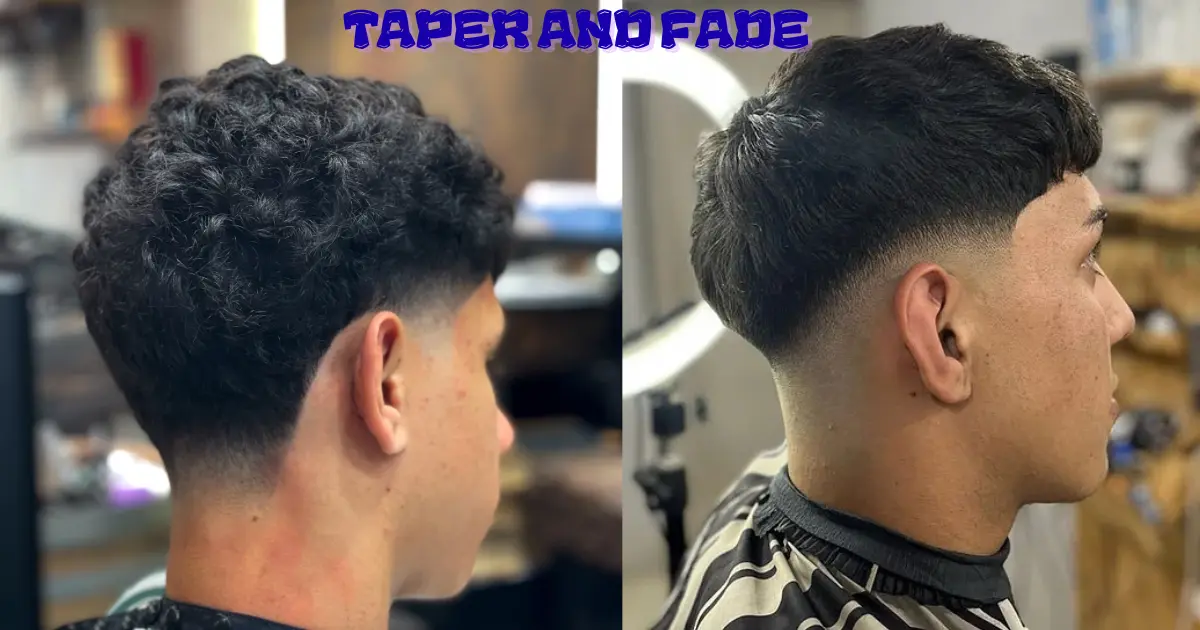
The mid taper fade transforms curly hair by removing side bulk while preserving natural texture on top. Starting at temple level, this fade creates clean contrast that highlights curls rather than fighting them. The cut works because curly hair’s natural volume softens the fade transition, while tapered sides prevent the “triangle head” effect thick curls create.
TL;DR:
- Why It Works: Curly texture disguises fade lines naturally, stays sharp 2-3 weeks
- Cutting Challenge: Curl shrinkage (20-40%) requires barbers to account for dry length
- Best Curl Types: 2C-4C patterns all work; tighter coils benefit most from bulk reduction
- Essential Products: Leave-in conditioner, curl cream, diffuser for controlled drying
- Maintenance: Professional cuts every 2-3 weeks, daily moisture routine
- Cost: $40-$75 per cut, ~$680-$1,040 annually for optimal upkeep
Why Mid Taper Fade Works Specifically for Curly Hair
Curly hair creates unique challenges: volume accumulates on sides, curl patterns appear uneven, and length management becomes tricky. The mid taper fade solves these issues through strategic bulk removal.
Volume Control Without Losing Texture
Curly hair grows outward before growing down. Without tapering, sides become disproportionately wide compared to top length. The mid taper removes this excess volume at temple level, creating balanced proportions while leaving enough curl texture for natural movement.
Natural Fade Line Disguise
Straight hair shows every fade imperfection. Curly hair’s texture naturally softens transition lines, making the fade appear smoother longer. This textural advantage extends time between cuts by 3-7 days compared to straight hair with identical growth rates.
Reduced Daily Styling Time
Full heads of curls require extensive moisturizing, detangling, and styling. Tapered sides need minimal maintenance—just edge cleanups—allowing you to focus care on the top section where curl definition matters most.
Professional Versatility
The mid taper provides enough structure for corporate environments while maintaining curl personality. Unlike low taper fades that can appear conservative, or high fades that read as casual, mid tapers balance professionalism with contemporary edge.
Curl Pattern Compatibility: What Works Best
Type 2C-3A (Loose Curls to Waves)
Characteristics: S-shaped waves, less shrinkage (10-20%), holds shape easily
Mid Taper Approach:
- Fade blends smoothly because curl pattern is more uniform
- Requires less length on top (2-3 inches sufficient)
- Air-drying often produces good results without diffuser
- Risk: Can appear too structured if fade is too tight
Styling Focus: Light products, natural flow, avoid over-manipulation
Type 3B-3C (Defined Curls to Tight Corkscrews)
Characteristics: Spiral curls, moderate shrinkage (25-35%), prone to frizz
Mid Taper Approach:
- Perfect curl pattern for mid taper—enough texture without excessive shrinkage
- Leave 3-4 inches on top to account for curl bounce-back
- Temple-level fade creates ideal contrast with curl volume
- Requires moisture-heavy products
Styling Focus: Curl-defining creams, diffusing on low heat, occasional refresh sprays
Type 4A-4C (Coily to Kinky Texture)
Characteristics: Tight coils, high shrinkage (40%+), maximum volume
Mid Taper Approach:
- Most dramatic transformation—fade removes significant bulk
- Barber must understand shrinkage or cut will appear too short when dry
- Leave 4-6 inches wet length for 2-3 inches dry length
- Edges and lineup become focal design elements
Styling Focus: Heavy moisture, pick or finger-styling for shape, regular scalp oil application
How Barbers Cut Mid Taper Fade on Curly Hair
Curly hair requires different technique than straight hair. Here’s what skilled barbers do.
Cutting Dry vs. Wet
Wet Cutting Issues: Curls stretch when wet (appearing 20-40% longer), then shrink dramatically when dry. Fade lines cut while wet end up higher than intended once hair dries and contracts.
Dry Cutting Advantage: Barber sees actual curl pattern and length, creating accurate fade placement. Most experienced curly hair barbers cut dry or at least check dry before finishing.
Hybrid Approach: Some barbers wet curls to define pattern, cut initial fade dry, then detail edges on damp hair.
Clipper Guard Selection
Standard Progression: #3 or #4 at fade start → #2 mid-transition → #1 lower → #0.5 or trimmer at edges
Curly Hair Adjustment: Start one guard higher (#4 instead of #3) because curly texture appears shorter than equivalent straight hair length. The texture creates visual density that mimics shorter guards.
Scissor Work on Top
Clippers compress curls, creating unnatural appearance. Skilled barbers use scissors or texturizing shears on top section to:
- Remove bulk without destroying curl pattern
- Create layers that allow curls to stack naturally
- Eliminate weight that pulls curls down
Point-Cutting Technique: Cutting into curls at an angle rather than straight across prevents blunt edges and maintains organic curl movement.
Blending the Fade Into Curls
This is where technique separates good fades from great ones. The fade must gradually disappear into the curly top section without visible lines.
Lever Technique: Barbers use clipper lever adjustments between guard changes, creating dozens of micro-transitions invisible to the eye.
Finger-Over-Comb Method: For transitional area between fade and curls, barbers hold curl sections with comb while trimming exposed hair, creating softer blend.
Communicating with Your Barber
Poor communication creates disappointing results. Use specific language.
What to Say
Define Fade Height: “Mid taper starting at temple level, not higher”
Specify Top Length: “Leave 3-4 inches on top” (account for shrinkage—specify wet or dry measurement)
Describe Desired Shape: “Keep curl volume on top, remove bulk on sides”
Edge Preference: “Natural hairline shape” versus “crisp lineup with defined corners”
Blend Specificity: “Smooth blend into curls—no visible lines where fade meets top”
Questions to Ask
- “Do you cut curly hair regularly?” (If hesitation, find another barber)
- “Will you cut dry or wet?” (Dry or hybrid is better for curls)
- “Do you use scissors or clippers on the top?” (Scissors preserve curl pattern)
- “How often should I return for maintenance?” (Sets expectations)
Show Reference Photos
Pictures eliminate ambiguity. Bring 3-4 photos showing:
- Front view with desired curl definition
- Side view clearly showing fade height
- Back view if you have specific neckline preferences
- Close-up of the fade-to-curl transition zone
Important: Choose photos of people with YOUR curl pattern. A tight coil reference won’t translate to loose waves.
Styling Products That Actually Work for Curly Fades
Generic recommendations fail. Here are curl-specific products.
Leave-In Conditioner (Essential Foundation)
Purpose: Maintains moisture, prevents frizz, creates styling base
Application: Apply to soaking wet hair immediately after shower, focusing on top curls. Avoid faded sides.
Product Recommendations:
- Kinky-Curly Knot Today (thick, creamy, high slip)
- Cantu Shea Butter Leave-In (budget-friendly, widely available)
- Olaplex No. 6 Bond Smoother (repairs damage, reduces frizz)
Curl-Defining Cream
Purpose: Clumps curls together, reduces frizz, adds hold without crunch
Application: Apply section-by-section to damp hair, rake through with fingers or wide-tooth comb
Product Recommendations:
- Shea Moisture Curl Enhancing Smoothie (heavy hold for tight curls)
- Ouidad Advanced Climate Control (humidity resistance)
- DevaCurl SuperCream (medium hold, natural finish)
Gel or Mousse (For Extra Hold)
Purpose: Locks curl definition, extends style longevity, creates “cast” that breaks into soft curls
Application: Layer over curl cream on soaking wet hair, scrunch upward
Product Recommendations:
- Eco Styler Gel (strong hold, budget option, multiple formulas)
- Aussie Instant Freeze Gel (medium hold, flexible finish)
- Herbal Essences Totally Twisted Mousse (volume without weight)
Oil (For Scalp and Ends)
Purpose: Seals moisture, adds shine, prevents dryness on exposed scalp areas
Application: 3-5 drops on fingertips, massage into scalp around faded areas, light application to curl ends
Product Recommendations:
- Jojoba oil (closest to natural sebum, non-greasy)
- Argan oil (adds shine, lightweight)
- Jamaican Black Castor Oil (thick, promotes growth, best for coily textures)
Products to Avoid
Heavy Waxes: Coat curls, prevent moisture absorption, require harsh shampoos to remove
Alcohol-Based Gels: Dry out curls, cause crunchy texture, lead to breakage
Silicone-Heavy Products: Create buildup on curls, diminish curl definition over time
Coconut Oil: Works for some but too heavy for fine curls, can cause dryness if hair is protein-sensitive
Drying Technique: Diffuser vs. Air-Dry
How you dry curls dramatically affects final appearance.
Diffuser Method (Controlled Definition)
Best For: Tight curls (3B-4C), humid climates, time-constrained mornings
Technique:
- Apply all products to soaking wet hair
- Gently scrunch curls upward to encourage coil formation
- Set dryer to low heat, low speed
- Hover diffuser near curls without touching
- “Pixie diffuse” by gently cupping curls in diffuser bowl
- Dry until 80-90% dry, then air-dry remainder
Benefits: Reduces frizz, speeds drying time, maintains curl clumps, adds volume
Mistakes to Avoid: High heat (causes frizz), moving diffuser too much (disrupts curl formation), over-drying (creates stiffness)
Air-Dry Method (Natural Texture)
Best For: Loose curls (2C-3A), low-frizz hair types, laid-back styles
Technique:
- Apply products to wet hair
- Scrunch gently, then hands off
- Allow 2-4 hours for complete drying
- Avoid touching hair while drying (causes frizz)
Benefits: Zero heat damage, most natural curl pattern, easiest technique
Drawbacks: Requires time, can result in less defined curls, humidity affects results
Hybrid Approach
Diffuse until 70% dry, then air-dry remainder. Balances speed with natural texture.
Daily Maintenance Routine
Curly fades require different care than straight hair fades.
Morning Routine (5-10 minutes)
If Curls Look Good from Previous Day:
- Lightly mist with water or refresh spray
- Scrunch to reactivate curl pattern
- Apply tiny amount of curl cream to frizzy areas
- Fluff with fingers or wide-tooth pick
If Curls Need Restyling:
- Wet top section completely in shower
- Apply leave-in conditioner
- Scrunch in curl cream
- Diffuse or air-dry
- Leave faded sides alone (just edge cleanup if needed)
Washing Schedule
Frequency: 1-2 times per week for curly hair (daily washing strips natural oils)
Technique:
- Co-wash (conditioner-only washing) between shampoo days
- Focus shampoo on scalp, let suds rinse through curls
- Deep condition for 5-10 minutes weekly
- Rinse with cool water to close cuticles and reduce frizz
Product Selection:
- Sulfate-free shampoo (sulfates cause dryness)
- Silicone-free conditioner (prevents buildup)
- Deep conditioner or hair mask weekly (moisture boost)
Nighttime Protection
Satin or Silk Pillowcase: Reduces friction that causes frizz and disrupts curl pattern. Cotton pillowcases absorb moisture and create tangles.
Pineapple Method: Gather curls loosely on top of head with silk scrunchie. Protects curl formation overnight. Works best for medium-long top length.
Bonnet or Wrap: For shorter curls or maximum protection, use satin bonnet to completely cover curls.
Edge and Lineup Maintenance
The fade stays sharp through consistent edge work.
Professional Edge-Ups
Frequency: Every 2-3 weeks with full fade refresh
What Barber Does:
- Redefines hairline shape (temples, forehead, sideburns)
- Cleans neckline following natural curve
- Sharpens fade gradient
- Trims any overgrown top length
Home Edge Maintenance (Between Cuts)
Safe Areas for DIY:
- Neckline cleanup using trimmers, following original shape
- Stray hairs around ears
- Light edge definition on sideburns
Never Attempt at Home:
- Raising fade line (creates unbalanced look)
- Aggressive lineup changes (risk of over-cutting)
- Actual fade gradient blending (requires professional skill)
Tools Needed:
- Quality edge trimmer (Andis T-Outliner, $40-$80)
- Handheld mirror for back visibility
- Patience (remove one hair at a time)
Common Curly Fade Problems and Solutions
Problem: Fade Line Visible Through Curls
Cause: Insufficient blending where fade meets top section, or top curls too short
Solution:
- Return to barber for better blending using scissors
- Let top section grow 0.5-1 inch longer
- Use curl cream to clump curls together, hiding transition
Problem: Curls Look Flat or Limp After Cut
Cause: Too much hair removed from top, or clippers used instead of scissors on curl section
Solution:
- Add volumizing mousse at roots before drying
- Diffuse upside-down to create lift
- Use clarifying shampoo if product buildup is weighing down curls
- Let hair grow and find barber who uses scissors on curls
Problem: Excessive Frizz on Top
Cause: Insufficient moisture, manipulation while drying, or curl damage
Solution:
- Increase leave-in conditioner amount
- Stop touching hair while drying
- Deep condition weekly
- Apply light oil to ends
- Consider protein treatment if curls are damaged
Problem: Fade Growing Out Unevenly
Cause: Curly hair grows at different rates in different areas
Solution:
- Schedule maintenance cut (can’t fix at home)
- Use matte products to create texture that disguises uneven growth
- Brush faded areas daily to smooth appearance
- Book appointments consistently every 2-3 weeks to prevent this
Problem: Scalp Dryness on Faded Areas
Cause: Exposed scalp loses moisture quickly, sun exposure, lack of natural oil coverage
Solution:
- Apply lightweight oil (jojoba, argan) to faded scalp areas
- Use SPF or wear hat during sun exposure
- Moisturize scalp after every wash
- Avoid harsh shampoos on fade areas
Face Shape Considerations for Curly Fades
Curl volume affects how face shapes interact with fades.
Oval Faces
Best Approach: Any mid taper works. Experiment with different top lengths and curl definitions.
Styling Tip: Volume on top or sides both work well. Most versatile face shape for curly fades.
Round Faces
Best Approach: Keep significant height on top to elongate face visually. Avoid excessive side volume.
Styling Tip: Blow-dry or diffuse curls upward. Pick out roots for extra lift. The mid taper’s side reduction helps slim appearance.
Square Faces
Best Approach: Softer, more textured curl styling balances angular jawline. The mid taper works perfectly. See mid taper fade for square faces for detailed guidance.
Styling Tip: Embrace curl’s natural softness. Avoid super-tight, defined curls that emphasize angles.
Heart-Shaped Faces
Best Approach: Forward-styled curly fringe minimizes wider forehead. Keep moderate volume on sides.
Styling Tip: Style curls with slight forward movement. Don’t slick everything back.
Long/Oblong Faces
Best Approach: Add width with voluminous sides. Don’t go too high with top styling.
Styling Tip: Encourage horizontal curl expansion. Avoid excessive vertical height.
Cost Analysis: Maintaining Curly Mid Taper Fade
Professional Cuts
Per-Cut Cost: $40-$75 depending on location, barber experience
Frequency: Every 2-3 weeks for optimal sharpness
Annual Cost:
- Aggressive schedule (26 cuts/year): $1,040-$1,950
- Moderate schedule (17 cuts/year): $680-$1,275
- Extended schedule (13 cuts/year): $520-$975
Curly Hair Advantage: Natural texture extends time between cuts by 3-7 days compared to straight hair
Products
Monthly Product Budget: $30-$60
Essential Products:
- Leave-in conditioner: $12-$25 (lasts 2-3 months)
- Curl cream: $15-$30 (lasts 2 months)
- Gel or mousse: $8-$15 (lasts 2-3 months)
- Oil: $10-$20 (lasts 3-4 months)
- Deep conditioner: $12-$25 (lasts 2-3 months)
Annual Product Cost: $360-$720
Total Annual Investment: $1,040-$2,670 for professional appearance with optimal maintenance
Cost-Saving Strategies
Extend Time Between Cuts: Master home edge cleanup to add 5-7 days between visits
Buy Products in Bulk: Many curl products available in larger sizes with better per-ounce pricing
DIY Deep Conditioning: Use coconut oil, honey, or avocado masks instead of expensive treatments
Find Skilled but Affordable Barbers: Newer barbers building portfolios often charge less while delivering quality work
Comparing Maintenance: Curly Hair vs. Straight Hair Fades
Longevity Difference
Straight Hair Mid Taper: Looks sharp 7-10 days, acceptable 14-21 days
Curly Hair Mid Taper: Looks sharp 10-14 days, acceptable 21-28 days
Reason: Curl texture naturally disguises fade line blur that would be obvious on straight hair
Maintenance Focus
Straight Hair: Edge work critical, daily styling minimal, product usage light
Curly Hair: Moisture routine critical, daily curl refresh needed, product usage heavy
Product Investment
Straight Hair: $15-$30 monthly (matte clay, light cream, edge trimmer maintenance)
Curly Hair: $30-$60 monthly (leave-in, curl cream, gel, oil, deep conditioner)
Time Investment
Straight Hair: 5 minutes daily styling
Curly Hair: 10-20 minutes daily (moisture application, curl refresh, drying time)
Cost-Benefit Analysis
Despite higher product costs and time investment, curly fades deliver better value through extended cut longevity and natural visual interest that straight hair must create artificially through product.
Professional Maintenance Guide
For complete fade upkeep details, see maintaining your mid taper fade.
Week 1-2: Fresh cut phase. Minimal maintenance needed. Daily moisture routine only.
Week 3-4: Growth visible but manageable. Home edge cleanup extends sharpness. Increase styling product for control.
Week 4+: Professional cut needed. Attempting to extend further results in clearly grown-out appearance.
FAQ: Mid Taper Fade for Curly Hair
Does mid taper fade work for all curly hair types?
Yes, mid taper fade works for curl patterns 2C through 4C. Tighter coils (3C-4C) benefit most from side bulk removal. Loose curls (2C-3A) need less dramatic fading. Skilled barbers adjust fade height and blending based on your specific curl pattern and density.
How do I find a barber experienced with curly hair?
Ask potential barbers: “How often do you cut curly hair?” Check their Instagram or portfolio for curly hair examples. Request consultation before committing. Good curly hair barbers cut dry or hybrid (wet then check dry), use scissors on top section, and understand shrinkage.
What products do I absolutely need for curly mid taper fade?
Essential four: leave-in conditioner (moisture base), curl-defining cream (clump formation), diffuser attachment (controlled drying), and lightweight oil (scalp moisture). These four products maintain curl health and fade appearance. Everything else is optional enhancement.
How often should I wash curly hair with a mid taper fade?
Wash curly top section 1-2 times weekly with sulfate-free shampoo. Co-wash (conditioner only) on alternate days if needed. Daily washing strips natural oils curly hair needs. Faded sides require minimal washing—just rinse with water during showers.
Can I maintain the fade at home between cuts?
You can safely clean up neckline and remove stray edge hairs using quality trimmers. Never attempt to raise the fade line, adjust the gradient, or significantly alter the shape. These require professional skill. Home maintenance extends time between cuts by 5-7 days.
Why do curly fades cost more than straight hair fades?
Curly hair requires different technique (dry cutting, scissor work, shrinkage consideration), more time (35-60 minutes vs 25-35 minutes), and specialized skill. Barbers proficient with curly texture command premium pricing. The investment ensures proper results that grow out well.
How long does curly mid taper fade stay sharp?
Curly texture keeps mid taper looking sharp 10-14 days, acceptable 21-28 days. Straight hair shows growth faster (7-10 days sharp, 14-21 days acceptable). Curl’s natural texture advantage extends fade longevity by roughly one week compared to straight hair.
Should my barber cut my curls wet or dry?
Dry cutting or hybrid approach (wet cut, dry check) produces best results. Curls shrink 20-40% when drying. Cutting while wet creates inaccurate length that appears too short once hair dries and contracts. Experienced curly hair barbers always verify dry length.
What's the difference between mid taper and low fade for curls?
Mid taper starts at temple level, creating noticeable contrast with curly top. Low fade starts near ears, producing subtle, conservative appearance. Mid taper offers better volume control for thick curls while maintaining contemporary edge. Choose based on workplace formality and personal style preference.
How do I prevent frizz with a mid taper fade?
Apply leave-in conditioner to soaking wet hair immediately after washing. Use curl cream to seal moisture and define pattern. Diffuse on low heat or air-dry without touching. Sleep on satin pillowcase. Deep condition weekly. Avoid products with sulfates and drying alcohols.
Can I get mid taper fade with short curly hair?
Yes, but requires at least 2 inches of curl length on top when stretched. Shorter than this leaves insufficient length for curl definition, creating appearance of regular short haircut rather than curly fade. Let hair grow to adequate length before first cut.
What if my curls look different on each side?
Normal curl behavior—growth patterns vary across scalp. Skilled barbers account for this by cutting slightly longer on the less-curly side or using different techniques per side. Style with curl cream, encouraging consistent clump formation. Accept some natural asymmetry as authentic curl characteristic.