Blowout Taper Fade (Brooklyn Fade): 2025 Complete Guide

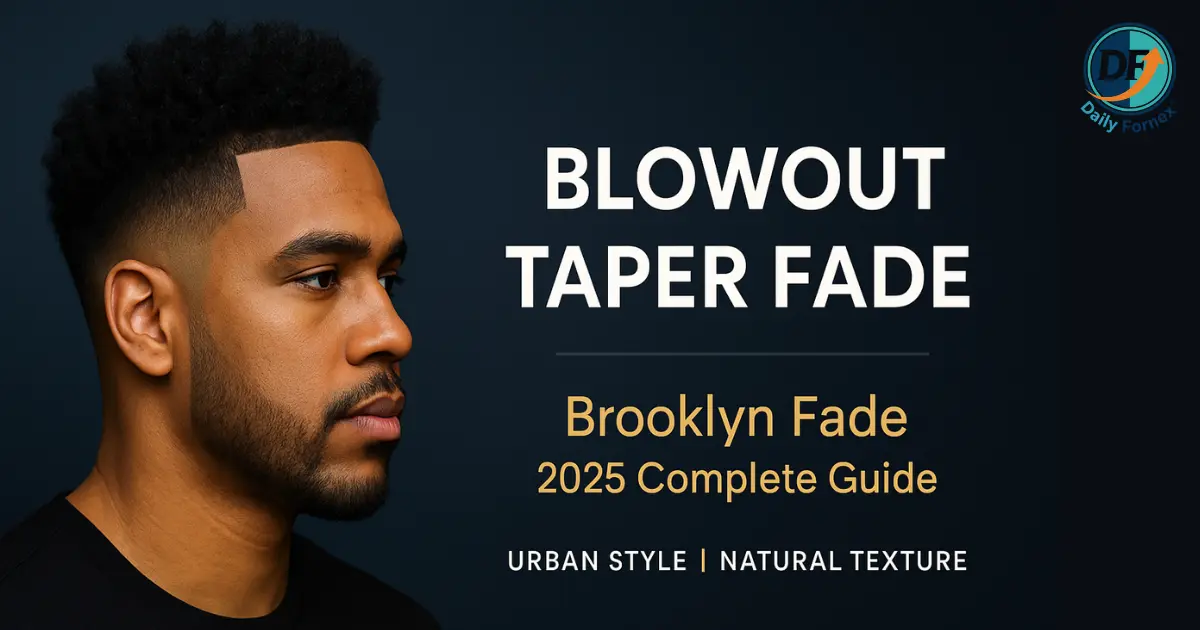
After working in Brooklyn barbershops for over twelve years, I’ve perfected hundreds of blowout taper fades – the style we created here that’s now requested worldwide. This cut combines the clean structure of a temple fade with the natural volume and texture that makes textured and curly hair look its absolute best, no straightening or manipulation required.
The blowout taper fade, known in the streets as the Brooklyn fade, emerged from Black and Latino barbershops in Brooklyn, New York during the early 2010s. It solved a specific challenge: how to give men with curly, coily, and kinky hair a sharp, professional fade while celebrating their natural texture instead of fighting it. The blow dryer technique creates lifted volume on top while the temple taper keeps sides clean and tight.
This style works across hair types but truly shines on textured hair (3A-4C curl patterns). According to a 2024 survey by the Professional Barbers League, 78% of barbers report the blowout taper as their most requested cut for clients with natural hair texture. It’s become the signature look of urban style, appearing everywhere from NBA courts to Brooklyn street corners to corporate boardrooms.
TL;DR – Quick Overview
- Best for: Curly, coily, and kinky hair (3A-4C); works with wavy and straight hair too
- Maintenance: Barber visits every 1.5-2 weeks for lineup; full cut every 3-4 weeks
- Signature element: Blow-dried volume on top with temple-area taper fade
- Cultural origin: Brooklyn, NY barbershop scene (early 2010s)
- What makes it different: Celebrates natural texture rather than flattening it
What Is a Blowout Taper Fade (Brooklyn Fade)?
A blowout taper fade combines a temple-high taper fade on the sides and back with blown-out, volumized hair on top that maintains natural texture. The “blowout” refers to the blow dryer technique used to lift and expand natural curl patterns, creating rounded volume rather than flat or slicked styling.
The fade typically starts at temple level or slightly higher, creating a clean taper from longer hair on top down to skin or a 0-guard at the bottom. This temple placement keeps the transition visible and sharp while leaving maximum length on top for the blowout effect.
The top section maintains 2-4 inches of length, though curly hair appears shorter due to shrinkage. A barber uses a blow dryer with a comb attachment or paddle brush to lift hair at the roots while slightly stretching curl patterns. This creates the signature rounded, voluminous silhouette that defines the style.
The name “Brooklyn fade” comes from its birthplace in Brooklyn, New York, where barbers serving predominantly Black and Latino communities developed this technique. It represents a shift in Black men’s grooming from styles that suppressed natural texture (waves, low cuts) toward styles that amplify and celebrate it.
Most men choose this cut because it delivers sharp, professional structure on the sides while showcasing natural hair personality on top. The volume creates presence and confidence without requiring chemical treatments, excessive products, or daily flat ironing.
Why the Blowout Taper Fade Dominates in 2025
Several cultural and style shifts have pushed this Brooklyn-born cut to global prominence.
Natural hair acceptance has reached mainstream status. Men across ethnic backgrounds now embrace their natural curl patterns rather than chemically altering them. The blowout taper demonstrates that textured hair can be professional, polished, and fashion-forward without straightening or heavy manipulation.
Urban barbershop culture influences global trends. What starts in Brooklyn, Harlem, Chicago, or Atlanta barbershops eventually spreads worldwide through social media. The blowout taper’s visibility in hip-hop, sports, and streetwear culture has made it aspirational across demographics.
Volume-forward styling replaces flat, slicked looks. Modern men’s grooming emphasizes texture, movement, and dimension over the flat, heavily gelled styles of previous decades. The blowout taper delivers maximum texture and visual interest while maintaining clean lines.
Versatility suits multiple contexts. Despite its street origins, this cut works in professional environments when styled properly. The clean fade reads as polished and intentional, while the textured top shows personality without appearing unprofessional.
The style also requires authentic barber skill – you can’t achieve this cut at a standard salon. This has elevated urban barbering as a specialized craft and created demand for barbers trained in textured hair techniques.
Best Hair Types for Blowout Taper Fade
This cut was designed for textured hair but adapts across hair types with proper technique.
Type 3B-4C hair (curly to coily) represents the ideal texture. The natural shrinkage, density, and curl pattern create the volume and rounded shape this style requires. Your hair naturally wants to lift and expand, which is exactly what the blowout technique enhances.
Type 3A hair (loose curls) works beautifully with this cut. You’ll achieve excellent volume with slightly more definition than tighter curl patterns. The looser curl allows for longer appearance and easier blow dryer control.
Type 4A-4C hair (coily to kinky) delivers the most dramatic results. The tight curl pattern creates maximum volume when blown out. You’ll need moisture-rich products and potentially a denman brush or comb attachment for the blow dryer to safely stretch without damage. For detailed guidance, check out our article on mid taper fade for curly hair which covers curl-specific techniques.
Type 2 hair (wavy) can pull off this style with modifications. You’ll need texturizing cuts and possibly sea salt spray to create the grip and volume that naturally curly hair provides. Your barber should add more layers and texture to compensate for looser wave patterns.
Type 1 hair (straight) presents the biggest challenge. You can achieve a version of this look, but it requires significant blow dryer work, volumizing products, and possibly a perm or texture treatment. The style won’t have the same effortless appearance it has on naturally textured hair.
Hair density matters as much as curl pattern. Thick, dense hair of any texture creates the fullness this style requires. Fine or thin hair struggles to achieve the rounded volume that defines the blowout aesthetic, regardless of curl pattern. If you’re working with curly hair and considering other fade options, our guide on low taper fade with curly hair explores lower fade placement alternatives.
Cultural Context: The Brooklyn Fade Origins
Understanding this style’s cultural significance improves how you wear and request it.
Brooklyn barbershops pioneered this technique in the early 2010s. Barbers serving Caribbean, African American, and Latino communities developed the blowout method to showcase natural hair while maintaining professional structure. It emerged alongside the natural hair movement that encouraged Black men and women to embrace their texture.
The style represents cultural pride and authenticity. For many men of color, the blowout taper is more than a haircut – it’s a statement about accepting and celebrating natural hair texture. It rejects decades of pressure to conform to Eurocentric hair standards.
Temple fades have specific cultural significance. The temple fade (fade starting at temple level) has roots in Puerto Rican and Dominican barbering traditions. Combining it with the blowout technique created a hybrid style that reflects Brooklyn’s multicultural communities.
The name “Brooklyn fade” honors its birthplace. While the style has spread globally, using this name acknowledges the barbers and communities who created and perfected it. This matters in barbering culture, where innovation and craftsmanship deserve recognition.
If you’re not from these communities but love this style, wear it respectfully. Understand its origins, request it properly, and support barbers skilled in textured hair – don’t just view it as a trendy cut divorced from its cultural context.
How to Ask Your Barber for a Blowout Taper Fade
Proper communication ensures you get the Brooklyn fade you’re envisioning.
Use the correct terminology. Say: “I want a blowout taper fade” or “Give me a Brooklyn fade.” If your barber doesn’t recognize these terms, say “temple taper fade with blown-out volume on top, keeping my natural texture.”
Specify your fade height and transition. Say: “Start the fade at my temples, drop it to a 0 (or 1) at the bottom. I want a tight transition.” For a more gradual fade, request “a longer blend over 2 inches.”
Discuss your desired volume and shape. Explain: “I want maximum volume on top” or “Keep it moderate, not too high.” Show the height you want using your hand above your head.
Address your lineup preferences. The lineup (edge-up, shape-up) is critical for this style. Specify: “Sharp lineup with defined corners” or “Natural lineup, just clean it up.” Mention if you want your hairline squared or rounded.
Bring reference photos from multiple angles. Choose photos of people with similar hair texture to yours. Don’t bring photos of someone with 4C hair if you have 3A curls – the results will differ significantly due to natural hair behavior.
Discuss the blow dryer technique honestly. Tell your barber: “I want the full blowout” or “I don’t blow dry at home, so cut it in a way that works without heat styling.” This information helps them adjust the cut for your actual routine.
Mention your maintenance commitment. Say: “I can come in every 2 weeks for lineups” or “I need this to last 4 weeks between cuts.” This helps your barber choose fade height and top length that matches your schedule.
Step-by-Step Guide: How Barbers Create the Blowout Taper Fade
Understanding the technique helps you communicate with your barber and maintain the style at home.
Step 1: Consultation and hair assessment (5 minutes). Your barber examines your hair texture, density, growth patterns, and natural hairline. They discuss your desired volume, fade placement, and lineup shape. This determines clipper guards, cutting angles, and blow dryer approach.
Step 2: Initial lineup and shape definition (3-5 minutes). Using a trimmer (often Wahl Detailer or Andis GTX), your barber creates your lineup – defining your forehead hairline, temple corners, and sideburn edges. This establishes the fade’s starting point and overall head shape.
Step 3: Fade execution starting at temples (10-15 minutes). Beginning at temple level with the longest guard (usually 3-4), your barber works downward using progressively shorter guards. They use clipper-over-comb technique for the transition areas, creating a seamless blend from longer top to skin-close bottom.
Step 4: Top section trimming and texturizing (5-7 minutes). Your barber trims the top to desired length (usually 2-4 inches before stretching) using scissors or clippers with guards. They add texture through point-cutting or notching to prevent bulk and encourage natural curl pattern.
Step 5: The blowout technique (5-10 minutes). This is what makes this cut distinctive. Your barber applies a heat protectant and light leave-in product. Using a blow dryer with comb attachment (or paddle brush for looser curls), they lift hair at roots while directing airflow upward and outward. This stretches curls slightly, creates volume, and shapes the rounded silhouette.
Step 6: Final lineup and detail work (3-5 minutes). After the blowout, your barber refines the lineup, ensuring crisp edges. They may use a razor for extra-sharp lines or clean up any stray hairs around the fade transition.
Total time: 30-45 minutes for a thorough cut from an experienced barber. Faster cuts often sacrifice quality in the fade transition or blowout technique.
Essential Products for Maintaining Your Blowout Taper Fade
Product selection for textured hair differs significantly from straight-hair products.
Moisture-rich leave-in conditioners are non-negotiable. Cantu Shea Butter Leave-In Conditioning Repair Cream, Shea Moisture Curl Enhancing Smoothie, or As I Am Leave-In Conditioner provide the moisture textured hair needs daily. Apply to damp hair before blow drying or air drying.
Heat protectants prevent damage during blowouts. Tresemme Thermal Creations Heat Tamer Spray or Chi 44 Iron Guard protect hair when using blow dryers. Apply before heat styling every time – textured hair is more vulnerable to heat damage than straight hair.
Lightweight oils seal in moisture without grease. Jojoba oil, argan oil, or grapeseed oil (not heavy petroleum-based products) applied to ends prevent dryness and frizz. Use 3-5 drops on damp hair, focusing on ends rather than roots.
Edge control products maintain your lineup between visits. Murray’s Edge Wax, Eco Styler Gel with Olive Oil, or Got2b Glued Spiking Wax smooth baby hairs and keep your hairline crisp. Use sparingly – excessive product causes buildup.
Texturizing creams add definition when desired. For days you want more curl definition rather than full volume, use Aunt Jackie’s Curl La La or Kinky-Curly Curling Custard on damp hair, scrunch, and air dry.
Co-wash or sulfate-free shampoos preserve natural oils. Washing textured hair with harsh sulfate shampoos strips necessary oils. Use As I Am Coconut Cowash or Shea Moisture’s sulfate-free options 1-2 times weekly maximum.
Quality blow dryer with diffuser or comb attachment is essential. Invest in a blow dryer with multiple heat settings and either a comb attachment (for tighter curls) or diffuser (for looser curls). The Red by Kiss Ceramic 2500 Turbo Dryer or any professional-grade dryer with 1800+ watts works well.
How to Style Your Blowout Taper Fade at Home
Replicating the barbershop blowout requires technique but becomes second nature with practice.
Start with freshly washed or dampened hair. If washing, use lukewarm water and sulfate-free shampoo, then apply leave-in conditioner while hair is soaking wet. If refreshing between washes, use a spray bottle to dampen hair thoroughly.
Apply heat protectant generously. Spray or apply cream heat protectant through all hair that will be blown out (the top section). Don’t skip this – regular heat exposure without protection causes long-term damage to textured hair.
Section your hair if it’s dense. Use clips to separate hair into 4-6 sections. This ensures every section gets proper blow dryer attention rather than just surface hair.
Use the blow dryer with comb attachment for tight curls (3C-4C). Insert the comb attachment at roots, lift upward, and direct heat from roots to ends. Keep the dryer moving constantly. Work through each section systematically, lifting and stretching curl pattern without pulling excessively.
Use a paddle brush or denman brush for looser curls (3A-3B). Place brush under hair section near roots, lift upward while directing blow dryer heat onto the brush. Pull brush through hair to ends, creating tension that stretches curls. The combination of tension and heat creates volume while slightly elongating curl pattern.
Blow dry until 90-95% dry. Completely dry hair becomes brittle and prone to breakage. Leave slight dampness so hair retains some flexibility and moisture.
Shape with your hands or a pick. Once blown out, use your fingers or a wide-tooth pick to shape the rounded silhouette. Lift at roots if you want more height, smooth sides if you want a more controlled shape.
Optional: Apply light oil to ends for shine. 2-3 drops of jojoba or argan oil on fingertips, applied to ends only, adds healthy shine without making hair look greasy.
Refresh your lineup with edge control. Apply small amounts of edge control or gel to a toothbrush, smooth down baby hairs, and maintain sharp edges around your hairline.
Blowout Taper vs Other Fade Heights
Understanding how the blowout taper compares to other fades helps you choose the right style.
Blowout taper typically starts at temple level or slightly higher. This places it between a mid and high fade in terms of starting point. The higher placement maximizes the contrast between voluminous top and tight sides, which is essential for the blowout effect.
Mid taper fades start around ear level. A mid taper fade maintains more hair on the sides than a blowout taper, creating less dramatic contrast. Mid tapers suit men wanting a conservative fade with moderate volume on top.
High taper fades start near the crown. A high taper fade creates even more dramatic contrast than a blowout taper. High fades work for men with longer faces who can balance the extreme height difference between top and sides.
Low taper fades start above the ear with minimal fade. A low taper fade is the most conservative option, maintaining substantial length on sides. This doesn’t work well with the blowout technique, as you need significant contrast to showcase the volume on top. To understand the distinction, check our low taper fade vs regular fade comparison.
The blowout taper’s defining feature isn’t just fade placement – it’s the blow dryer technique. You could technically do a blowout with any fade height, but the temple-level placement has become standard because it creates ideal proportions for the rounded, voluminous top.
Fade transition speed matters as much as height. Blowout tapers typically feature tight, quick transitions (fade completes over 1-1.5 inches of vertical space) rather than gradual blends. This sharp transition enhances the style’s urban, street-ready aesthetic.
Maintenance and Styling Schedule
Keeping your blowout taper fade sharp requires more frequent maintenance than standard fades.
Lineup touch-ups every 1.5-2 weeks maintain crispness. The lineup (edge-up) grows out noticeably faster than the fade itself. Many barbers offer quick lineup services for $10-15 that take 10-15 minutes. This keeps your style looking fresh between full cuts.
Full haircut every 3-4 weeks preserves the fade. By week four, your fade has grown out enough that the transition blurs and loses definition. Your barber will re-execute the fade and trim the top to maintain proper proportions.
Daily or every-other-day styling maintains the blowout. Unlike cuts you can wash-and-go, the blowout requires active styling. Budget 10-15 minutes for blow drying and shaping. Many men blow out every 2-3 days rather than daily, using refresher sprays between blowouts.
Moisturize daily regardless of blowout schedule. Apply leave-in conditioner or light oil to hair daily, even on days you don’t blow dry. Textured hair requires consistent moisture to prevent dryness and breakage.
Protect your hair at night. Use a satin or silk pillowcase, or wear a durag or bonnet to bed. This prevents friction that causes frizz and maintains your blowout between styling sessions. Cotton pillowcases absorb moisture and create friction that destroys textured hairstyles overnight.
Schedule your next appointment before leaving the barbershop. Book your lineup for 2 weeks out and your full cut for 3-4 weeks out while you’re still in the chair. This ensures consistent timing and prevents the “I should have gone last week” cycle.
For detailed maintenance techniques applicable to all taper fades, see our guide on how to maintain mid taper fade which covers fade-specific care and troubleshooting. If you’re specifically curious about fade longevity, our article on how long does mid taper last provides realistic expectations.
Common Mistakes to Avoid
These errors compromise your blowout taper’s appearance and damage your hair health.
Using high heat without protection destroys textured hair. Heat damage on curly, coily, and kinky hair is cumulative and permanent. Always use heat protectant before blow drying, and keep your dryer on medium heat rather than maximum.
Blowing out completely dry hair causes breakage and frizz. Your hair must be damp for the blow dryer to effectively shape it. Dry hair breaks under tension from brushing and pulling during the blowout process.
Neglecting moisture leads to dry, brittle hair. Textured hair requires daily moisture through leave-ins, oils, or water-based refresher sprays. Dry hair won’t hold volume, looks dull, and breaks easily.
Waiting too long between lineups ruins the sharp aesthetic. The lineup is half the style’s visual impact. A grown-out, fuzzy hairline undermines even a perfect fade and blowout. Prioritize lineup maintenance even if you extend the time between full cuts.
Using products designed for straight hair causes buildup. Gels, pomades, and sprays formulated for straight hair often contain silicones and alcohols that build up on textured hair or cause excessive dryness. Stick to products specifically designed for curly, coily, and kinky hair.
Sleeping on cotton pillowcases destroys your style overnight. Cotton absorbs moisture and creates friction. One night on a cotton pillowcase can undo your blowout and create frizz that requires rewashing and restyling.
Over-brushing or over-picking creates frizz and breakage. Once your blowout is complete, minimize manipulation. Constantly running brushes or picks through blown-out hair disrupts the curl pattern and creates unwanted frizz.
Face Shape Considerations
The blowout taper’s volume affects facial proportions differently based on face shape.
Oval faces handle this style with no adjustments needed. Balanced proportions work with the added height. The blowout’s rounded shape complements oval face natural symmetry.
Round faces benefit significantly from the vertical volume. The height on top elongates round faces, creating more balanced proportions. Request maximum volume on top to enhance this elongating effect.
Square faces should discuss fade placement carefully. The clean, angular fade lines can emphasize strong jawlines. If you have a very square jaw, consider a slightly lower fade or rounded lineup rather than sharp corners to soften overall appearance.
Oblong faces (long, narrow) may want to limit top height. Too much vertical volume can make long faces appear even longer. Discuss with your barber about keeping moderate height (2-2.5 inches after blowout) rather than maximum volume.
Heart-shaped faces (wide forehead, narrow chin) work well with this cut. The volume on top balances the wider forehead, while the temple fade creates clean lines that don’t add bulk.
Diamond faces (wide cheekbones) benefit from the temple-high fade. Starting the fade at temples rather than higher up prevents adding width at your widest point (cheekbones).
Cost Breakdown and Budget Considerations
Understanding the financial commitment helps you maintain this style consistently.
Initial cut costs $40-75 in most US cities. Barbershops specializing in Black hair and textured cuts typically charge $45-60. High-end urban barbershops in major cities (NYC, LA, Atlanta) charge $65-90 for the same cut.
Lineup services run $10-20 for quick maintenance. Many barbers offer lineup-only appointments that take 10-15 minutes. Getting lineups every 2 weeks between full cuts significantly extends the life of your main haircut.
Monthly maintenance costs $80-120 assuming full cut every 3-4 weeks plus mid-month lineups. One full cut ($50 average) plus one or two lineups ($15 each) per month.
Annual cost runs approximately $960-1,440 for consistent maintenance at the recommended schedule. This assumes full cuts every 3-4 weeks and lineups every 2 weeks.
Quality products cost $60-80 for 2-3 months supply. Leave-in conditioner ($12-18), heat protectant ($10-15), oil ($8-12), edge control ($6-10), co-wash ($10-15), and styling cream ($12-18). These products last longer than 2-3 months if you’re the only user.
Home blow dryer investment: $40-120 one-time. A quality blow dryer with proper attachments costs $50-80 for mid-range or $100-150 for professional-grade. This tool lasts 3-5+ years, making per-use cost negligible.
Cost-saving strategies include: learning to maintain your own lineup at home (saves $15-30 monthly), finding a skilled barber at a training barbershop (often 30-40% cheaper), or extending to 4-week full cuts consistently if your hair grows slower.
Troubleshooting Common Issues
Solutions for frequent problems that frustrate men attempting this style.
Blowout won’t hold volume throughout the day. Causes: insufficient product, hair too long/heavy, or humidity. Solutions: use volumizing foam at roots before blow drying, request shorter top length (3 inches maximum), or use anti-humidity products in your routine.
Fade looks grown out after just one week. Causes: very fast hair growth or coarse hair texture. Solutions: discuss tighter fade (down to skin rather than 0-guard), plan for every-2-week full cuts, or learn basic fade maintenance at home for touch-ups.
Lineup gets fuzzy within days. Causes: fast hair growth or natural hairline texture. Solutions: maintain your lineup at home using small clippers or straight razor (carefully), use edge control daily to smooth regrowth, or schedule lineup appointments every 10 days instead of 2 weeks.
Hair looks dry and frizzy despite products. Causes: product buildup, hard water, or insufficient moisture. Solutions: clarify hair monthly with apple cider vinegar rinse, install shower filter if you have hard water, or switch to heavier leave-in conditioners and butters.
Blowout technique causes heat damage. Causes: heat too high, no heat protectant, or over-drying. Solutions: always use heat protectant, keep blow dryer on medium heat, limit blowouts to every 2-3 days, and leave hair slightly damp rather than bone dry.
Can’t achieve the rounded shape at home. Causes: improper technique, wrong tools, or unrealistic expectations. Solutions: invest in proper comb attachment or paddle brush, watch technique videos from skilled barbers, or accept that home results may not perfectly match barbershop blowouts.
Related Fade Styles to Consider
Alternative styles worth exploring if the blowout taper doesn’t fully meet your needs.
Drop fade with natural hair curves behind the ear and follows the head’s natural curvature. This works beautifully with natural texture and offers a different aesthetic than the temple-high blowout. See our guide to drop fade for detailed information, or if you have curly hair specifically, check out drop fade for curly hair.
Burst fade for curly hair fades in a circular pattern around the ear. This style, like the blowout taper, celebrates natural texture and works especially well for men with curls who want a distinctive fade pattern. Check out our comprehensive burst fade haircut for curly hair guide. For those interested in comparing fade styles, our burst fade vs drop fade breakdown clarifies the differences.
High top fade is the classic predecessor to the blowout taper. Popular in the 1980s-90s, it features an extremely high, flat-top shape with faded sides. This represents the original volume-forward fade style for Black men’s hair.
Temple fade with curls (no blowout) maintains natural curl definition on top rather than blowing out. This delivers a more compact, defined curl appearance while keeping the same temple-level fade. It requires less daily maintenance since you’re not blow drying.
Afro taper keeps an afro shape on top (rounded but not blown out to maximum volume) with a tapered fade on sides. This works for men wanting natural afro texture with clean sides but without the styling commitment of a full blowout.
Buzz cut fade offers a low-maintenance alternative if you want the clean fade aesthetic without any styling commitment. Our buzz cut fade guide covers this minimalist approach that still delivers sharp, urban style.
The blowout taper fade represents one of urban barbering’s most significant innovations of the past 15 years. It transformed how men with textured hair approach grooming, proving that natural curl patterns deserve celebration rather than suppression. This Brooklyn-born style combines technical precision in the fade with artistic expression in the blowout, creating a look that’s simultaneously sharp and authentically textured.
Success with this cut requires three commitments: finding a barber skilled in textured hair and fade techniques, investing in proper products and tools for at-home maintenance, and dedicating 10-15 minutes to daily or every-other-day styling. Meet those requirements, and you’ve got a signature style that announces confidence, cultural awareness, and personal style whether you’re in Brooklyn, London, Lagos, or anywhere between.
Frequently Asked Questions
What is a blowout taper fade?
A blowout taper fade is a haircut combining a temple-level taper fade on the sides with blown-out, volumized hair on top. The blow dryer technique lifts and expands natural curl patterns while the fade creates clean contrast. It originated in Brooklyn, NY barbershops and is also called the Brooklyn fade.
What's the difference between a blowout taper and regular taper fade?
The blowout taper requires blow-drying hair on top to create lifted volume and slightly stretched curl definition, while regular taper fades don’t involve heat styling. Blowout tapers also typically start higher (temple level) and are specifically designed to showcase natural texture on top.
How often should I get my blowout taper fade trimmed?
Get lineups every 1.5-2 weeks and full haircuts every 3-4 weeks. The lineup maintains crisp edges while the full cut preserves fade definition. This is more frequent than standard fades because the sharp lineup is essential to the style’s appearance.
Can straight hair work with a blowout taper fade?
Yes, but it requires more effort and won’t look identical to textured hair versions. You’ll need volumizing products, possibly texturizing treatments, and more aggressive blow dryer technique. The style works best and looks most natural on curly, coily, and kinky hair (3A-4C textures).
What products work best for maintaining a blowout taper fade?
Use moisture-rich leave-in conditioners (Cantu, Shea Moisture), heat protectant spray before blow drying, lightweight oils (jojoba, argan) for shine, edge control for lineups, and sulfate-free shampoo or co-wash. Avoid products designed for straight hair as they cause buildup on textured hair.
How do I ask my barber for a Brooklyn fade?
Say: “I want a blowout taper fade” or “Give me a Brooklyn fade with a temple taper down to a 0 (or 1), and blow out the top for maximum volume.” Bring reference photos showing front, side, and back views. Specify your lineup shape (sharp corners vs. rounded).
Is the blowout taper fade appropriate for professional environments?
Yes, when maintained properly. The clean fade and defined lineup read as professional and intentional. The textured top demonstrates cultural pride and natural hair acceptance, which is increasingly valued in modern workplaces. Keep your lineup fresh and style neat for professional settings.
How long does it take to style a blowout taper fade at home?
10-15 minutes for a full blowout including dampening hair, applying products, blow drying with comb attachment or brush, and shaping. Many men blow out every 2-3 days rather than daily, using refresher sprays between blowouts to extend the style.
What face shapes work best with blowout taper fade?
Oval and round faces work best, as the vertical volume creates flattering proportions. Square and heart-shaped faces also work well. Oblong faces should limit top height to avoid making faces appear longer. Discuss proportions with your barber based on your specific face shape.
How do I protect my blowout overnight?
Sleep on a satin or silk pillowcase, or wear a durag or bonnet to bed. This prevents friction that causes frizz and maintains volume between styling sessions. Cotton pillowcases absorb moisture and destroy textured hairstyles overnight, requiring complete restyling in the morning.