Mid Taper Fade: The Goldilocks Haircut That Works for Everyone


After cutting hundreds of mid taper fades in my barbershop over the past eight years, I’ve seen this haircut transform everyone from 16-year-old students to 55-year-old executives. The mid taper fade starts around your temple area, blending gradually down to create that perfect balance: sharp enough to look intentional, subtle enough to grow out gracefully. It’s the haircut that works when you’re stuck between wanting something fresh but not too extreme.
I remember a client who walked in frustrated because his previous high fade looked too aggressive for client meetings, but his old low taper felt invisible. The mid taper fade solved his problem perfectly. That’s exactly what makes this cut special in 2025—it occupies that sweet spot where style meets versatility.
Quick Takeaways:
- Mid taper fade starts at temple level, blending down to shorter sides
- Works with all hair types: straight, wavy, curly, and coily textures
- Lasts 2-3 weeks before needing a trim, longer than high fades
- Best for oval, square, and round face shapes (though adaptable to most)
- Pairs with dozens of top styles: pompadours, crops, textured fringes, comb overs
- Perfect balance between professional polish and modern edge
What Is a Mid Taper Fade?
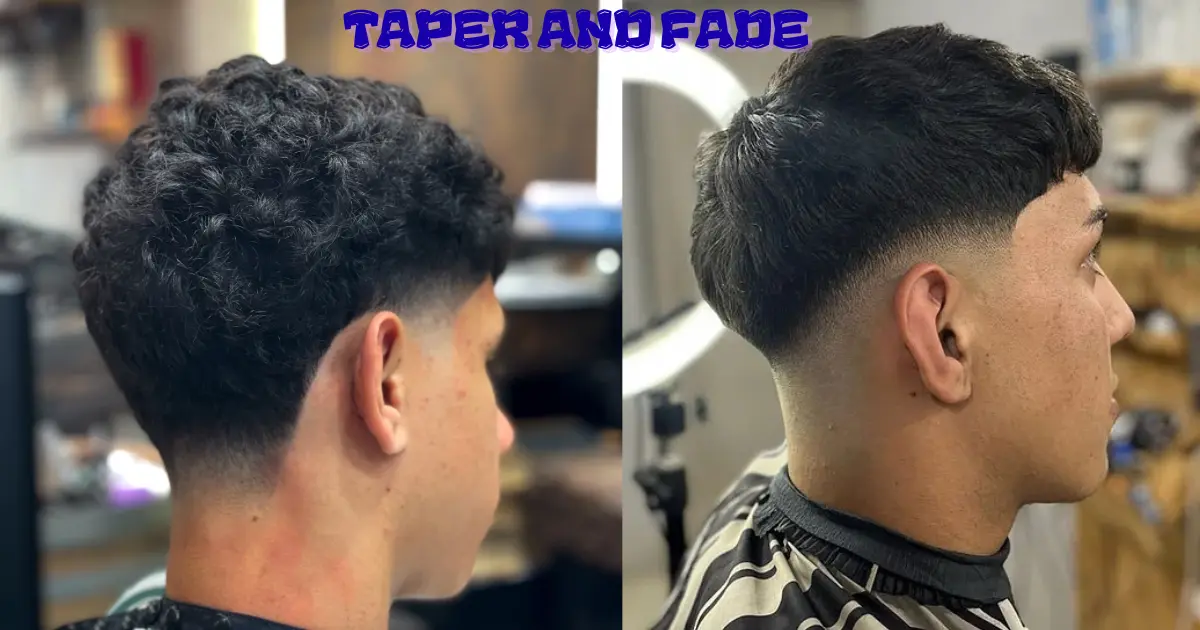
A mid taper fade haircut is a gradual hair length transition that begins around the middle of your head, typically at temple height. The hair on top stays longer (your chosen length), whilst the sides and back progressively shorten as they descend toward your neckline and ears.
The word “mid” refers to the fade’s starting position—not too low near the ears, not too high toward the crown. This placement creates natural contrast without dramatic exposure. Your barber uses different clipper guard sizes (usually #3 or #2 on top of the fade zone, blending down to #1 and eventually #0 or skin) to achieve that seamless gradient.
Unlike an abrupt undercut or a barely-there low taper, the mid taper fade gives you visible definition whilst maintaining enough hair on the sides to avoid that “just joined the military” look. It frames your face, sharpens your jawline, and keeps the focus balanced between your top styling and your fade work.
The beauty lies in its versatility. Because it starts at temple level, you have room to style longer hair on top—whether that’s a textured crop, slicked-back pompadour, messy fringe, or even natural curls. The fade simply provides the foundation that makes whatever you do on top look cleaner and more intentional.

Why the Mid Taper Fade Dominates 2025 Barbershops
Walking into barbershops across London, Manchester, Melbourne, or New York, you’ll hear the same request every twenty minutes: “mid taper fade, please.” This haircut has become the default modern men’s cut because it solves multiple problems simultaneously.
First, it adapts to any lifestyle. I’ve given the same mid taper fade base to a corporate lawyer (paired with a side part), a university student (styled with a messy textured top), and a gym trainer (kept short on top for easy maintenance). The fade height provides enough contrast to look modern without alienating conservative workplaces.
Second, it works with your natural hair texture rather than fighting it. Straight hair gains structure and movement. Wavy hair gets tamed on the sides whilst keeping flow on top. Curly and coily textures benefit from reduced bulk on the sides, letting your natural curls shine whilst maintaining a clean silhouette. That’s why you’ll see the mid taper fade for curly hair so frequently requested.
Third—and this matters more than people admit—it grows out better than extreme fades. A high skin fade looks amazing for week one, then becomes a blurry mess by week two. A low taper barely changes your appearance. The mid taper fade maintains its shape for 2-3 weeks, giving you that sweet spot where you look fresh without constant barber visits.
The 2025 trend toward personalisation has elevated the mid taper fade further. Clients now request subtle design elements: a hard part carved into the fade, geometric lines shaved at the temple, or slight color tints on the longer top section. The mid placement provides the perfect canvas for these customisations without overwhelming your overall look.
Mid Taper vs. Low Taper vs. High Taper: Which Should You Choose?
Understanding the differences between taper heights prevents that disappointing moment when you leave the barbershop thinking “this isn’t what I wanted.” The placement of where your fade begins dramatically changes your haircut’s entire character.
Low Taper Characteristics:
- Starts just above the ear, sometimes even lower near the neckline
- Creates minimal contrast between top and sides
- Grows out smoothly, often lasting 3-4 weeks
- Works best for conservative environments or subtle preference
- Pairs naturally with longer top styles and side parts
- Best for those who want definition without drawing attention
A low taper fade comparison shows how this subtle approach maintains more hair on the sides, creating a gradual, almost conservative transition. It’s perfect if your workplace frowns upon obvious fades or you simply prefer understated grooming.
Mid Taper Characteristics:
- Begins at temple level, roughly halfway up the side of your head
- Provides balanced contrast: noticeable but not extreme
- Lasts 2-3 weeks before blurring
- Versatile across professional and casual settings
- Complements modern styles: crops, fringes, textured tops
- Ideal for most men wanting that “safe but stylish” zone
High Taper Characteristics:
- Starts at or above temple height, sometimes near the crown
- Creates dramatic contrast with significant skin exposure
- Requires maintenance every 10-14 days to stay sharp
- Makes a bold statement, best for creative fields or confident styling
- Works excellently with high-volume tops: afros, pompadours, mohawks
- Recommended for those wanting maximum edge and definition
The high taper fade delivers that aggressive, attention-grabbing look that some clients crave, but it demands commitment to regular upkeep.
Which One For You?
Choose low taper if: You work in traditional corporate environments, prefer subtle grooming, or want maximum time between cuts.
Choose mid taper if: You want versatility, need a haircut that works for both office and weekend, prefer balanced definition, or like trying different top styles.
Choose high taper if: You work in creative industries, want maximum contrast, don’t mind frequent barber visits, or style high-volume hair on top.
Most men land on mid taper because it’s forgiving. If you’re unsure, start here. You can always adjust higher or lower at your next appointment based on how it suits your lifestyle.
Popular Mid Taper Fade Styles That Actually Work
The mid taper fade serves as a foundation, not a complete hairstyle. What you do on top determines whether you look corporate, casual, edgy, or classic. Here are the combinations I cut most frequently, with real advice on styling each one.
Classic Mid Taper Fade (Short Top)
The simplest version: short hair on top (usually 1-2 inches), mid taper on sides. This is your “set and forget” option.
Best for: Men who want zero styling time, those with active lifestyles, or anyone prioritising simplicity.
Hair type: Works with all textures but especially good for straight or wavy hair that gets unruly when longer.
Styling: Run a pea-sized amount of matte clay through damp hair, ruffle forward or to the side, done in 30 seconds.
Mid Taper Fade with Textured Crop
Longer on top (2-4 inches) with choppy, disconnected texture. The crop sits forward, creating a modern, youthful vibe.
Best for: Younger clients (late teens to 30s), those wanting a trendy look, or men with fine hair needing volume.
Hair type: Straight to wavy works best; curly hair needs longer length on top to achieve the crop look.
Styling: Apply sea salt spray to damp hair, blow-dry forward whilst scrunching with fingers, finish with light texture powder for hold and separation.
Mid Taper Fade with Curly Hair
The sides taper down whilst the top maintains natural curl volume. This is probably the most requested variation in my chair because it solves the “triangle head” problem curly-haired clients face with all-over length.
Best for: Anyone with naturally curly, coily, or kinky hair textures (2C to 4C curl patterns).
Hair type: Specifically designed for curly textures; transforms the overall shape.
Styling: Apply curl cream to soaking wet hair, scrunch upward, diffuse on low heat or air dry. The taper does the heavy lifting here—your curls become the feature, not the problem.
Mid Taper Fade with Comb Over
A side-parted style where longer hair on top sweeps across to one side, paired with the mid taper for clean contrast. This is the go-to professional look that works in any boardroom. For detailed styling, check our guide on the mid taper with comb over.
Best for: Professionals, formal events, men aged 30+, or anyone wanting timeless sophistication.
Hair type: Straight and wavy hair executes this best; requires at least 3 inches on top.
Styling: Apply pomade to damp hair, create a hard part with a comb, brush hair across and slightly back, finish with light hairspray for all-day hold.
Mid Taper Fade with Pompadour
Volume swept up and back on top, with the mid taper creating clean sides that emphasise the pompadour’s height.
Best for: Confident stylists, those with thick hair, men wanting a statement look for nights out.
Hair type: Thick, straight, or wavy hair; fine hair struggles to hold the volume.
Styling: Apply volumising mousse to damp hair, blow-dry upward and back with a round brush, finish with strong-hold pomade shaped into the pompadour, set with hairspray.
Mid Taper Fade with Beard
Any of the above styles can pair with facial hair, but the combination deserves mention because the taper fade connects to your beard line, creating continuous grooming from hairline to jawline.
Best for: Anyone with facial hair, especially those with patchy beard growth (the taper draws eyes upward).
Hair type: All types work; this is more about the overall grooming aesthetic.
Styling: Ask your barber to line up both the fade and your beard edge simultaneously for cohesive symmetry.
How to Ask Your Barber for a Mid Taper Fade (And Actually Get What You Want)
I’ve had clients sit down and say “just clean me up” then complain the result wasn’t what they imagined. Communication prevents disappointment. Here’s how to request a mid taper fade clearly.
What to Say: “I want a mid taper fade that starts around my temple. Keep [X inches] on top, and blend the sides down smoothly. I’m going for [describe style: professional/modern/textured/etc.].”
What to Bring: Reference photos solve 90% of miscommunication. Screenshot 2-3 images of mid taper fades you like from different angles (front, side, back). Show your barber these and say “something like this.”
Specific Details to Mention:
- Top length: “I want about 3 inches on top” or “keep it long enough to style a quiff”
- Fade start point: Point to your temple and say “start the taper around here”
- Skin fade or not: “Take it down to skin” or “leave a shadow, don’t go to skin”
- Neckline shape: “Squared off” or “rounded” or “natural taper”
- Hairline cleanup: “Line up my hairline” or “keep it natural”
Questions Your Barber Might Ask:
- “How much contrast do you want?” (Translation: How dramatic should the fade be?)
- “What clipper guard on top?” (If you want a buzz, they’re asking for length)
- “Any designs or hard parts?” (Do you want extra details shaved in?)
What NOT to Say: Avoid “just fade it” or “you know, the usual”—even if you’ve been to this barber before, they cut dozens of heads weekly and might not remember your preference.
DIY Mid Taper Fade: Why You Probably Shouldn't (But If You Must…)
I’ll be honest: cutting your own mid taper fade at home is possible but extremely difficult. The back and sides of your head aren’t visible to you, blending requires steady hand-eye coordination you’ve practiced for years, and most home clippers lack the power for smooth fades.
Why It’s Hard:
- You can’t see what you’re doing on the sides and back
- Blending guard lengths requires technique, not just changing attachments
- Most home clippers have weak motors that pull hair rather than cutting cleanly
- One mistake creates a line or patch that’s difficult to fix
If You’re Determined to Try:
- Invest in quality tools: Professional-grade clippers (Wahl, Andis, or Oster), not £20 supermarket versions
- Use three mirrors: One in front, one handheld for sides, one behind you
- Start conservative: Begin with a #3 guard where the taper starts, then #2, then #1. Work slowly.
- Blend with clipper lever: Use the taper lever on your clippers to create gradations between guard sizes
- Accept imperfection: Your first five attempts will have visible lines. That’s normal.
- Watch tutorials: Search “mid taper fade self-cut tutorial” on YouTube for visual guidance
Better Alternative: Learn to maintain your fade between barber visits instead. Touch up your neckline with a trimmer, clean your hairline edges, and shape your top. This extends your fade’s life by a week without the disaster risk of attempting a full cut.
Most clients who try home fades end up in my chair saying “can you fix this?” It usually costs more time and money to repair than a regular cut would have cost initially.
Styling and Maintenance: Keep Your Mid Taper Fade Looking Fresh
Getting the haircut is half the battle. Maintaining it between appointments and styling it daily determines whether you look sharp or sloppy. Here’s what actually works, based on what I see clients doing successfully.
Daily Styling Routine:
- Start with damp hair (towel-dried, not soaking): Products distribute better and activate properly
- Choose your product based on desired finish:
- Matte clay: Natural, textured look with flexible hold (my recommendation for most mid tapers)
- Pomade: Shine and strong hold for slicked styles (comb overs, pompadours)
- Sea salt spray: Volume and texture for wavy/beachy looks
- Gel: Maximum hold for all-day control (can look stiff if overused)
- Apply product correctly: Rub between palms first, then distribute through hair starting at roots, working to tips
- Style with purpose: Use fingers for texture, comb for clean lines, blow-dryer for volume
- Don’t overdo it: Pea-sized amount for short hair, dime-sized for longer tops
Washing Schedule:
- Daily: If you exercise heavily or have oily scalp
- Every other day: Most men with mid taper fades (my recommendation)
- 2-3 times weekly: If you have dry scalp or very curly hair
Overwashing strips natural oils, making hair dry and difficult to style. Underwashing creates buildup and odor. Find your balance.
Between-Cut Maintenance: Your mid taper fade looks best for about 2 weeks, acceptable for 3 weeks, then starts blurring and losing shape. To extend that timeline:
- Clean your neckline: Use a trimmer to remove stray hairs below your fade line (carefully)
- Edge up your hairline: Tidy the forehead edges and sideburns
- Shape your top: Trim any wild hairs that stick out awkwardly
- Moisturise: Use leave-in conditioner to prevent dryness, especially on tapered areas
For a comprehensive breakdown of timing, products, and techniques, see our complete maintenance guide for mid taper fades.
How Often to Visit Your Barber:
- Every 2 weeks: If you want to look magazine-sharp constantly (expensive but effective)
- Every 3 weeks: Sweet spot for most clients—fade still looks intentional
- Every 4 weeks: Pushing it; your taper will blur significantly but remains acceptable
- Beyond 4 weeks: You’re due; book your appointment
Best Hair Products for Mid Taper Fades:
- For textured/messy looks: Hanz de Fuko Claymation, Baxter of California Clay Pomade
- For slicked/professional styles: Layrite Original Pomade, Suavecito Original Hold
- For natural/matte finish: American Crew Fiber, Gatsby Moving Rubber
- For curly hair: Cantu Curl Activator Cream, Shea Moisture Curl Enhancing Smoothie
Who Should Get a Mid Taper Fade? Face Shapes, Hair Types, and Lifestyle
The mid taper fade’s biggest strength is its adaptability, but certain face shapes and hair textures benefit more than others. Here’s who looks best with this cut.
Face Shapes That Excel with Mid Taper Fades:
Oval faces: You’re the lucky ones—mid tapers work perfectly because your proportions are balanced. The fade adds definition without distorting anything.
Square faces: The mid taper softens angular jawlines whilst the length on top can add vertical height. Excellent choice. For specific styling advice, explore the mid taper fade for square face shapes.
Round faces: The fade creates vertical lines that elongate, whilst keeping length on top adds height that counters roundness. Works brilliantly.
Diamond faces: The mid taper balances your narrow chin and forehead with your wider cheekbones. Solid match.
Triangle faces: Add volume on top to balance your wider jawline; the taper won’t fight this.
Oblong/rectangular faces: Be cautious with too much top volume as it elongates further. Keep the top moderate, and the mid taper works well.
Hair Types That Work Best:
Straight hair (1A-1C): The mid taper adds structure that straight hair sometimes lacks. Easy to style and maintain. Looks crisp.
Wavy hair (2A-2C): Perfect match. The taper controls bulk on sides whilst your natural wave adds movement on top. My most common client type.
Curly hair (3A-3C): Excellent. The reduced side volume prevents triangle head, letting your curls be the feature. Very popular.
Coily hair (4A-4C): Works exceptionally well. The taper shapes the silhouette whilst keeping your natural texture. Often paired with shape-ups for added definition.
Thin/fine hair: The mid taper creates the illusion of thickness by adding contrast. Keep some length on top for styling body.
Thick/coarse hair: The taper reduces bulk exactly where you need it, preventing that “mushroom” effect.
Lifestyle Considerations:
Corporate/professional: The mid taper reads as intentional grooming without crossing into “trying too hard” territory. Pair with a side part or comb over.
Active/athletic: Short versions with textured tops work for gym-goers who need quick wash-and-go styling.
Creative fields: Add designs, hard parts, or color highlights to the basic mid taper for personal expression.
Students: Budget-friendly because it lasts longer than high fades whilst still looking current and trendy.
Busy schedules: The 3-week maintenance cycle suits those who can’t visit barbers weekly but still want to look groomed.
Common Mistakes to Avoid with Your Mid Taper Fade
I’ve seen these mistakes repeatedly over eight years. Learning from others’ errors saves you time, money, and disappointment.
Mistake #1: Asking for Too Much Too Soon
First-time fade clients often request a high skin fade with aggressive contrast because they’ve seen it on Instagram. Two weeks later, they hate how quickly it grows out or how exposed they feel.
The fix: Start with a mid taper fade with some shadow (not going to skin). If you like it, go more aggressive next time. It’s easier to fade tighter than to grow back hair you’ve removed.
Mistake #2: Not Styling the Top
The fade on the sides is only half the haircut. If your top is a flat, unstyled mess, the overall look fails regardless of how clean your taper is.
The fix: Invest 60 seconds each morning using proper products. Even the simplest styles (like running clay through for texture) make a massive difference.
Mistake #3: Skipping Regular Trims
Clients push their cuts to 5-6 weeks, then wonder why their once-sharp taper looks blurry and overgrown.
The fix: Book your next appointment before leaving the barbershop. Treat it like a recurring calendar event, not an afterthought.
Mistake #4: Using the Wrong Products
Heavy wax on fine hair creates greasy clumps. Gel on naturally dry curly hair makes it crunchy and brittle. Wrong products sabotage great haircuts.
The fix: Ask your barber what product they recommend for your specific hair type and desired style. Buy that product. Use it correctly.
Mistake #5: Ignoring Your Hairline and Neckline
Barbers line up these areas for a reason—they frame your fade. When stray hairs grow in, your whole cut looks messy even if the fade itself is fine.
The fix: Every few days, use a trimmer to clean up obvious strays below your neckline and around your forehead edges. Don’t reshape anything major; just maintain clean lines.
Mistake #6: Washing with Harsh Shampoo Daily
Cheap shampoos with sulfates strip your hair and scalp, causing dryness, flaking, and difficult-to-style hair.
The fix: Use a gentle, sulfate-free shampoo every other day, not daily. Condition regularly. Your hair and scalp will thank you.
Mistake #7: Not Communicating During the Cut
You notice your barber is fading higher than you wanted, but you don’t say anything until it’s finished. Now you’re stuck with it for three weeks.
The fix: Speak up immediately if something doesn’t look right as it’s being cut. A good barber would rather adjust mid-cut than have an unhappy client. Say “can we start the fade a bit lower?” when you first notice.
Mid Taper Fade Cost and Choosing the Right Barber
Pricing varies dramatically based on location, barber experience, and shop prestige. Here’s what you should expect and how to find someone who won’t butcher your head.
Average Price Ranges (2025):
- Budget barbershops/chains: £15-£25 ($20-$30 USD, $25-$40 AUD)
- Mid-tier local barbers: £25-£40 ($30-$50 USD, $40-$60 AUD)
- Premium barbershops: £40-£65 ($50-$80 USD, $60-$100 AUD)
- Celebrity/high-end barbers: £65+ ($80+ USD, $100+ AUD)
The price reflects location (central London costs more than rural Wales), barber skill (master barbers charge premium rates), and shop amenities (complimentary drinks, hot towel treatments, etc.).
How to Choose the Right Barber:
- Check Instagram/Facebook: Every decent barber showcases their work. Look for consistent fade quality across multiple posts, not just their best cut.
- Read reviews with context: One bad review among fifty great ones isn’t alarming. Patterns of complaints about blending or wait times are red flags.
- Ask friends with good fades: If someone’s taper looks clean, ask where they go. Personal recommendations beat online searches.
- Visit without committing: Drop by the shop, observe the environment. Are cuts being rushed? Do barbers talk with clients about what they want? Is it clean?
- Start with a simple cut: Your first appointment isn’t the time to request elaborate designs. Get a basic mid taper fade to test their blending skills.
- Watch their clipper technique: Good barbers blend smoothly, frequently checking their work from multiple angles. Rushed barbers use guards quickly without proper blending.
Red Flags to Avoid:
- No consultation before starting the cut
- Using the same guard length too long (indicates lack of proper fading technique)
- Never stepping back to view the overall shape
- Rushing through the cut in under 15 minutes
- Unwillingness to make adjustments when you ask
Green Flags to Seek:
- Asks questions about your lifestyle, styling habits, and preferences
- Takes 25-45 minutes on a mid taper fade (proper time for quality work)
- Uses clipper lever adjustments and multiple guard changes for smooth blending
- Checks symmetry and balance from different angles
- Happy to explain what they’re doing and why
Related Fade Styles Worth Considering
The mid taper fade isn’t your only option. If you’re exploring different fade types, these related styles offer distinct advantages depending on your preference.
Drop Fade: Instead of following a straight line around your head, the drop fade curves downward behind the ears, creating a semicircular taper. This works brilliantly with longer hair on top or if you want something slightly less common than the standard mid taper. Check out our guide on the drop fade haircut for detailed comparisons.
Burst Fade: The burst fade arcs around the ear in a sun-burst pattern, typically paired with mohawks or faux hawks. More creative and eye-catching than the mid taper, but requires specific top styles to look cohesive.
Temp Fade: Also called temple fade, this style tapers only around the temples and hairline, leaving more length at the back and sides. Popular with those wanting minimal commitment or maintaining longer all-over hair.
Skin Fade: Any fade can go to skin level, including mid tapers. The “skin” designation means the fade blends down to completely bald skin rather than leaving shadow. This creates maximum contrast but requires more frequent maintenance.
Shadow Fade: The opposite of skin fades—this keeps a subtle shadow of hair at the shortest point rather than going completely bald. It’s softer, more forgiving as it grows out, and suits conservative environments better.
Each of these can be applied at low, mid, or high starting points, giving you dozens of combination possibilities. The mid taper fade remains the most versatile and widely flattering option, which is why it’s become the default recommendation for most clients.
Conclusion: Why the Mid Taper Fade Remains Unbeatable
After eight years cutting mid taper fades on hundreds of clients, I can confirm this haircut’s staying power isn’t accidental. It solves the three biggest problems men face with haircuts: looking dated, looking too extreme, or looking sloppy.
The mid taper fade strikes that perfect balance—modern without being trendy, defined without being aggressive, low-maintenance without being boring. Whether you’re styling a textured crop for the weekend or a slicked comb over for Monday’s presentation, the foundation remains consistent and reliable.
It works with your natural hair texture, flatters most face shapes, suits diverse lifestyles, and grows out gracefully. In a world where haircut trends come and go seasonally, the mid taper fade haircut has proven itself a timeless choice that adapts rather than fades into obsolescence.
Book your next appointment, bring reference photos, communicate clearly with your barber, and invest in proper styling products. That’s all it takes to maintain this versatile, confidence-boosting haircut that’s dominated barbershops throughout 2025 and shows no signs of slowing.
Frequently Asked Questions About Mid Taper Fade
What is a mid taper fade haircut?
A mid taper fade is a men’s haircut where the hair gradually shortens from the top down to the sides and back, with the fade starting at temple level. The transition creates a balanced, modern look that works with various hair types and styling preferences. Unlike low fades that start near the ears or high fades that begin near the crown, the mid placement offers versatile contrast suitable for both professional and casual settings.
How often should I get my mid taper fade trimmed?
Most mid taper fades look sharpest for 2 weeks, remain acceptable for 3 weeks, and start blurring noticeably after 4 weeks. The ideal maintenance schedule is every 2-3 weeks depending on your hair growth rate and how crisp you want your fade to remain. Those wanting magazine-quality sharpness should visit every 2 weeks, whilst those comfortable with gradual blurring can stretch to 3-4 weeks between cuts.
Can I get a mid taper fade with curly hair?
Absolutely. The mid taper fade for curly hair is one of the most popular variations because it solves the “triangle head” problem that occurs when curly hair grows out evenly all over. The tapered sides reduce bulk whilst allowing your natural curls on top to become the focal point. This works excellently for all curl patterns from 2C waves to 4C coils.
What's the difference between mid taper and low taper fade?
A mid taper fade starts at temple level, creating moderate contrast between the top and sides. A low taper fade begins just above the ears, producing subtler definition and a more conservative appearance. Mid tapers offer more visible shaping and modern edge, whilst low tapers maintain a classic, understated look. The mid option grows out slightly faster but provides more versatility for different top styles.
What face shapes work best with mid taper fade?
The mid taper fade flatters oval, square, round, and diamond face shapes particularly well. Oval faces suit it naturally due to balanced proportions. Square faces benefit from the softening effect on angular jawlines. Round faces gain elongating vertical lines from the fade. Diamond faces find the taper balances wider cheekbones nicely. Only extremely long/oblong faces should be cautious about adding too much height on top.
How much does a mid taper fade cost?
Mid taper fade prices vary by location and barber experience. Budget barbershops charge £15-£25 ($20-$30 USD), mid-tier barbers cost £25-£40 ($30-$50 USD), and premium shops charge £40-£65 ($50-$80 USD). Major cities command higher prices than smaller towns. Celebrity barbers and high-end establishments may exceed £65 ($80+ USD). The cost reflects the barber’s skill level, shop location, and included amenities.
Can I do a mid taper fade at home?
While technically possible, cutting your own mid taper fade at home is extremely difficult and not recommended. You cannot see the back and sides of your head properly, proper blending requires practiced technique with clipper lever adjustments, and home clippers often lack the power for smooth fades. Most DIY attempts result in visible lines, uneven blending, or patches requiring professional correction that costs more than the original cut would have.
What products should I use to style a mid taper fade?
For mid taper fades, use matte clay for natural, textured looks (Hanz de Fuko Claymation, American Crew Fiber), pomade for slicked, shiny styles (Layrite Original, Suavecito), sea salt spray for beachy texture (Bumble & Bumble Surf Spray), or curl cream for curly hair (Cantu Curl Activator). Choose based on your desired finish: matte vs shine, strong vs flexible hold. Apply to damp hair, starting with a pea-sized amount.
Is mid taper fade good for professional settings?
Yes. The mid taper fade is excellent for professional environments because it provides intentional grooming without appearing too aggressive or trendy. Paired with classic top styles like side parts or comb overs, it reads as polished and appropriate for corporate settings, client meetings, and formal events. It’s bold enough to look current but conservative enough to avoid raising eyebrows in traditional workplaces.
How do I ask my barber for a mid taper fade?
Tell your barber: “I want a mid taper fade starting around my temples, blending down smoothly to [skin/shadow]. Keep [X inches] on top for [describe style: textured/slicked/curly/etc.].” Bring reference photos showing front and side angles of the look you want. Specify whether you want your hairline and neckline lined up sharp or kept natural. Clear communication with visual references prevents disappointment.
Does mid taper fade work with all hair types?
Yes. The mid taper fade adapts to straight, wavy, curly, and coily hair textures. Straight hair gains structure and definition. Wavy hair gets tamed on sides whilst maintaining movement on top. Curly hair benefits from reduced bulk, preventing triangle head. Coily textures receive excellent shaping whilst showcasing natural texture. Thin hair creates illusion of thickness through contrast, whilst thick hair reduces unwanted volume on sides.
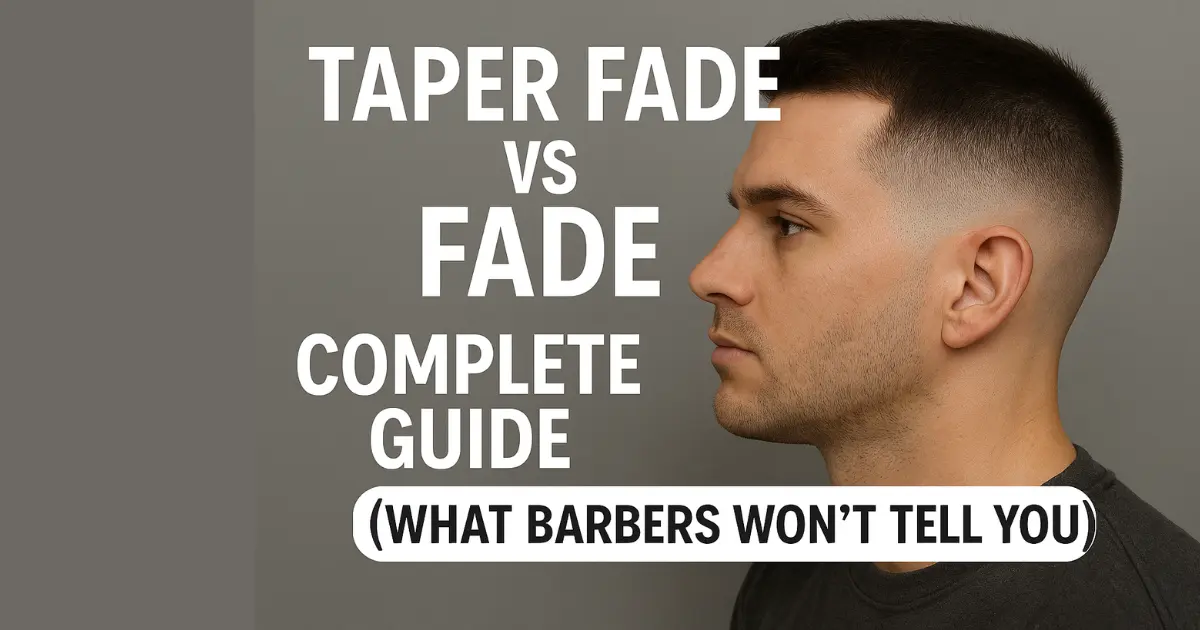
What's the difference between fade and taper fade?
A fade creates dramatic transitions with significant contrast, often going to skin level, resulting in bold, eye-catching definition. A taper fade offers subtler, more gradual blending that maintains some length throughout the transition, providing softer, more conservative styling. Fades are edgier and require more maintenance, whilst taper fades grow out more gracefully. The mid taper fade combines both concepts: noticeable shaping with smoother transitions.