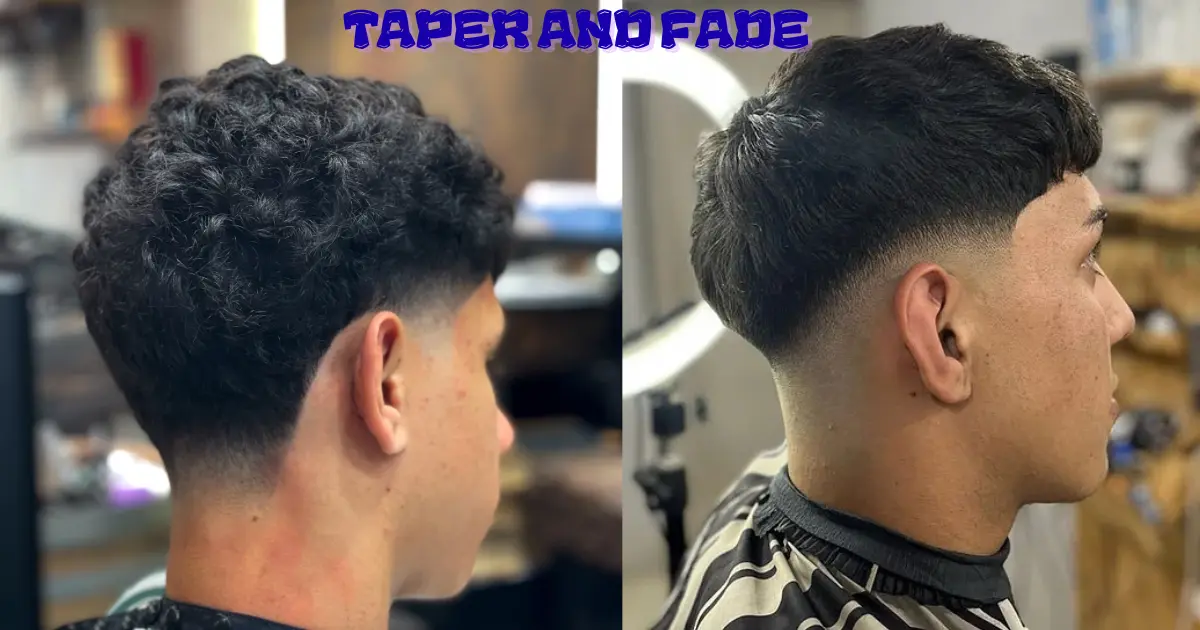
Taper Fade vs Fade: Complete Guide (What Barbers Won’t Tell You)

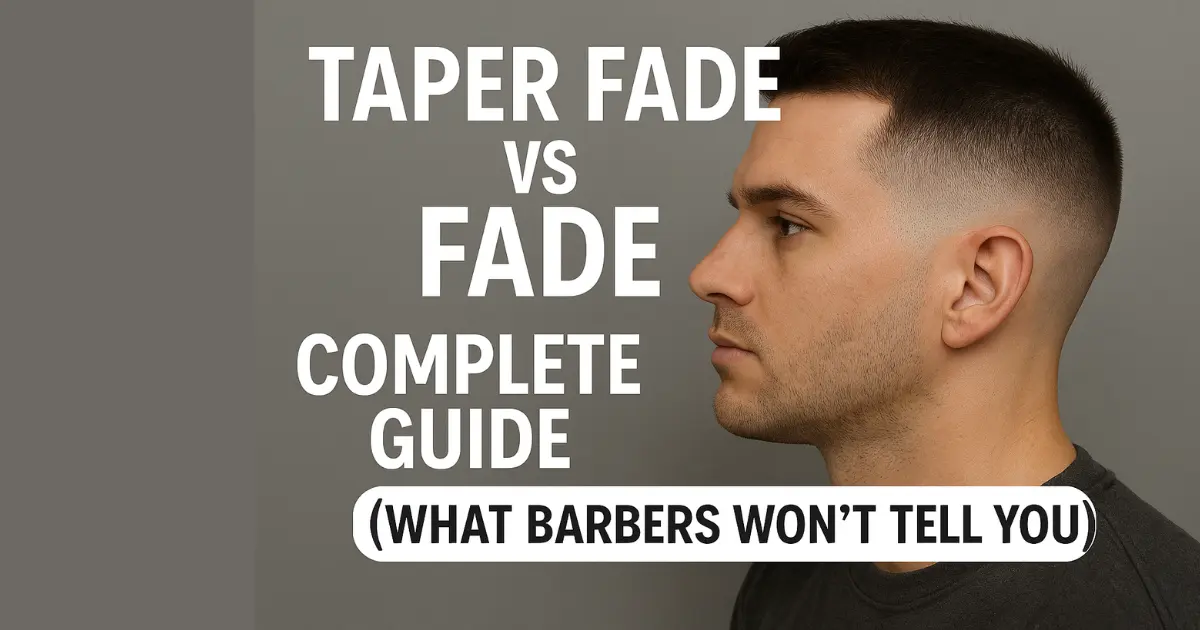
The taper fade vs fade confusion causes more bad haircuts than almost any other miscommunication in barbershops. After years of watching clients struggle with these terms, I can tell you the core difference in one sentence: a taper cleans your edges, a fade changes your entire side profile.
Most people use these words interchangeably. Barbers sometimes do too, which creates chaos when you sit in the chair expecting one thing and walk out with another. The truth is simpler than you think—it’s about where the shortening happens and how much contrast you create.
According to recent grooming surveys, nearly 60% of men who request a “taper fade” can’t accurately describe what they want because the term itself blends two distinct techniques. You’re about to learn exactly what separates these styles, which one matches your lifestyle, and how to communicate with your barber so you never leave disappointed again.
TL;DR: The Essential Difference (Taper Fade vs Fade)
Taper:
- Hair shortens gradually at the edges only (sideburns, ears, neckline)
- Most of the side area keeps reasonable length
- Subtle, workplace-friendly, classic
- Lasts 3-5 weeks before looking messy
- Edge-focused cleaning
Fade:
- Hair shortens across a larger portion of sides and back
- Creates dramatic contrast top-to-sides
- Often goes down to skin or near-skin
- Needs touch-ups every 2-4 weeks
- Side-profile transformation
Who should read this:
Anyone confused about taper vs fade, preparing for a barber appointment, or wanting to understand why their haircut doesn’t look like the reference photo they showed.
What Is a Taper? (The Edge-Focused Approach)
A taper means your hair gradually gets shorter only at the perimeter of your head—specifically around your sideburns, behind your ears, and along your neckline. The key concept is control and subtlety.
Your barber shortens the very edges to create clean lines while leaving the bulk of your sides at a reasonable length (often a #3 or #4 guard). Think of it as outlining your haircut rather than reshaping it.
What a taper looks like in practice:
The sides don’t compress dramatically. From across the room, your hair appears relatively uniform in length. Up close, you notice crisp edges, clean necklines, and defined sideburns. The transition zone is compact—usually confined to the bottom inch or so.
Tapers excel in professional settings because they read as “well-groomed” rather than “bold style choice.” They also grow out gracefully, which is why they remain the default approach for traditional barbering.
The taper technique has roots in military haircuts from the 1940s and 1950s, when regulations required neat edges without flashy styling. That DNA still shows today—tapers signal discipline and polish.
What Is a Fade? (The Side-Profile Game Changer)
A fade means your hair gradually gets shorter across a much larger portion of your sides and back, typically creating strong contrast between your top and sides. The shortening travels several inches up your head, not just along the edges.
Your barber uses progressively shorter clipper guards as they work downward, often ending at skin level or very close to it. This creates the signature “fade” effect where hair seems to disappear into your scalp.
What a fade looks like in practice:
The sides look noticeably lighter than the top. You can see clear gradation—multiple distinct lengths blending together. The transformation changes your head’s silhouette, making your hairstyle the focal point rather than a finishing detail.
Fades create modern, sharp, high-definition looks with crisp edges. They’re associated with contemporary barbering, streetwear culture, and athletic aesthetics. A fade announces “I care about my appearance and I’m willing to maintain it.”
The contrast is intentional and eye-catching. While tapers whisper refinement, fades make a statement.
The Simplest Way to Remember the Difference
Here’s the framework that clarifies everything:
Taper = Edge-Focused
If the haircut mostly cleans your outline and tightens your edges, it’s a taper. The work concentrates on the perimeter. Your overall hair volume stays intact.
Fade = Side-Focused
If the haircut changes your entire side profile by removing significant volume, it’s a fade. The work travels up the sides, creating visible layers of transition.
Visual test: Look at someone from the side. If you see a smooth, subtle edge cleanup, that’s a taper. If you see multiple distinct hair lengths graduating from top to bottom, that’s a fade.
This distinction holds true regardless of whether it’s low, mid, or high placement—those terms just describe where the transition starts.
Types of Taper (Low, Mid, High)
Tapers come in three main categories based on where the shortening begins:
1. Low Taper
The cleanup stays minimal and concentrated low on your head—just above your ears and along the neckline. This is the most subtle option, perfect for conservative environments or anyone wanting a slight upgrade without drama.
For comprehensive styling options, see our complete low taper fade guide.
2. Mid Taper
The transition begins around temple level, creating more visible definition than a low taper while staying professional. This hits the sweet spot for most guys—noticeable improvement without being loud about it.
Explore all variations in our mid taper fade breakdown.
3. High Taper
The tightness at the edges becomes more obvious as the taper starts higher on your head (near or above your temples). It looks sharper and more intentional, though still not as intense as a full fade.
See how high placement changes the game in our high taper fade guide.
Key point: Even high tapers focus primarily on edge cleaning rather than side compression. That’s what keeps them in the “taper” category despite the increased visibility.
Types of Fade (Low, Mid, High, Skin)
Fades are defined by how high the blend rises on your head:
1. Low Fade
Starts just above the ear, creating stylish definition while staying safe for formal settings. It’s the fade world’s answer to the professional taper—modern but not aggressive.
2. Mid Fade
The most universally popular fade height. Begins around temple level and works for most face shapes. It strikes the perfect balance between subtlety and impact.
3. High Fade
Creates strong contrast by starting the blend well above your temples. This delivers a clean, athletic, bold look that emphasizes your top hair dramatically.
4. Skin Fade (or Bald Fade)
This describes the finish rather than height. The shortest part goes down to bare skin, creating maximum contrast. Skin fades can be low, mid, or high—the “skin” part just means you’re showing scalp at the bottom.
Special fade variations:
Beyond standard heights, creative options exist. The drop fade curves around the ear and follows your head’s natural shape. The burst fade fans out in a semi-circle, often paired with mohawks or textured styles.
Taper vs Fade: Side-by-Side Comparison
| Feature | Taper | Fade |
| Main Focus | Sideburns, ears, neckline (edges) | Larger side and back area (profile) |
| Contrast Level | Low to medium | Medium to high |
| Skin Exposure | Usually minimal or none | Often down to skin |
| Workplace Compatibility | Very high | High to moderate (depends on height) |
| Grow-Out Appearance | Stays clean longer | Loses shape faster |
| Maintenance Frequency | 3-5 weeks | 2-4 weeks (1-2 for skin fades) |
| Best For | Subtle polish, classic style | Strong statement, modern edge |
| Volume on Sides | Retains more | Removes significant bulk |
Which One for Your Face Shape?
Your face shape influences which style balances your proportions best:
Round Face:
- Best choice: Mid fade or high taper
- Why: Adds structure and vertical emphasis, creating angles that balance roundness
- Avoid: Very low tapers that keep too much side volume
Square Face:
- Best choice: Low fade or low taper
- Why: Complements your natural angles without overpowering your strong jawline
- Works well: Most taper options maintain your masculine structure
Oval Face:
- Best choice: Almost anything works
- Safest options: Mid taper, mid fade
- Why: Oval faces are naturally balanced, so you have maximum flexibility
Long Face:
- Best choice: Low taper or low fade
- Why: Avoids adding extra vertical emphasis that would elongate your face further
- Avoid: High fades that draw eyes upward
Diamond Face:
- Best choice: Mid to high fades
- Why: Balances narrow foreheads and brings attention to your cheekbones
- Complement: Textured tops work beautifully with this combination
Heart Face:
- Best choice: Mid fade
- Why: Adds width at the jawline through side contrast
- Balance: Keeps proportions even between wider forehead and narrow chin
Which One for Your Hair Type?
Natural hair texture plays a major role in which technique delivers better results:
Curly or Coily Hair
Taper: Excellent if you want to keep curl volume on the sides while adding shape and structure. Your natural texture does most of the visual work, and the taper frames it cleanly.
Fade: Outstanding for high-contrast looks that showcase your texture on top. The tight sides make your curls the absolute focal point.
For specialized curly hair guidance, check our tapers for curly hair and mid taper for curls guides.
Straight Hair
Taper: Looks classy and natural with side parts, comb overs, or classic styles. Creates definition without harsh lines.
Fade: Often looks cleaner and more structured on straight hair. The gradation shows beautifully when you don’t have texture softening the transitions.
Thick Hair
Taper: Works if you want thickness maintained with a clean finish. You keep the bulk but add definition.
Fade: Reduces bulk more effectively. If thick hair feels heavy or hot, fades remove significant weight while keeping your style intact.
Fine or Thin Hair
Taper: Can look softer and less exposing. Keeps enough coverage on the sides to avoid emphasizing thinning areas.
Fade: A low fade can still work, but avoid extreme high or skin fades if you want to maintain the illusion of fuller hair on the sides.
Maintenance and Haircut Schedule
This is where lifestyle decisions matter most:
Taper Maintenance
Timeline: Looks good for 3 to 5 weeks depending on how sharp you want your edges.
Why it lasts longer: The subtle nature means regrowth blends naturally into your existing hair. You don’t have dramatic contrast that becomes obvious quickly.
Between-visit care: Clean up your neckline every 7-10 days with basic trimmers. This extends the professional look without a full appointment.
For step-by-step taper upkeep, see our maintaining your low taper and mid taper maintenance guides.
Cost consideration: Fewer appointments mean lower annual grooming costs—typically 8-12 barber visits per year.
Fade Maintenance
Timeline: The contrast makes regrowth obvious, requiring refresh every 2 to 4 weeks.
Skin fades: Often need weekly or bi-weekly touch-ups to maintain that crisp, just-cut appearance.
Why it demands more: When your hair goes from several inches to nearly bald, even a week of growth disrupts the “fade” effect significantly.
Between-visit care: Touch up edges every 3-5 days if possible. Some guys maintain necklines at home but still visit barbers for the actual fade work.
Cost consideration: More frequent appointments mean higher annual costs—typically 13-26 barber visits per year depending on fade type.
Time investment: If you can’t commit to regular barber sessions, fades will look overgrown faster than tapers.
Best Style Pairings (What Works with Each)
Different hairstyles naturally pair with tapers or fades based on the aesthetic they’re trying to achieve:
Taper Pairs Well With:
- Side part – Classic, professional, timeless
- Comb over – Sophisticated without being stuffy
- Traditional quiff – Adds height while keeping it classy
- Brush up – Natural volume with clean edges
- Textured top – Casual but polished
This is your “clean gentleman” category. Tapers support styles that emphasize refinement and versatility.
Fade Pairs Well With:
- Textured crop – Modern, youthful, fashion-forward
- Buzz cut with a fade – Minimal effort, maximum impact
- Modern quiff – Bold volume with sharp sides
- Curly top – High contrast showcases natural texture
- Pompadour – Vintage style with contemporary edge
Fades lean sporty, trendy, and sharp. They enhance styles that make statements rather than blend into backgrounds.
What to Tell Your Barber (Exact Scripts)
Eliminate confusion with specific language:
If You Want a Taper:
Say this:
“I want a low/mid/high taper. Keep the sides mostly natural, just clean the sideburns, around the ears, and neckline. No skin. Soft blend.”
Optional additions:
- “Start with a #3 or #4 on the sides”
- “Don’t take the taper higher than [temple/ear]”
- “I want a classic, professional look”
What this prevents: Your barber won’t give you a dramatic fade when you wanted subtle edge cleaning.
If You Want a Fade:
Say this:
“I want a low/mid/high fade on the sides and back.”
Then specify the finish:
- “Skin at the bottom” or “Take it down to a #0”
- “Not skin, keep a little shadow” (if you want near-skin but not bald)
Optional additions:
- “Start the fade at [ear level/temple/above temple]”
- “I want strong contrast between top and sides”
- “Make it sharp and clean”
What this prevents: You won’t get a conservative taper when you wanted bold, modern styling.
If You're Unsure:
Say this:
“I want something between a taper and fade—clean sides but not too dramatic. What would you recommend for my face shape and hair type?”
Then show a reference photo. Photos eliminate 80% of miscommunication.
Common Mistakes People Make
Mistake 1: Asking for a “taper fade” without knowing what you mean
Many people say “taper fade” thinking it’s a specific style. In reality, it’s become slang for “a taper with slightly more visibility than classic tapers.” Some barbers interpret this as a low fade, others as a mid taper. You need to specify.
Mistake 2: Not specifying low/mid/high placement
These height terms change everything. “I want a fade” is incomplete information. Your barber will guess, and you might not like the guess.
Mistake 3: Not mentioning skin vs. non-skin finish
This is critical. Skin fades create maximum contrast but require maximum maintenance. If you don’t want to show scalp, say so explicitly.
Mistake 4: Choosing based on trends instead of lifestyle
Instagram fades look incredible, but if you can’t visit the barber every 10 days, you’ll spend most of your time with a messy haircut. Choose based on your actual schedule.
Mistake 5: Ignoring your workplace culture
Some industries still expect conservative grooming. A high skin fade might raise eyebrows in traditional corporate settings, while a low taper won’t.
The "Taper Fade" Hybrid Explained
You’ll hear people say “taper fade” constantly. Here’s what it actually means:
Traditional definition: A taper that’s blended neatly enough that it resembles a very subtle fade. The edges are cleaner than a classic taper but it doesn’t have true fade contrast.
Modern barbershop usage: Many barbers now use “taper fade” interchangeably with “low fade” or “subtle fade.” The line has blurred.
What you should do: Never say “taper fade” without additional description. Always specify:
- Height (low/mid/high)
- Finish (skin or not)
- General vibe (professional, trendy, classic, bold)
When people successfully order “taper fades,” they’re usually getting what we’d call a low fade with a softer blend—more contrast than a taper, less drama than a mid or high fade.
Quick Decision Guide
Choose a TAPER if you want:
- Subtle upgrade to your current look
- Office-safe, professional appearance
- Cleaner grow-out between appointments
- Classic, timeless vibe
- Less frequent barber visits (every 3-5 weeks)
- Minimal scalp exposure
Choose a FADE if you want:
- Strong visual contrast top-to-sides
- Modern, trendy, athletic style
- Cleaner side profile that transforms your silhouette
- Sharper, more defined look
- Don’t mind frequent touch-ups (every 2-4 weeks)
- Contemporary barbering aesthetics
Still can’t decide?
Start with a low taper or low fade—whichever appeals more. These are the safest entry points because they’re conservative enough to work in most settings while giving you a taste of the style. You can always go higher or bolder at your next appointment.
For a more specific comparison, read our detailed low taper fade versus regular fade analysis.
Cost Analysis: What You'll Actually Spend
Here’s the reality nobody talks about—maintenance frequency dramatically affects your annual grooming budget:
Taper Economics:
- Average cost per cut: $25-$50
- Frequency: Every 4 weeks
- Annual visits: 13 appointments
- Annual cost: $325-$650
Fade Economics:
- Average cost per cut: $25-$50 (same price per visit)
- Frequency: Every 2.5 weeks (average across fade types)
- Annual visits: 20-21 appointments
- Annual cost: $500-$1,050
Skin Fade Economics:
- Average cost per cut: $25-$50
- Frequency: Every 2 weeks
- Annual visits: 26 appointments
- Annual cost: $650-$1,300
The difference isn’t the per-visit price—it’s how often you need to go. Over a year, a skin fade can cost double what a taper costs despite identical barber rates.
Budget accordingly.
When Each Style Works Best
Professional/Corporate Settings:
Best choice: Low to mid taper
Also acceptable: Low fade (increasingly common in 2025)
Risky: High fades, skin fades (depends heavily on industry)
Conservative industries (law, finance, government) still lean toward tapers. Creative fields have more flexibility.
Casual/Creative Workplaces:
Best choice: Any fade height
Also works: Mid to high tapers
Freedom: Style choices rarely matter in tech, retail, hospitality, creative agencies
Athletic/Fitness Focus:
Best choice: Mid to high fades
Why: The sharp, clean aesthetic aligns with fitness culture. Sweat doesn’t mess up fades as much as longer hair.
Student Life:
Best choice: Low fades or mid tapers
Why: Works for class presentations and weekend parties. Budget-friendly if parents are paying. Grows out okay if you miss appointments during finals.
Low Maintenance Lifestyle:
Best choice: Low to mid taper
Why: If you travel frequently, work remotely, or just don’t prioritize haircuts, tapers forgive longer intervals between visits.
How Each Grows Out (Week-by-Week)
Understanding the grow-out timeline helps set realistic expectations:
Taper Grow-Out:
Week 1-2: Still looks fresh and intentional
Week 3: Edges soften but overall shape remains
Week 4: Starting to look relaxed; edges need cleaning
Week 5: Clearly needs a refresh but not messy
Week 6: Now it’s obviously grown out
Key advantage: The gradual decline means you have flexibility in scheduling.
Fade Grow-Out:
Week 1: Peak sharpness
Week 2: Still strong but regrowth visible in transition zones
Week 3: Fade effect diminishing; looks lived-in
Week 4: Clearly grown out; shape is blurred
Week 5+: Lost the fade entirely
Key challenge: The contrast means regrowth disrupts the look faster. You have a shorter window of “looks good.”
The Bottom Line: Which Should You Choose?
Neither taper nor fade is objectively superior. The right choice depends entirely on your personal equation of:
Lifestyle factors:
- How often you can (or want to) visit a barber
- Your workplace dress code or industry norms
- How much you enjoy grooming maintenance
Aesthetic preferences:
- Subtle polish vs. bold statement
- Classic vs. contemporary
- Low-contrast vs. high-contrast
Practical considerations:
- Annual grooming budget
- Hair growth rate
- Face shape and hair type
If you value versatility, professional appearance, and lower maintenance, tapers deliver all three. If you prioritize modern style, sharp definition, and don’t mind frequent upkeep, fades create that impact.
Most guys eventually try both and settle on their preference through experience. There’s no penalty for switching between them—your next appointment can adjust the style in either direction.
The only wrong choice is walking into a barbershop using these terms interchangeably and hoping for the best. Now you know exactly what separates them and how to communicate your choice clearly.
For more detailed fade comparisons, explore our burst fade versus drop fade breakdown to understand additional variation options.
Frequently Asked Questions
What is the main difference between a taper and a fade?
A taper gradually shortens hair only at the edges—around sideburns, ears, and the neckline—while keeping the sides relatively full. A fade shortens hair across a larger area of the sides and back, creating dramatic contrast and often going down to skin level.
In simple terms: tapers clean your outline, fades change your side profile.
Is a "taper fade" a real thing or just slang?
Yes, taper fade is real, but it means different things to different barbers. Traditionally, it refers to a taper with very clean blending that resembles a subtle fade. In modern barbershops, many professionals use “taper fade” interchangeably with “low fade.”
To avoid confusion, never say “taper fade” without specifying height (low/mid/high) and finish (skin or not skin). Always provide additional context about the look you want.
Which requires more maintenance, taper or fade?
Fades require significantly more maintenance. Tapers typically last 3-5 weeks before needing a refresh, while fades need touch-ups every 2-4 weeks. Skin fades often require weekly or bi-weekly appointments to maintain sharpness.
The higher contrast in fades makes regrowth more visible, which is why they demand more frequent barber visits and higher annual grooming costs.
Can a taper go all the way down to skin?
Technically yes, but it’s uncommon. Most tapers keep some hair length even at the shortest points. If you want the edges to go to skin while keeping a taper approach, you’d specifically request a “skin taper” or “bald taper,” but this creates enough contrast that it starts resembling a very low fade.
The distinction blurs when you add skin-level finishing to a taper.
Which is better for professional or corporate environments?
Tapers are generally safer for traditional professional settings. They read as polished and conservative without drawing attention. Low to mid tapers work in finance, law, government, and corporate offices without question.
Low fades have become increasingly acceptable in 2025, even in conservative industries. Mid and high fades are better suited for creative fields, tech, or casual workplace cultures.
What should I tell my barber if I want a taper?
Say: “I want a low/mid/high taper. Keep the sides mostly natural, just clean the sideburns, around the ears, and neckline. No skin. Soft blend.”
Optionally add: “Start with a #3 or #4 on the sides” and specify exactly how high you want the taper to go (temple level, ear level, etc.). Bring a reference photo if possible.
What should I tell my barber if I want a fade?
Say: “I want a low/mid/high fade on the sides and back. [Skin at the bottom / Keep a little shadow, not full skin].”
Be explicit about placement height and whether you want it to go to bare skin. Specify “Start the fade at ear level” or “Begin at temple” for clarity. Reference photos eliminate most miscommunication.
Which works better for curly or thick hair?
Both work well, but they create different effects:
Fades are excellent for curly/thick hair because they remove bulk and create high contrast that showcases your natural texture on top. The tight sides make your curls the focal point.
Tapers work beautifully if you want to keep volume on the sides while adding shape. Your texture creates visual interest, and the taper just frames it cleanly.
Thick hair specifically benefits from fades if you want weight reduction and easier management.
How long does each style last before looking messy?
Taper: 3-5 weeks before it clearly needs a refresh. The subtle nature means it grows out gracefully.
Fade (low/mid): 2-3 weeks before the fade effect starts blurring noticeably. Some people can push to 4 weeks.
Skin fade: 1-2 weeks maximum. High contrast means regrowth is very obvious very quickly.
Your hair growth rate affects these timelines—fast-growing hair shortens all windows by about a week.
Which is better for round face shapes?
Mid fades or high tapers work best for round faces. They add vertical structure and create angles that balance the roundness. The height draws eyes upward, elongating your face visually.
Avoid very low tapers that keep too much side volume, as this can make round faces appear wider. Some contrast between top and sides helps create definition.
Which is better for square or angular faces?
Low fades or low to mid tapers complement square faces beautifully. They work with your natural angles without overpowering your strong jawline.
Square faces already have built-in definition, so you don’t need dramatic contrast. Subtle edge cleaning or low-level fading maintains your masculine structure while adding polish.
Can you switch from a fade to a taper (or vice versa)?
Yes, but transitioning from fade to taper requires growing your hair out first. If you have a mid or high fade, you’ll need 2-4 weeks of growth to build enough length for a taper. Then your barber can create the new blend.
Going from taper to fade is immediate—just ask for a higher starting point and more contrast at your next appointment. No waiting required.
Which costs more over time?
Fades cost significantly more annually despite identical per-visit prices. The difference is maintenance frequency:
- Taper: ~13 annual visits at $25-50 = $325-650/year
- Regular fade: ~20 annual visits = $500-1,050/year
- Skin fade: ~26 annual visits = $650-1,300/year
Over time, skin fades can cost double what tapers cost purely due to appointment frequency.
What face shapes work with any taper or fade?
Oval faces are universally compatible. They’re naturally balanced, so both tapers and fades work well. You can choose based purely on style preference rather than face shape correction.
Mid-level variations (mid taper or mid fade) are the safest all-around options for oval faces.
Are fades only for younger people?
No—fades work for all ages. While they’re heavily associated with contemporary style and younger demographics, plenty of men in their 40s, 50s, and beyond wear fades successfully.
The key is choosing the right fade height for your lifestyle and workplace. Low fades are age-neutral and professional enough for any setting. High skin fades skew younger and trendier.
Tapers tend to read as more classic and timeless, which is why older men often prefer them—but it’s personal choice, not an age rule.
Do barbers prefer cutting tapers or fades?
Most skilled barbers enjoy both because they showcase different technical abilities. Fades require precision blending across larger areas, while tapers demand clean edge work and subtle refinement.
High-end barbershops often charge the same for both because both require expertise. The difference is maintenance—fades bring clients back more frequently, which some barbers prefer from a business perspective.
Can women get tapers or fades?
Absolutely. Both techniques are gender-neutral and increasingly popular for women with short haircuts. The approach is identical—tapers clean edges, fades create contrast.
Women’s tapers and fades often pair with pixie cuts, undercuts, or short textured styles. The same face shape and hair type guidelines apply regardless of gender.